


The Horizon Europe project TiCCA4Danu proposes a novel and comprehensive transformative innovation framework to accelerate just climate change adaptation (CCA) at the level of cities and their surrounding administrative regions.
 © TICCA4Danu project consortium
To address the structural barriers to Climate Change Adaptation (CCA) implementation at the city-region level, TiCCA4Danu proposes a systems-level approach. This approach necessitates effective governance changes, the introduction of directionality, and a redefined use of policy instruments that favor discovery and experimentation processes.
TiCCA4Danu aligns directly with the EU Cities Mission and Adaptation Mission frameworks. It builds upon emerging literature that explores the opportunities and limitations of governing socio-technical change to address grand challenges—such as climate change—through transformative approaches.
At the core of TiCCA4Danu’s methodological framework is the concept of place-based Transformative Innovation Policy (TIP), which advocates for systemic change in innovation policy. The project seeks to operationalize the TIP framework at the city-region level by:
- Linking TIP to Local Green Deals (LGDs)—an established tool for sustainable urban transformation
- Complementing LGDs with a novel, region-level approach to transformative CCA
Through the lens of TIP, which enables broad and inclusive societal transformation, TiCCA4Danu emphasizes:
- Greater involvement of vulnerable groups
- Enhanced participation of the private sector
The project focuses on four “Anchor Cities” and their surrounding areas within the Danube Macro-Region, each representing a distinct bio-geographical context: Coastal, Mountain, and Continental regions.
By establishing a direct connection to the EU Strategy for the Danube Region (EUSDR) and engaging with relevant Priority Area Working Groups, TiCCA4Danu aims to scale its results to the macro-regional level. The applicability at the EU level will be further explored during the EU Week of Regions and Cities.
The TiCCA4Danu project has received funding from the European Union's HORIZON Research and Innovation Actions under grant agreement No.101214311.
IIASA contribution & context
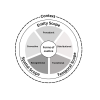
The Equity and Justice (EQU) Research Group at IIASA will will be in charge of Task 4.1 ensuring a just transition. Drawing on the IIASA/EQU AJUST framework, we will highlight effects on and considerations for a just transition in the project, and design capacity building modules to that effect. Moreover EQU will contribute to WP3 that focuses on stakeholder engagement efforts by advising on the use of qualitative systems methods and co-production.
The Applied Justice Taxonomy and Assessment Framework (AJUST)
- The AJUST Framework provides a consistent way of using justice terminology in the context of research and policymaking. Moreover, it is broad and flexible enough to be applied to diverse contexts and tailored to a variety of spatial and temporal scales. It is also modular, with independent components that can be applied as appropriate to research or policy contexts.
- This Framework provides a systematic backdrop to the transparent identification and description of justice issues, to enable explicit justice assessment and the design of more successful transition policies.
- AJUST is not normative in the sense of defining a specific view of what is just. Rather, it allows researchers and policy makers to reveal often-implicit justice aspects as well as communicate justice ideas using consistent terminology.