


As Europe advances its climate adaptation and biodiversity strategies, a new report by the Assessing Climate Change Risk in Europe (ACCREU) project, led by IIASA in partnership with the Technical University of Denmark (DTU) and the Global Climate Forum (GCF), shows how climate change and changes in land use will reshape ecosystems and the services they provide. The study examines wetlands, forests, farmland, species habitats, and pollination under different scenarios, combining ecological modeling with economic valuation.
The findings highlight the enormous value of nature. Coastal wetlands currently provide flood and storm protection worth over US$ 10 billion annually to European communities and infrastructure. However, these natural defenses face significant threats from rising sea levels and coastal development, with researchers noting that protecting and restoring wetlands proves more cost-effective than engineered alternatives.
Wildfires are projected to increase in a warmer, drier Europe, especially in southern countries. These fires reduce forest carbon, disrupt timber supply, and put many plants and animals at risk. While some species benefit from small, controlled burns, most wildlife populations decline under the frequent, high-intensity fires projected in future warming scenarios.
Sea-level rise poses an additional threat to agricultural productivity, with low-lying regions in Germany, Italy, and the Netherlands facing substantial risks. This creates challenging trade-offs between immediate food production needs and long-term ecological resilience.
Many European wildlife species face severe habitat loss by 2050, with pollinators among the most vulnerable groups. These insects, including bees and butterflies, currently provide agricultural pollination services valued at more than US$ 5 billion annually, a figure that could decline by half by mid-century without habitat protection measures. This estimate is conservative, as it does not include important crops such as fruit trees, which would further increase the overall value.
The report makes clear that Europe is facing difficult trade-offs. While protecting nature may have economic consequences for agricultural productivity, ecosystem-based solutions such as wetland conservation and integrated land use and wildfire management may deliver substantial economic benefits alongside their ecological value.
Overall, the study shows that climate change and land use change will have far-reaching impacts on biodiversity and ecosystems, and that the services they provide are at risk. The authors stress that ecosystem-based strategies are essential for Europe’s adaptation to climate change, delivering economic as well as ecological value.
This article was first published on the ACCREU project website. Read the original article here.
Find out more:
Read the full report
Visit the ACCREU website
News
15 October 2026
MowingQuest system-test campaign 2026 concludes, data collection continues
IIASA’s MowingQuest citizen-science campaign has wrapped up its August–September 2026 system test, with 25 pioneer users submitting almost 800 observations across eight countries. The results will help improve the app and data-quality workflows ahead of the main 2027 campaign. Two participants have also won Garmin GPS watches in the campaign raffle.

07 October 2026
MOSAIC results highlighted during Austria’s Protective Forest Week 2026
MOSAIC project results and IIASA research on climate-resilient protective forests are featured during Austria’s Protective Forest Week 2026, including work on wildfire risk, decision-support tools, and the Alpine Resilience Web Atlas.
06 October 2026
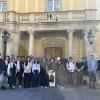
IIASA celebrates long-term partnership with MSc European Forestry Program
Coordinators, partners and graduates of the MSc European Forestry program visited IIASA on 29 September 2026. Twenty visitors from at least eight countries came as part of the alumni event held alongside the program's graduation ceremony at BOKU University in Vienna.