

Climate change reshapes lives, but not always the way headlines suggest. In this podcast, Roman Hoffmann joined Judith Kohlenberger to explore why most climate‑affected people stay close to home, and what that means for policy and preparedness.
Judith Kohlenberger who leads the Research Institute Research Institute for Migration and Forced Displacement Management at WU, hosts the podcast Aufnahmebereit, where she explores the complexities of arrival and reception through conversations with experts. The program examines how migration intersects with policy, climate, demographics, and social justice, aiming to promote an evidence‑based and nuanced public understanding.
In this episode, she talked with Roman Hoffmann discussing the facts and myths surrounding climate‑related mobility, why it is so difficult to measure, and what policymakers and the public should be doing now to prepare for the future impacts of climatic change on (internal) migration.
Roman Hoffmann, Migration and Sustainable Development (MIG) Research Group leader at IIASA discussed what research actually tells us about climate-related mobility, challenging the widespread and often alarmist notion of “climate refugees.” He emphasized that climate change rarely acts as a single or direct cause of migration but instead shapes mobility decisions through a complex interaction of environmental pressures, economic conditions, political instability, and social inequalities. While climate impacts can increase pressures to move, they can also lead to immobility, particularly among the most vulnerable populations who lack the resources to migrate. Most climate-related mobility occurs within countries rather than across borders, and large-scale predictions of mass migration to Europe are highly uncertain and often misleading. Roman also highlighted the deep global inequalities underlying climate impacts—those least responsible for emissions are often the most affected—and argued for a more evidence-based, humane, and justice-oriented public and political debate that focuses not only on migration, but also on protecting and supporting people facing growing climate risks where they live.
News

24 September 2026
IIASA researcher joins Austrian Academy of Sciences working group on integrated carbon neutrality
On 15 September, Principal Research Scholar Thomas Schinko represented IIASA at a high-level event of the Commission on the De-Fossilization and Carbon Neutrality of the European Energy Systems (DEE) of the Austrian Academy of Sciences (OEAW). The meeting denoted the kick-off workshop of the newly established DEE Working Group "Transsectoral and Transcontinental Integration”.
23 September 2026
Eco-Welfare Network Conference
Julia Beier participated in the first in-person Eco-Welfare Network Conference, held in Brussels from 9-11 September at the Université Libre de Bruxelles as part of the Transform-Labor project.
14 September 2026
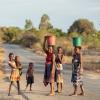
Can a warming climate put women at greater risk?
Unusually warm periods could have a link to an increased risk of intimate partner violence against women, according to a new IIASA-led study covering 31 countries in sub-Saharan Africa. The findings highlight how rising temperatures may compound existing risks of violence, with effects varying between demographic groups.