

IIASA recently welcomed Distinguished Visiting Fellow Éliane Ubalijoro, CEO of the Center for International Forestry Research and World Agroforestry (CIFOR-ICRAF), for a lecture on the importance of gender and social inclusion in forest and landscape governance and an interdisciplinary discussion on equity and sustainability.
In her lecture titled, Why gender and social inclusion matter for forests, trees, and sustainable landscapes, Ubalijoro drew on decades of global research and field experience to demonstrate how social dynamics shape environmental outcomes. Forest and agroforestry systems, she explained, play a crucial role in addressing interconnected global challenges such as climate change, biodiversity loss, and food security. However, structural inequalities, including unequal access to land, finance, and decision-making power, often limit the ability of women and marginalized groups to contribute fully to these systems.
“Gender equality is not a parallel social objective. It is a precondition for sustainable forestry,” she emphasized, noting that forest and landscape initiatives depend on who has access to resources, authority, and recognition in governance processes.
Drawing on examples from CIFOR-ICRAF’s global research portfolio, Ubalijoro highlighted how gender-responsive and socially inclusive approaches can strengthen landscape governance, improve environmental outcomes, and enhance livelihood resilience. She also discussed the importance of integrating equity considerations directly into research design, data systems, and policy frameworks rather than treating them as an afterthought.
 © IIASA
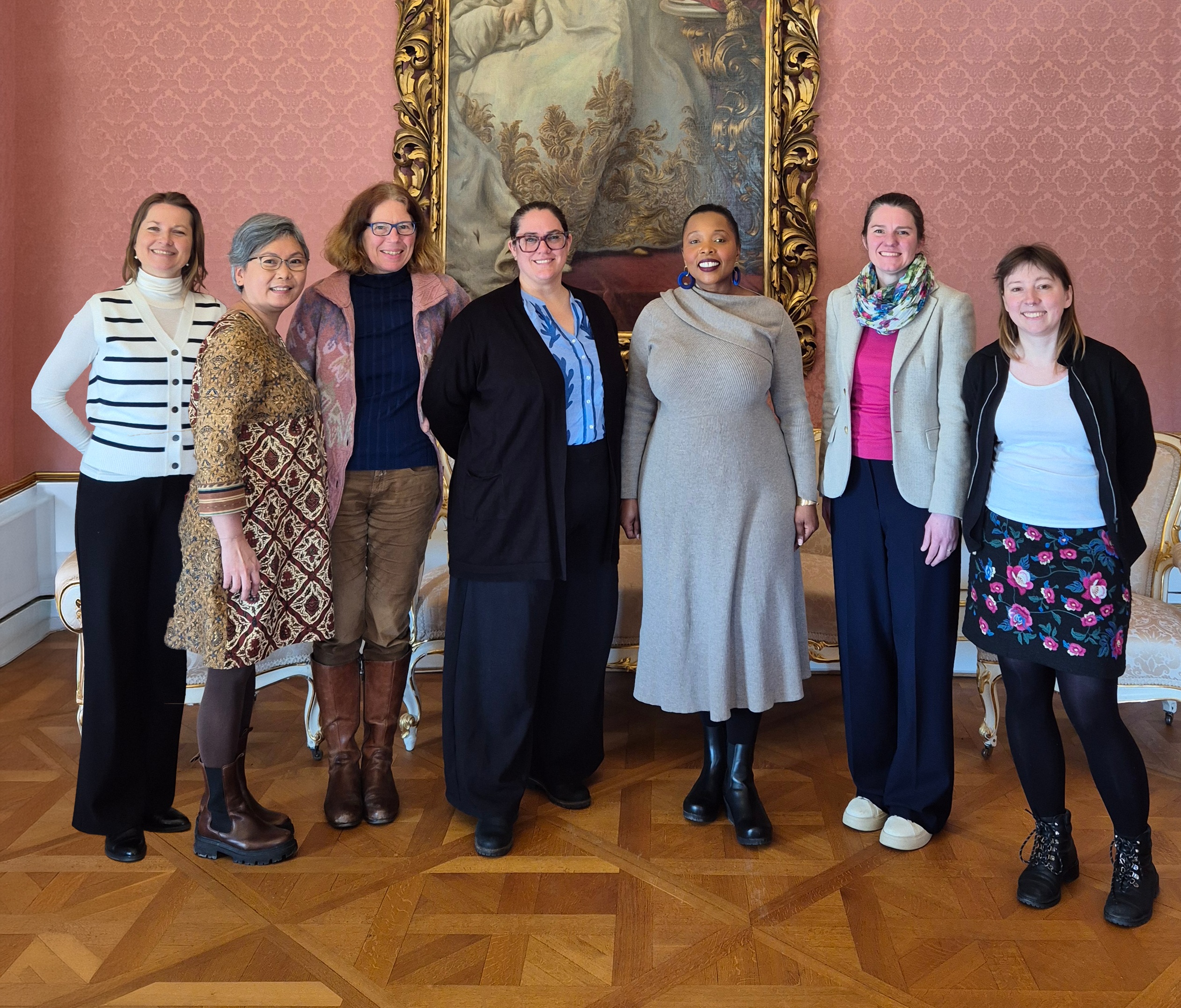
Éliane Ubalijoro with members of the IIASA Women in Science Club.
A key message of the lecture was that gender should be understood not simply as a synonym for women, but as an analytical lens for examining power relations in institutions and societies.
“Gender is a category of analysis and a power lens,” she explained, pointing to the ways in which authority, labor, and access to resources are structured within environmental systems and institutions.
Ubalijoro also reflected on how inclusive research practices can strengthen innovation and policy impact. Diverse perspectives, she argued, are essential for tackling complex sustainability challenges.
“The more inclusive we are in our work, the more diversity of thought we bring and the more innovative we can become,” she noted.
Participants engaged in a lively exchange following the lecture, discussing how systems analysis can better account for social dynamics such as tenure rights, household decision-making, and institutional power structures. The discussion also explored how incorporating these factors into models and policy frameworks can lead to more robust projections and more equitable outcomes.
 © IIASA
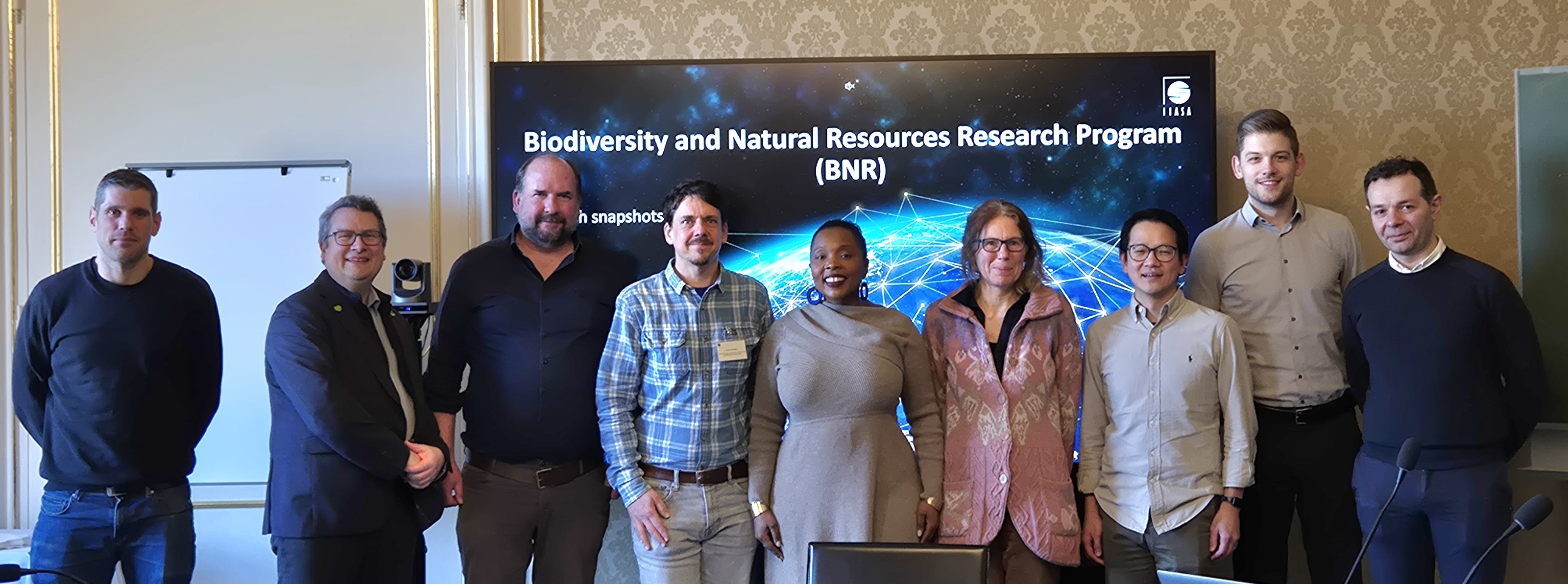
Ubalijoro with scientists from the IIASA Biodiversity and Natural Resources Program
During her visit to IIASA, Ubalijoro also met with members of the IIASA Women in Science Club and the institute’s Gender Equality and Diversity, Equity, and Inclusion (DEI) Officer, Anastasia Lijadi, for an informal lunch and networking session. The conversation provided an opportunity to discuss leadership, career development, and the role of gender equality in shaping research institutions.
Following the lecture, she participated in an exchange with IIASA scientists from the Biodiversity and Natural Resources Program, where discussions focused on opportunities for collaboration and the integration of social inclusion perspectives into environmental research and systems modeling.
Ubalijoro is a globally recognized leader in sustainability and science-policy engagement. In addition to serving as CEO of CIFOR-ICRAF and Director General of ICRAF, she is a Professor of Practice at McGill University and the University of Hawai‘i at Mānoa. She was appointed by the UN Secretary-General to the Independent Group of Scientists for the 2027 Global Sustainable Development Report and serves on several international advisory boards.
Her lecture at IIASA underscored the importance of interdisciplinary approaches that link environmental science with social equity and governance – an increasingly critical perspective for advancing sustainable development and resilient landscapes worldwide.
Watch a recording of the lecture
News

13 October 2026
Connecting disciplines and inspiring new ideas with the Environment and Climate Research Hub
IIASA Deputy Director General Karen Lips delivered a keynote at the University of Vienna's recent Environment and Climate Research Hub (ECH) Research Frontiers Workshop in Bad Vöslau, Austria, emphasizing the importance of interdisciplinary collaboration in addressing complex environmental and climate challenges.

12 October 2026
Connecting science across borders: IIASA Committee meets University of Salzburg
How can universities and international research organisations work together to address the complex challenges of a changing world? This question shaped a full day of scientific exchange at the University of Salzburg on 6 October, when the Austrian IIASA Committee met with members of the University community to discuss research, collaboration and opportunities for researchers and students.

06 October 2026
Nanjing University delegation visits IIASA to explore future collaboration
A high-level delegation from Nanjing University (NJU), led by Professor Tan Zhemin, President of NJU and Fellow of the Chinese Academy of Sciences, visited IIASA to discuss opportunities for strengthening scientific cooperation and advancing joint research on global challenges.