
On 23 June 2025, IIASA will launch the global citizen science “Tree-Quest” campaign at the Living Planet Symposium in Vienna, inviting people from all over the world to take part using the free Geo-Quest app. As part of the Citizens for Copernicus project, IIASA researchers will also lead hands-on workshops with schoolchildren at the symposium, teaching them how to use the app and collect ground data that will help scientists map the carbon stored in trees with satellite data more accurately.
The Living Planet Symposium (LPS) is one of the world's largest events dedicated to Earth observation, climate action, and environmental sustainability. This year, the LPS25 symposium will be hosted by the European Space Agency (ESA) at the Austria Center Vienna, bringing together participants from science, policy, industry, and education to explore how satellite data can be harnessed to address pressing global challenges.
IIASA at LPS25: hands-on science for a cooler planet
As part of ESA’s school-focused activities, IIASA – together with the Technical University of Vienna and Tree.ly FlexCo – will host an interactive workshop for students aged 10-19, showcasing the Tree-Quest module through the free Geo-Quest app. The session “Measuring the Carbon Storage of Trees with a Smartphone” invites schoolchildren to use their phones' 3D scanning and augmented reality features to estimate the carbon stored in trees at Vienna’s Danube Park. Schoolchildren will compare these values to everyday CO₂ emissions, such as those from a car journey, and compete for prizes.
The “Tree-Quest” campaign will run through the end of 2025, and at both the midpoint and conclusion, top contributors will be recognized. In their name, IIASA will purchase carbon credits to support the protection of tropical forests and wildlife in Costa Rica. Tree.ly FlexCo will also sponsor CO2 credits for protecting local Austrian forests. In addition, symbolic prizes such as goody bags and reusable water bottles featuring the app logo will be awarded to participants.
The activity is part of the Citizens for Copernicus (C4C) project, led by Milutin Milenković, a research scholar in the Novel Data Ecosystems for Sustainability Research Group of the IIASA Advancing Systems Analysis Program. The project explores how citizen science can enhance satellite-based forest monitoring and support the development of AI models to map carbon storage more accurately.
How to get involved
Everyone is invited to download the Geo-Quest app and join the Tree-Quest campaign! More info is given on the campaign webpage. The free Geo-Quest app is available on both the Apple Store and Google Play.
“By combining satellite data with citizen-generated data, we can close critical knowledge gaps in forest monitoring and engage the next generation in meaningful climate action,” says Milenković. “If you don’t make it to the symposium, you can simply join via your phone – just download the app, measure a tree, and help map carbon. Every tree counts in the fight against climate change.”
News
15 October 2026
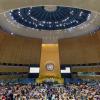
IIASA strengthens science diplomacy ties at UNGA in New York
IIASA Science Diplomacy Director and Head of Communications and External Relations Susie Kitchens represented the Institute at the United Nations General Assembly (UNGA) High-level Week and Science Summit in New York in September, contributing to discussions on how science and international cooperation can help address shared global challenges.
13 October 2026
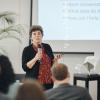
Connecting disciplines and inspiring new ideas with the Environment and Climate Research Hub
IIASA Deputy Director General Karen Lips delivered a keynote at the University of Vienna's recent Environment and Climate Research Hub (ECH) Research Frontiers Workshop in Bad Vöslau, Austria, emphasizing the importance of interdisciplinary collaboration in addressing complex environmental and climate challenges.
12 October 2026
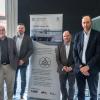
Connecting science across borders: IIASA Committee meets University of Salzburg
How can universities and international research organisations work together to address the complex challenges of a changing world? This question shaped a full day of scientific exchange at the University of Salzburg on 6 October, when the Austrian IIASA Committee met with members of the University community to discuss research, collaboration and opportunities for researchers and students.