

In January, IIASA Director General Hans Joachim (John) Schellnhuber visited Israel as part of an effort to deepen scientific cooperation and advance discussions on Israel’s continued membership in IIASA. The visit highlighted the growing role of science diplomacy in connecting research, policy, and international collaboration to support evidence-based decision-making and long-term sustainability.
A central element of the visit was a high-level working meeting with senior representatives from government ministries and academia, focused on renewing Israel’s IIASA membership and identifying pathways to expand future cooperation. The meeting brought together Prof. Itai Sened, IIASA Council Member and Israel’s Formal Representative, alongside IIASA Member Organization Secretaries Prof. Vered Blass and Dr. Avi Raveh, reflecting the strong institutional commitment to Israel’s engagement with IIASA.
 © Vered Blass | IIASA
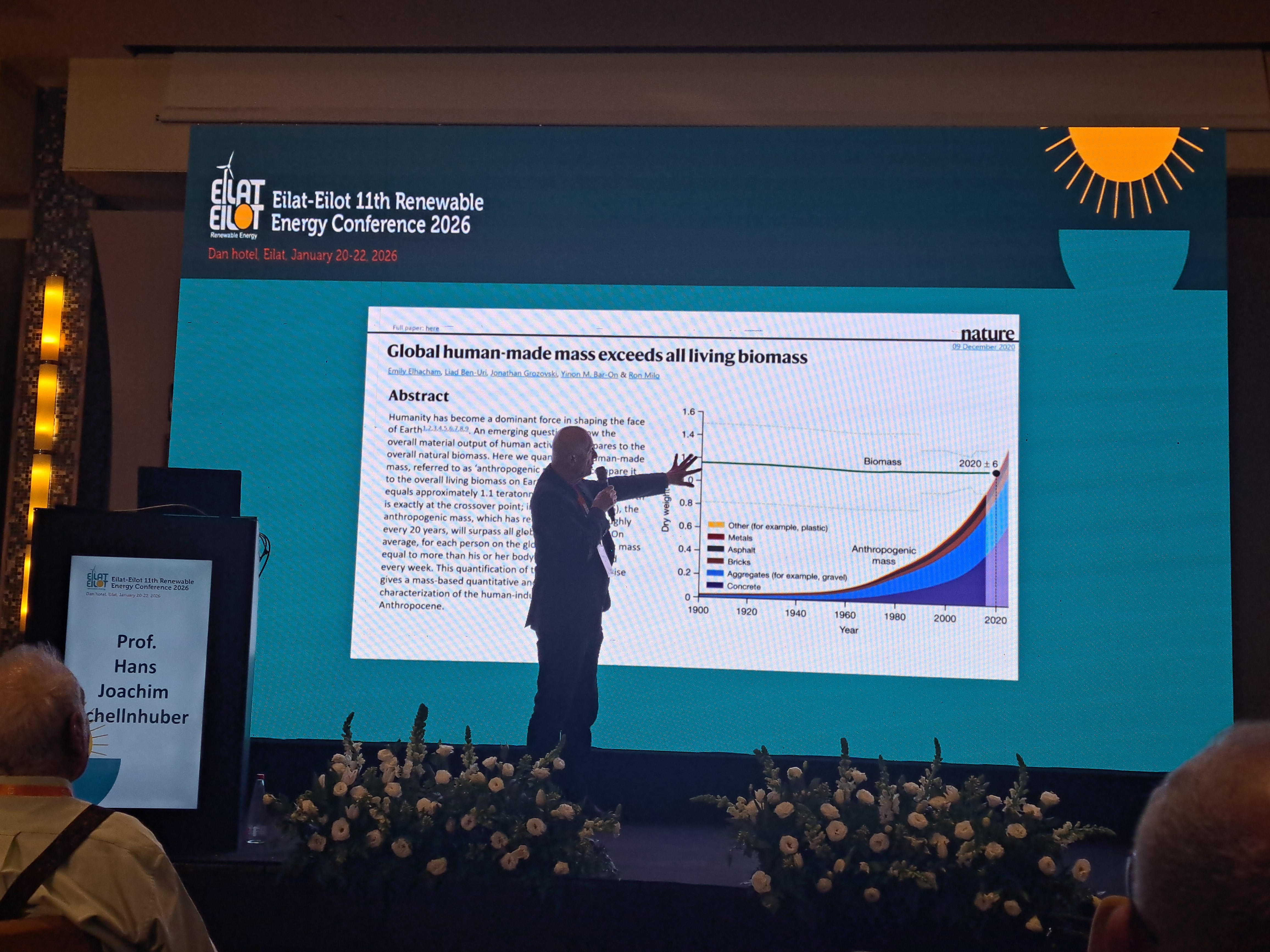
IIASA Director General Hans Joachim (John) Schellnhuber speaking at the Eilat–Eilot Renewable Energy Conference, highlighting research from the Weizmann Institute of Science.
Bringing a broad cross-section of government expertise to the table, the meeting also included Dr. Orna Metzner, Deputy Chief Scientist at the Ministry of Environmental Protection and a member of the IIASA Membership Steering Committee; Mrs. Galit Cohen, former Director General of the Ministry of Environmental Protection; Prof. Brian Rosen, incoming Chief Scientist at the Ministry of Energy and Infrastructure;; Mrs. Sharon Hatzor, Deputy Director General for Policy Planning and Strategy Division, Ministry of Energy and Infrastructure; Dr. Sahar Dolev, Head of Models Development and Long Term Policy Division, Ministry of Energy and Infrastructure; and Dr. Ehud Galun from the Ministry of Defense.
Schellnhuber opened the meeting with an overview of IIASA’s mission and global impact, emphasizing the importance of science-policy integration at the international level.
“IIASA exists to connect science and policy across borders,” he noted. “Israel’s membership strengthens this mission by bringing strong scientific expertise into a global framework that turns systems analysis into actionable policy insight.”
 © Vered Blass | IIASA
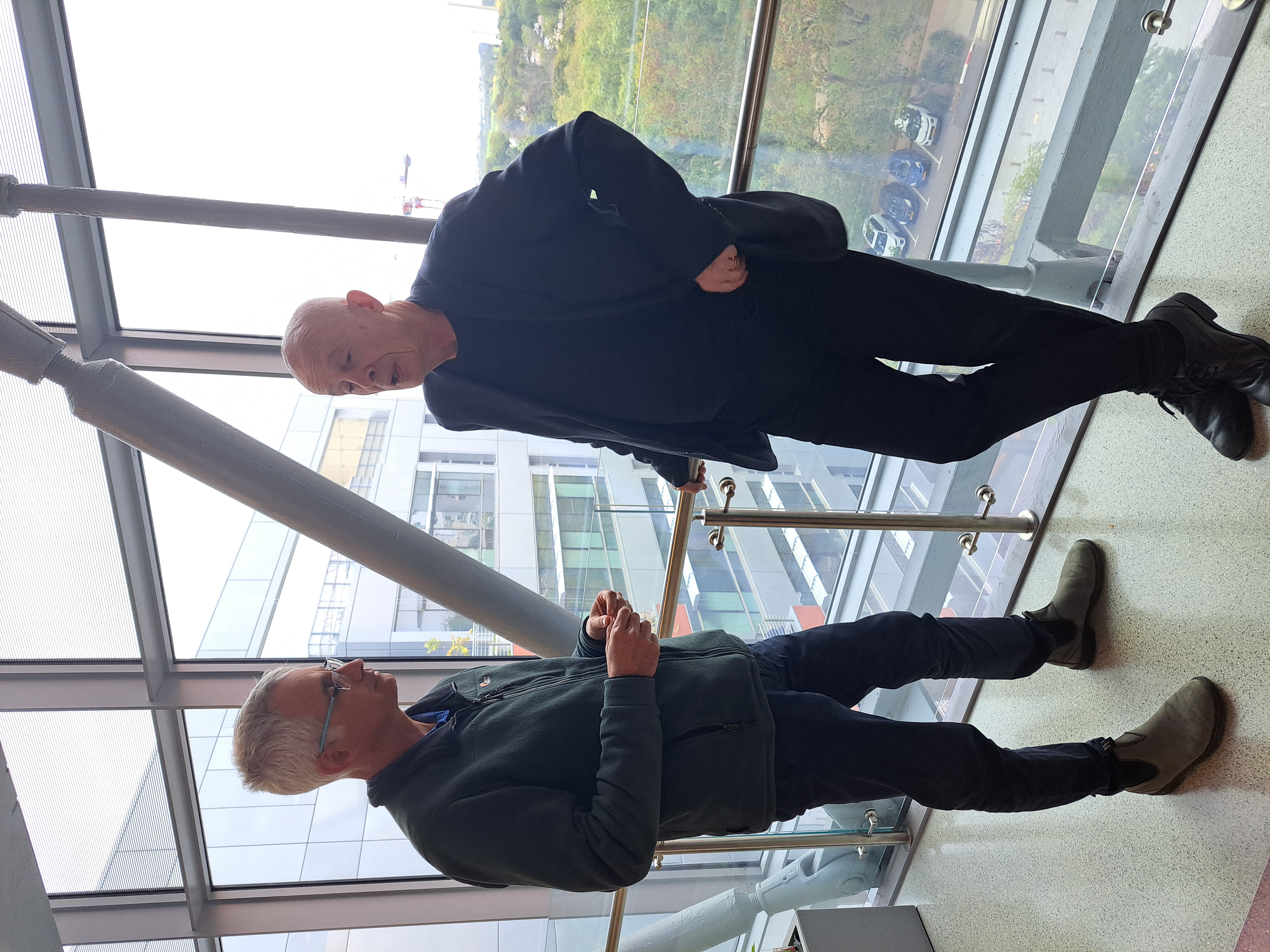
Schellnhuber in conversation with Prof. Ron Milo, host of the visit to the Weizmann Institute of Science, discussing recent publications and ongoing work in Milo Lab.
Participants underscored the value of IIASA membership – active since 2017 through the Israel Committee for IIASA – in enabling access to global expertise, advanced modeling tools, and collaborative research aligned with national priorities.
“Through IIASA, Israel gains direct access to world-class modeling, global expertise, and policy-relevant research that enhances national decision-making on complex challenges such as energy and climate resilience, alongside major science diplomacy efforts” said Prof. Itai Sened.
Key examples included the Archimedes Center at Tel Aviv University (established in collaboration with IIASA), joint NetZero 2050 energy planning, research on water and climate resilience, postdoctoral fellowship programs, and the annual Young Scientists Summer Program in Austria.
As part of his broader engagement with Israel’s sustainability community, Schellnhuber also addressed the 11th Eilat-Eilot Renewable Energy Conference, contributing to the plenary session “Talk Zero – Changing the Way We Think, Speak, and Act with the Aim of Reaching Zero Emissions in the World,” as well as a panel session on new materials for energy and urban environments.
 © Vered Blass | IIASA
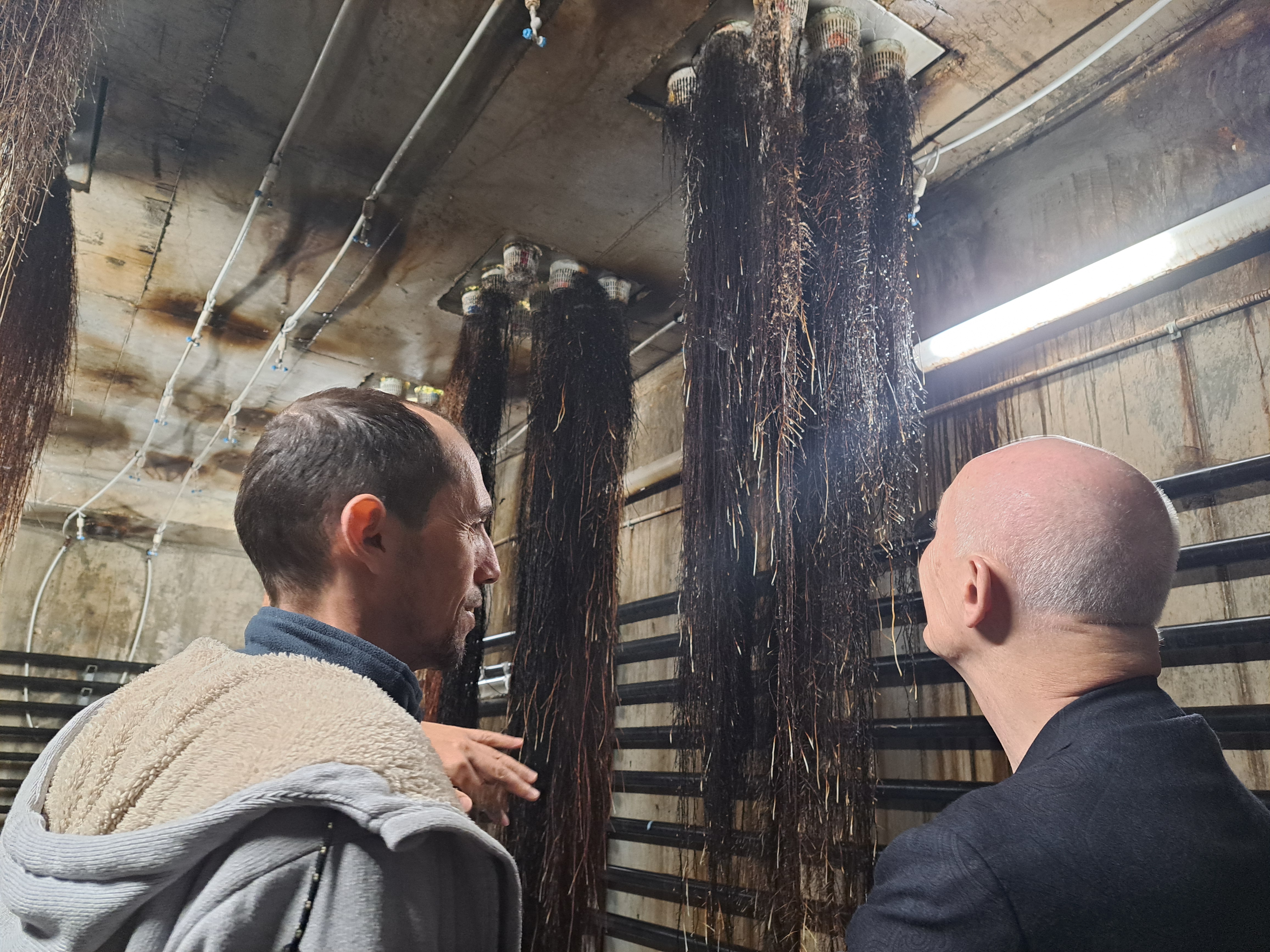
Schellnhuber with Prof. Tamir Klein from the Plant and Environmental Sciences Department at the Weizmann Institute of Science, during a visit to Klein’s roots lab, where researchers study water and carbon transport within and between trees.
The visit concluded with a stop at the Weizmann Institute of Science, where Schellnhuber met with leading researchers to exchange views on shared research interests and explore opportunities for future collaboration.
This final engagement underscored IIASA’s commitment to connecting cutting-edge science with policy and reinforced the value of Israel’s active participation in IIASA’s global research community.
News

11 November 2025
Together for water: Science diplomacy to advance regional cooperation in MENA
IIASA recently hosted an exploratory workshop titled, Together for water: Fostering collaboration in the Middle East and North Africa (MENA). The two-day event brought together around 50 representatives from international organizations, civil society organizations, research institutions, and diplomatic missions to explore new pathways for transboundary collaboration on water challenges across the region.
12 August 2024
RESIST updates
The RESIST project has made significant progress through active collaboration with IIASA's National Member Organizations (NMO). Key recent achievements include setting up collaborations with national researcher partners and consulting with local experts and stakeholders in respective case study regions (listed below).

08 March 2024
The Archimedes Center: advancing systems analysis in Israel
In 2023, IIASA collaborated with Tel Aviv University and the Israeli Ministry of Innovation, Science, and Technology, to set up a new national research center focusing on a broad set of scientific fields related to systems analysis in Israel.