

IIASA Energy, Climate, and Environment Program Director, Keywan Riahi, has been reappointed to the European Scientific Advisory Board on Climate Change for a second term from 2026 to 2030.
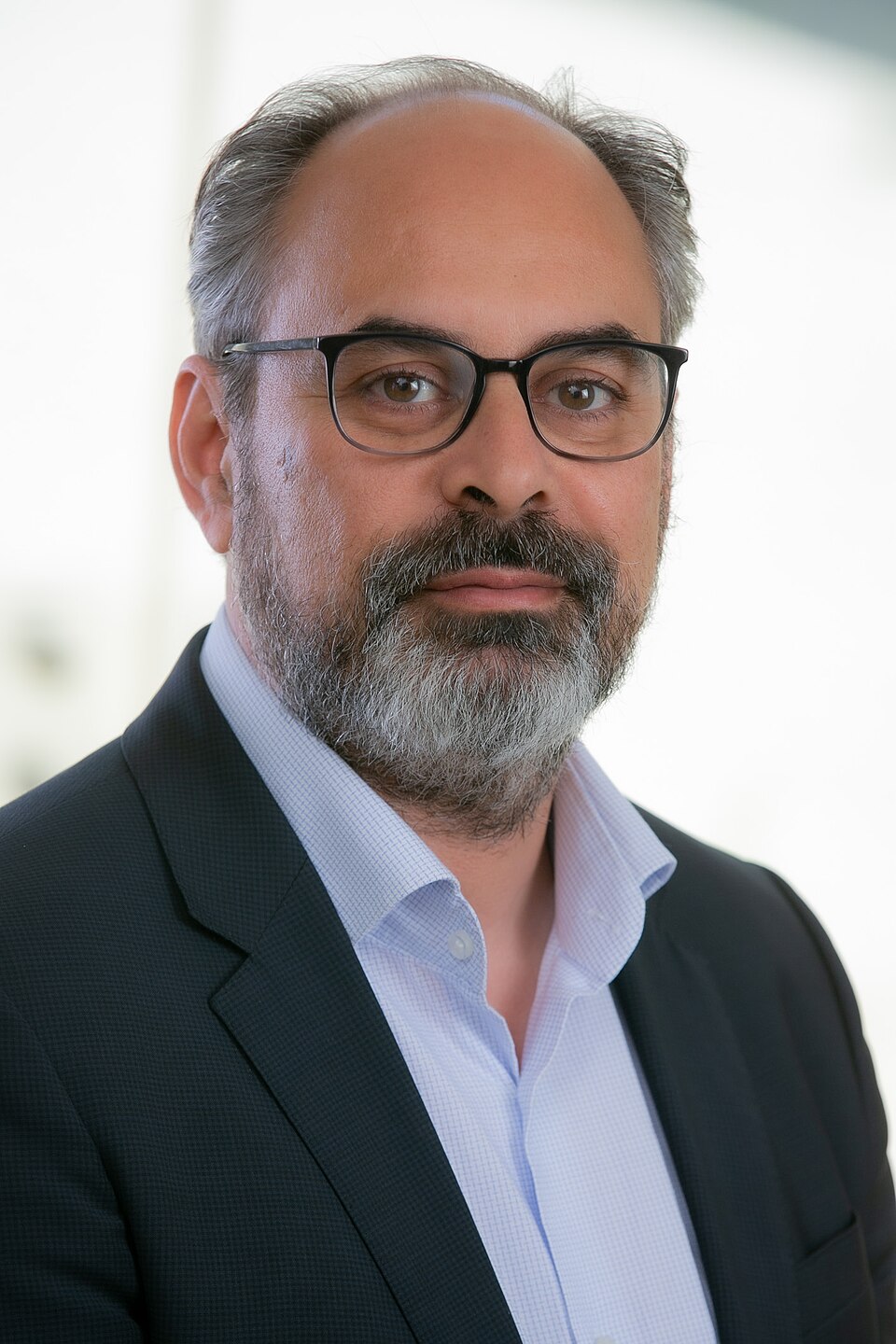 © IIASA
Keywan Riahi
The EU established the European Scientific Advisory Board on Climate Change in 2021 to support the achievement of the objectives of the European Climate Law. Riahi was first appointed to the Board in 2022. The Board comprises leading scientific experts covering a broad range of relevant disciplines. It provides independent scientific advice on EU measures and climate targets, which will underpin the EU’s climate action and efforts to reach climate neutrality by 2050.
During its first term (2022-2026), the Advisory Board provided advice on important issues such as the EU’s 90% emissions reduction target for 2040, policy gaps and opportunities, carbon dioxide removals, and the EU’s response to the energy crisis and energy infrastructure. The Advisory Board will publish two more reports on adaptation and agriculture before the end of its first term.
The Advisory Board operates independently from EU institutions. Its members are designated by the European Environment Agency (EEA) Management Board for a four-year term, renewable once, following an open, fair and transparent selection procedure.
On 4 December, the EEA Management Board appointed the following 15 members, whose term will commence on 24 March 2026 (in alphabetical order):
- Annela Anger-Kraavi (Estonia) – University of Cambridge
- Constantinos Cartalis (Greece) – National and Kapodistrian University of Athens (second mandate)
- Suraje Dessai (Portugal) – University of Leeds’ School of Earth, Environment, and Sustainability (second mandate)
- Laura Díaz Anadón (Spain) – University of Cambridge (second mandate)
- Ottmar Edenhofer (Germany) - Potsdam Institute for Climate Impact Research (second mandate)
- Vera Eory (Hungary) – Scotland’s Rural College (second mandate)
- Lena Kitzing (Denmark / Germany) - Technical University of Denmark (second mandate)
- Kati Kulovesi (Finland) – University of Eastern Finland
- Lars J. Nilsson (Sweden) – Lund University (second mandate)
- Åsa Persson (Sweden) – KTH Royal Institute of Technology’s Climate Action Centre
- Keywan Riahi (Austria) – International Institute for Applied Systems Analysis (second mandate)
- Jean-François Soussana (France) - French National Research Institute for Agriculture, Food and the Environment (second mandate)
- Giorgio Vacchiano (Italy) – University of Milan
- Detlef van Vuuren (The Netherlands) – PBL Netherlands Environmental Assessment Agency
- Zinta Zommers (Latvia) – University of Toronto
Riahi welcomes the opportunity to continue serving on the Advisory Board, noting: “I am pleased to take on a second term and to continue supporting the EU with scientific analysis at a time when climate decisions carry long-lasting implications. I look forward to working with colleagues on the Board to provide clear and science-based advice.”
We congratulate all the board members on this prestigious appointment and wish them all the best in their work on this important topic.
Adapted from a press release issued by the European Environment Agency. Read the original press release here.
News

22 October 2026
Global agricultural productivity growth is in decline
Global agricultural productivity growth has hit its lowest level since the 1970s, threatening future food security. IIASA researchers contributed to Chapter 3 of the 2026 GAP Report published by the Global Agricultural Productivity (GAP) Initiative at Virginia Tech, exploring how regenerative agriculture could help reverse this trend while improving farm profitability and resilience.
15 October 2026
MowingQuest system-test campaign 2026 concludes, data collection continues
IIASA’s MowingQuest citizen-science campaign has wrapped up its August–September 2026 system test, with 25 pioneer users submitting almost 800 observations across eight countries. The results will help improve the app and data-quality workflows ahead of the main 2027 campaign. Two participants have also won Garmin GPS watches in the campaign raffle.

07 October 2026
MOSAIC results highlighted during Austria’s Protective Forest Week 2026
MOSAIC project results and IIASA research on climate-resilient protective forests are featured during Austria’s Protective Forest Week 2026, including work on wildfire risk, decision-support tools, and the Alpine Resilience Web Atlas.