


How can private gardens help support biodiversity in Austria? The new IIASA citizen science project G/ArtenLeben brings science and gardening practice together. At three G/ArtenCafés in Lower Austria, hobby gardeners are invited to contribute their knowledge and experience to research and work alongside scientists to explore how gardening can help biodiversity thrive.
Gardens are much more than private or public green spaces. Particularly in densely populated and intensively farmed areas, they can provide important habitats and help connect fragmented ecosystems for plants and animals. They are also a rich source of knowledge: which plants thrive, which animals regularly visit, which practices have stood the test of time, and which measures seem to make a real difference for biodiversity.
This is where the new citizen science project G/ArtenLeben, funded through the Lower Austrian Research, Technology and Innovation Strategy, comes in. Hobby gardeners and school students become active partners in the research process, contributing their observations, experiences, and local knowledge directly to the scientific work.
“People who have a garden know its unique characteristics better than any statistics ever could,” says Gerid Hager, IIASA researcher and project leader. “Especially in densely populated and intensively farmed areas, gardens can provide important habitats and connections for plants and animals, while also being places that support health, wellbeing, and social interaction.”
G/ArtenCafés: Turning gardening experience into research knowledge
The project kicks off with three G/ArtenCafés in Lower Austria in September and October 2026. Hobby gardeners are invited to share their personal experiences and garden stories and work alongside scientists as co-researchers.
During the approximately two-hour workshops, participants will explore which gardening practices support biodiversity, the experiences and traditions behind them, and how personal values and beliefs influence the way people garden.
Participants will also work together to develop a survey “by gardeners, for gardeners”, designed to systematically capture and make visible gardening knowledge from across Austria. To get the conversation started, participants are invited to bring along a plant or a photo from their own garden that has a special story connected to biodiversity.
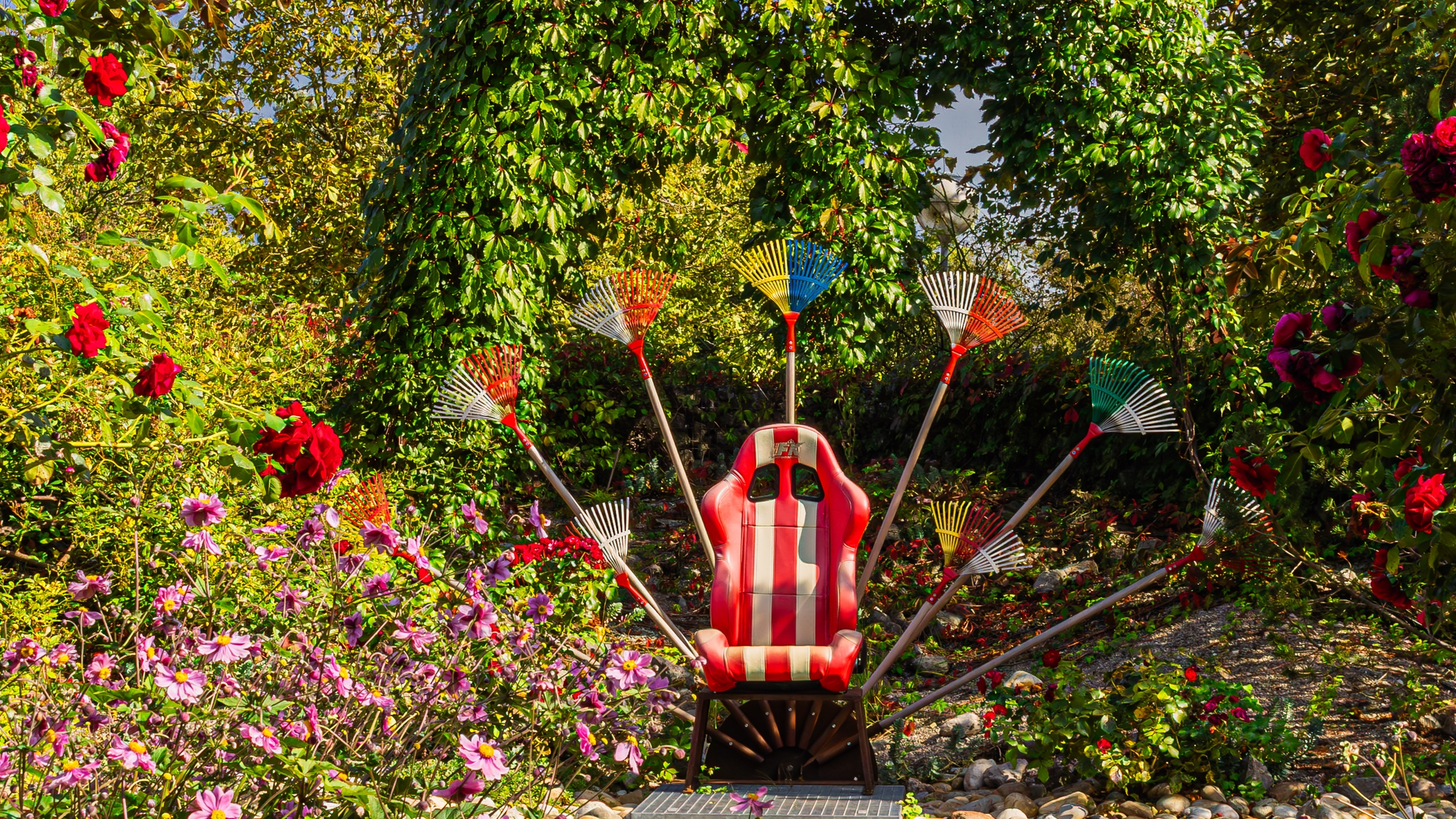 © Baber Ghazi | Dreamstime.com
Die Garten Tulln, Austria
Three dates, three special garden settings
Friday, 11 September 2026, 14:00–17:00 – Laxenburg Palace
G/ArtenCafé workshop (2 hours), followed by a one-hour guided tour on “Biodiversity hotspots in a natural garden”. In cooperation with the Municipality of Laxenburg and Natur im Garten.
Friday, 18 September 2026, 13:30–16:30 – ARCHE NOAH, Schiltern
G/ArtenCafé workshop (2 hours), followed by a guided tour on “Where crop diversity meets biodiversity”. In cooperation with ARCHE NOAH.
Friday, 2 October 2026, 14:00–17:00 – DIE GARTEN TULLN
G/ArtenCafé workshop (2 hours), followed by a guided tour on “G/ArtenLeben biodiversity hotspots in autumn”. In cooperation with Natur im Garten.
Join and become part of the research
Participation in the G/ArtenCafés is free of charge. Participants will also receive:
- free admission to the respective garden for the day;
- coffee and cake;
- a one-hour expert-led guided tour; and
- an ARCHE NOAH voucher worth EUR 40.
Please note: Advance registration is required. Register now and bring your garden story into the research:
Your garden. Your knowledge. Your contribution to research.
G/ArtenLeben puts local knowledge and lived gardening experience at the heart of collaborative research. The aim is to better understand how sustainable gardening can support biodiversity and to develop this knowledge together with the people who observe, shape, and care for their gardens every day.
Find out more about the project:
https://g-artenleben.at/
News

15 October 2026
IIASA strengthens science diplomacy ties at UNGA in New York
IIASA Science Diplomacy Director and Head of Communications and External Relations Susie Kitchens represented the Institute at the United Nations General Assembly (UNGA) High-level Week and Science Summit in New York in September, contributing to discussions on how science and international cooperation can help address shared global challenges.
13 October 2026
Connecting disciplines and inspiring new ideas with the Environment and Climate Research Hub
IIASA Deputy Director General Karen Lips delivered a keynote at the University of Vienna's recent Environment and Climate Research Hub (ECH) Research Frontiers Workshop in Bad Vöslau, Austria, emphasizing the importance of interdisciplinary collaboration in addressing complex environmental and climate challenges.
12 October 2026
Connecting science across borders: IIASA Committee meets University of Salzburg
How can universities and international research organisations work together to address the complex challenges of a changing world? This question shaped a full day of scientific exchange at the University of Salzburg on 6 October, when the Austrian IIASA Committee met with members of the University community to discuss research, collaboration and opportunities for researchers and students.