IIASA is taking a leading role in promoting science diplomacy and fostering debates about how science can help build trust between nations and support foreign policies.
IIASA was established in 1972 with the aim to use scientific cooperation to build bridges across the Cold War divide and to jointly confront growing problems on an international scale. This was the result of US President Lyndon B. Johnson initiative to create such an international research organization, which found support from Soviet Prime Minister Alexey Kosygin. Negotiations took several years and led to the signature of IIASA Charter in London in 1972 by twelve founding National Member Organizations from Bulgaria, Canada, Czechoslovakia, East Germany, France, Italy, Japan, Poland, UK, USA, USSR and West Germany.
When the Cold War ended, IIASA broadened its mandate to achieve a greater global mandate. Today it continues to successfully provide scientific insight to policymakers worldwide by finding solutions to global problems through applied systems analysis. Building on its strengths, and within its overall research framework, IIASA delivers impact globally and to its member countries by helping them to strengthen bilateral and multilateral relations through science diplomacy and through scientific input to international negotiations.
With global problems becoming more complex and the world more divided, the concept of science diplomacy gained new traction. Science diplomacy is seen as a tool to foster relations between nations and as scientific support to foreign policies. Science diplomacy helps to ensure that foreign policies, as well as global policy efforts, remain informed by scientific evidence.
News
06 May 2025
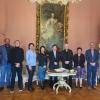
Japan’s Minister of Environment visits IIASA
IIASA had the great honor of welcoming His Excellency Mr. Keiichiro Asao, Minister of the Environment and Minister of State for Nuclear Emergency Preparedness of Japan, for a high-level visit and strategic dialogue with IIASA leadership and researchers.
21 February 2025
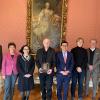
Vietnamese Ambassador and IIASA discuss strengthening research collaboration
On 14 February 2025, IIASA welcomed H.E. Ambassador Vu Le Thai Hoang, Permanent Representative of the Socialist Republic of Vietnam to the International Organizations in Vienna, to explore advancing research cooperation between IIASA and Vietnam.
07 February 2025
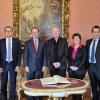
Mexican Ambassador visits IIASA
On 3 February 2025, IIASA had the honor of welcoming H.E. Ambassador José Antonio Zabalgoitia, Permanent Representative of the United Mexican States to the International Organizations in Vienna. The visit marked an important step in reinforcing the longstanding relationship between IIASA and Mexico in addressing global challenges through scientific collaboration.
Events
Prague, Czech Republic
IIASA at the Concluding Meeting of the 32nd OSCE Economic and Environmental Forum
Articles

Annual Report 2025
Annual Report 2025: Science Diplomacy Highlights
In 2025, IIASA reinforced its role as a trusted actor in science diplomacy by deepening engagement with international institutions and supporting research‑informed policy dialogue across global platforms.

Annual Report 2024
Annual Report 2024: Science Diplomacy Highlights
In 2024, IIASA strengthened its position as a trusted science diplomacy actor by deepening engagement with international institutions and supporting evidence-based policy dialogue across global platforms.
Annual Report 2023
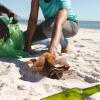
Improving national SDG reporting through citizen science
Working with IIASA researchers, Ghana pioneered the adoption of a citizen science approach to address the problem of plastic pollution in marine environments. Further analysis highlighted how a similar citizen science data validation and reporting process can benefit reporting on the Sustainable Development Goals (SDGs) in other countries.