
Story ideas, media briefings, and press releases specifically for media. If you are a journalist, you can subscribe to receive upcoming press releases by email.
Press Releases

04 February 2026
An integrated, society-centered approach to reducing pollution in European cities
End of January saw the launch of the new EU-funded ATMOPOLIS project, an innovative study that integrates environmental and social sciences to understand how air and noise pollution exposure affect citizens across European cities and propose actions to help improve their quality of life. IIASA researchers are leading a work package to develop an integrated decision support tool for cities.

02 February 2026
Education matters more than income to reduce premature adult mortality in India
IIASA researchers explored why mortality among adults of working age remains high in India alongside rapid economic growth, finding that education – at both individual and community levels – is more strongly associated with lower premature mortality than income or household wealth.
27 January 2026
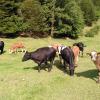
Heatwaves could put millions of European cattle at risk by mid-century
Within the next few decades, intensifying heatwaves could expose a significant share of Europe’s cattle to dangerous levels of heat stress. New research maps where and how millions of animals may be affected by mid-century.

26 January 2026
Citizen science and the challenge of measuring urban sustainability
Cities are expected to track sustainability progress with data that are often incomplete, outdated, or available only at national level. New research led by IIASA in collaboration with UN-Habitat finds that citizen science could address these gaps and support nearly 70% of global sustainability indicators, yet is currently used in only 4% of cases.

22 January 2026
China can meet its rapidly growing cooling demand without heating the planet
China’s rising demand for cooling doesn’t have to drive rising temperatures. A new study shows how rapid shifts to cleaner refrigerants and high-efficiency technologies could cut cooling-related climate impacts to near zero by mid-century.

14 January 2026
Rethinking climate impacts through human wellbeing
A new study by IIASA researchers offers a pioneering way to understand how climate change affects people’s lives over the long term. Using a global model and the Years of Good Life (YoGL) metric, the research shows that today’s emissions shape future wellbeing, especially for younger generations.

12 January 2026
Trees4Adapt project to address risks from climate change and biodiversity loss through tree-based solutions
Researchers from the IIASA Biodiversity and Natural Resources Program are involved in the recently launched EU-funded Trees4Adapt project. The project focuses on tree-based solutions for climate adaptation, aiming to strengthen Europe’s adaptation and resilience to climate change in a way that supports people and nature.
09 January 2026
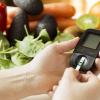
Diabetes costs the global economy trillions
Diabetes mellitus is a chronic metabolic disorder and one of the most prevalent non-communicable diseases worldwide. On average, one in ten adults is affected. The number of people living with diabetes continues to rise, posing an increasing challenge for healthcare systems and entire economies. A new study reveals the global and national economic costs of diabetes and offers strategies to reduce them.

08 January 2026
Global data gaps highlight why citizen science has now become essential for official statistics
A commentary coauthored by IIASA experts and senior representatives from the UN and the international statistics community discusses the implications of recent changes to the Demographic and Health Surveys (DHS) program and highlights the importance of integrating citizen science more fully into official data systems