
Story ideas, media briefings, and press releases specifically for media. If you are a journalist, you can subscribe to receive upcoming press releases by email.
Press Releases
07 May 2025
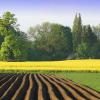
Intensifying farmland could degrade biodiversity more than expansion
The intensification of existing farmland can sometimes be more harmful to local biodiversity than expanding the area covered by agricultural land, according to new research just published in Nature Ecology and Evolution.

07 May 2025
The world’s wealthiest 10% caused two thirds of global warming since 1990
Wealthy individuals have a higher carbon footprint. A new study published in Nature Climate Change quantifies the climate outcomes of these inequalities. It finds that the world’s wealthiest 10% are responsible for two thirds of observed global warming since 1990 and the resulting increases in climate extremes such as heatwaves and droughts.

28 April 2025
Balancing nature restoration and land use: a path to sustainable growth in the EU
Can nature restoration and economic productivity go hand in hand? A new study finds that the EU’s ambitious Nature Restoration Regulation (NRR) is essential to achieving biodiversity conservation and climate mitigation targets and that it could be implemented without compromising the supply of agricultural and forest products.

17 March 2025
Addressing the needs of vulnerable populations unable to move away from climate risk areas
People in informal settlements, urban deprived areas, refugee camps, prisons, and war zones can be particularly vulnerable to climate threats and natural hazards. A new study, led by IIASA researchers, explores how policymakers can ease their burden.

06 February 2025
Rethinking energy demand can foster sustainable development and reduce emissions from buildings and transport
In a new study, IIASA scientists show that a mix of policy measures, including both technological solutions and behavioral changes, can significantly reduce greenhouse gas (GHG) emissions from energy use in buildings and transport.

05 February 2025
Gender equality is crucial for a climate resilient future
A new IIASA study shows why gender equality trends should be central when planning how societies adapt to and mitigate climate change. A society where women have little access to decision-making or finance or have less education, will be ill-equipped to find and implement solutions, ranging from concrete measures like irrigation or crop rotation, to behavior shifts and engineering the energy transition. We need to ask the “what-if” questions related to progress towards equality or deterioration of inequality. One thing is clear: gender inequality will have a high price if neglected.

16 December 2024
The collaborative power of AI and citizen science in advancing the Sustainable Development Goals
Citizen science and artificial intelligence (AI) offer immense potential for tackling urgent sustainability challenges, from health to climate change. Combined, they offer innovative solutions to accelerate progress on the UN Sustainable Development Goals (SDGs). IIASA researchers explored the synergies between citizen science and AI, specifically highlighting how the integration of citizen science data and approaches into AI can enhance sustainable development monitoring and achievement while mitigating AI risks.

03 December 2024
MINE-THE-GAP: Advancing responsible mining monitoring with satellite data and AI
As global demand for raw materials intensifies due to the material needs of digitalization and decarbonization, the new MINE-THE-GAP project aims to address a critical knowledge gap in mining's environmental and social impacts by creating scalable, reliable mining indicators using advanced satellite data and artificial intelligence (AI).
26 November 2024
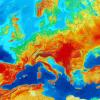
Mapping the world's climate danger zones
With 2024 on track to be declared the hottest on record, scientists from IIASA and Columbia University have noticed that specific regions are consistently more affected by extreme temperatures. A new study provides the first worldwide map of these regional climate danger zones.