The following statistics are from the last 5 full calendar years: 2021-2025
Publications
Projects
Engagement
28
Number of times participants from Pakistan joined IIASA events
13
Number of times visitors from Pakistan came to IIASA
8
IIASA staff visits to Pakistan
People
3
- Women
- Men
Staff members from Pakistan
1
- Women
- Men
Postdoctoral researchers from Pakistan
1
- Women
- Men
YSSPers from Pakistan
29
- Women
- Men
Total number of alumni from Pakistan
News

09 December 2024
IIASA model helps Asian Development Bank quantify costs of low-carbon transition in Pakistan
In a recent report, the Asian Development Bank (ADB) concluded that Pakistan will require $391 billion to achieve the low-carbon transition by 2050. The report uses the IIASA MESSAGEix framework to analyze the low-carbon transition pathways in Pakistan, the energy sector, the greenhouse gas emissions, and the associated challenges.
20 July 2021
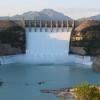
The Indus basin: untapped potential for long-term energy storage
Hydropower has massive potential as a source of clean electricity, and the Indus basin can be a key player in fulfilling long-term energy storage demands across Africa, Asia, Europe, and the Middle East. IIASA researchers explored the role the Indus basin could play to support global sustainable development.

22 March 2021
The value of cooperation for sustainable development in transboundary river basins
Can cooperation across sectors and countries help to achieve sustainable development? How do stakeholders in the Indus and Zambezi basins envision the future and how can they make that future a reality? IIASA researchers looked into these questions as part of a large-scale initiative with international partners.
Events
Lahore University of Management Sciences (LUMS), Pakistan
NEXUS Summit: Harmonizing Energy, Water, and Agriculture Systems for a Low Emissions Future
IIASA, Laxenburg
Ambassador of Pakistan visits IIASA
Focus

Annual Report 2025: Policy Impact Highlights
As part of its mission, IIASA provides scientific guidance to policymakers by applying systems analysis to global challenges.

27 April 2026
Cleaning the air in South Asia: Why science and cooperation matter
IIASA researchers Pallav Purohit and Zbigniew Klimont examined the urgent challenge of air pollution in South Asia and the opportunities to address it through science-based policy and regional cooperation. In the run-up to the recent International Vienna Energy and Climate Forum, they drew on recent research and real-world examples to highlight how integrated approaches to energy, climate, and air quality can deliver cleaner air, improved health, and more resilient economies for nearly one billion people.
Projects
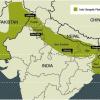
Air Quality Management in the Indo-Gangetic Plain and Himalayan Foothills (GAINS-IGP-HF)