The following statistics are from the last 5 full calendar years: 2021-2025
Publications
1
Publications about Mozambique
| Title | Type | Publisher | Date Sort ascending | Journal |
|---|---|---|---|---|
| Comparative validation of recent 10 m-resolution global land cover maps | article | Remote Sensing of Environment |
3
Publications co-authored with institutions in Mozambique
| Title | Type | Publisher | Date Sort ascending | Journal |
|---|---|---|---|---|
| Biodiversity–production feedback effects lead to intensification traps in agricultural landscapes | article | Nature Publishing Group | Nature Ecology & Evolution | |
| Tropical dry woodland loss occurs disproportionately in areas of highest conservation value | article | Wiley-Blackwell | Global Change Biology | |
| Social considerations are crucial to success in implementing the 30×30 global conservation target | article | Springer Nature | Nature Ecology & Evolution |
0
Publications by IIASA researchers from Mozambique
Projects
257
Projects related to Mozambique
| Name | Start | End Sort ascending | Abbreviation | Classification |
|---|---|---|---|---|
| Delivering Incentives to End Deforestation: Global Ambition, Private/Public Finance, and Zero-Deforestation Supply Chains | 2016 | 2021 | ZDSC | Global |
| OECD TRADE: The Economic and Environmental Consequences of Confronting Climate Change in the Agricultural Sector through Trade | 2020 | 2021 | OECD TRADE | Global |
| Coordination of International Research Cooperation on soil CArbon Sequestration in Agriculture | 2017 | 2021 | CIRCASA | Global |
| Protecting forests by catalyzing corporate and financial reforms | 2020 | 2021 | Orbitas | Global |
| Barry Callebaut YSSP fellowship | 2021 | 2021 | BCallebaut YSSP | Global |
| Citizen Science and Health related SDG-indicators | 2021 | 2021 | CS-SDG-Health | Global |
| IPCC 6th Assessment Report Review - Chapters review | 2020 | 2021 | IPCC Chapters | Global |
| Strengthening and facilitating the science-policy dialogue on climate change impacts through stakeholder engagement in ISIMIP 3 | 2017 | 2021 | ISIPEDIA | Global |
| CCI+ BIOMASS PHASE I, II | 2018 | 2021 | CCI BIOMASS | Global |
| Water and land management trajectories – best bet options for sustainable agricultural intensification | 2020 | 2021 | WaterLand_Cap | Global |
Pagination
1
Projects sponsored by funders from Mozambique
| Name | Start | End Sort ascending | Abbreviation | Funder |
|---|---|---|---|---|
| MOZPSA: UNFPA Mozambique Population Situation Analysis | 2024 | 2026 | MOZPSA | United Nations Population Fund (UNFPA) |
Engagement
2
Number of times participants from Mozambique joined IIASA events
3
IIASA staff visits to Mozambique
People
3
- Women
- Men
- Unknown
Total number of alumni from Mozambique
News
02 June 2026
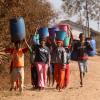
Climate-driven drought linked to rising violence among adolescents in Southern Africa
New research from IIASA and the University of Oxford provides the first quantitative evidence that drought exposure over the last 12 months is associated with increased risk of sexual, emotional, and physical violence among adolescents in Southern Africa. This risk rises substantially during cumulative droughts over two years.
18 May 2026
African Human Capital Data Sheet 2026
The African Human Capital Data Sheet 2026: Past Trends, Skills, and Future Pathways presents new evidence on population trends by level of education, skills, and demographic transitions across the African continent.
Focus

Annual Report 2024
Annual Report 2024: Policy Impact Highlights
As part of its mission, IIASA aims to provide scientific guidance to policymakers by finding solutions to global problems through applied systems analysis. Through interdisciplinary research and international collaboration, the Institute delivers independent, science-based insights into critical policy issues, supporting evidence-informed decision-making on challenges such as climate change, energy security, and sustainable development.

Annual Report 2024
Annual Report 2024: Biodiversity and Natural Resources Program Highlights
Over the past year, the Biodiversity and Natural Resources Program has made significant strides in advancing our understanding of the complex relationships between ecosystems, land use, and climate.