The following statistics are from the last 5 full calendar years: 2021-2025
Publications
Projects
Engagement
143
Number of times participants from Italy joined IIASA events
45
Number of times visitors from Italy came to IIASA
344
IIASA staff visits to Italy
People
52
- Women
- Men
Staff members from Italy
12
- Women
- Men
Postdoctoral researchers from Italy
13
- Women
- Men
YSSPers from Italy
135
- Women
- Men
- Unknown
Total number of alumni from Italy
News
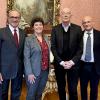
09 December 2025
Expanding horizons for scientific engagement in Italy
On 3 December 2025, H.E. Ambassador Giovanni Pugliese and Scientific Counselor Amedeo Staiano of the Italian Embassy in Austria visited IIASA for discussions on strengthening scientific engagement between Italy and the Institute.

14 February 2025
Strengthening citizen science and sustainability monitoring in Europe
Researchers from the IIASA Novel Data Ecosystems for Sustainability (NODES) Research Group are part of the newly launched RIECS-Concept (Towards A Pan-European Research Infrastructure for Excellent Citizen Science), a project designed to develop a conceptual framework for a pan-European citizen science research infrastructure. The initiative aims to enhance the role of citizen science in data collection, validation, and policy engagement, ensuring long-term sustainability and broader participation in scientific research across Europe.

13 February 2023
French and Italian ambassadors visit IIASA
H.E. Gilles Pécout, Ambassador of the French Republic to the Republic of Austria, and H.E. Stefano Beltrame, Ambassador of the Italian Republic to the Republic of Austria, recently paid a joint visit to IIASA to meet with the institute’s leadership and discuss possible research collaboration between their countries and IIASA.
Events
Loveno di Menaggio, Italy
The Europeans of the 21st century
FAO Headquarters, Rome, Italy and online
Launch of Global Agro-Ecological Zoning V5 and signing of MoU with FAO
Focus

31 July 2026
When demographic decline becomes a democratic question
In a new Expert Voices article published in Science, IIASA Population and Just Societies Program Director, Anne Goujon examines the concept of “dejuvenation” – the declining demographic, economic, cultural, and political weight of younger generations – and asks how aging societies can ensure that young people and future generations have a meaningful voice in shaping the decisions that will affect them most.

21 July 2026
One climate forecast, many online conversations
What happens when an El Niño forecast reaches social media? Drawing on two recent studies, IIASA researchers Dmitry Erokhin and Nadejda Komendantova explore how the same climate information is discussed differently across online platforms and why those differences matter for climate communication and resilience.
Projects

Transformative Innovation for Climate Change Adaptation in the Danube Region (TiCCA4Danu)
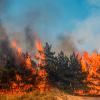
Systems approach to EU wildfire risk management project (FIRELOGUE)

'According to nature' - solutions to reduce risk in mountain landscapes (PHUSICOS)