
The transition to a low-carbon future requires both ambitious action and a clear understanding of what works. In 2025, the Energy, Climate, and Environment Program produced research that helped clarify the opportunities, trade-offs, and practical pathways for accelerating climate mitigation and strengthening environmental sustainability.

Safe underground carbon storage may cut warming by just 0.7°C – far less than earlier estimates
Storing carbon underground is often seen as a key climate solution. IIASA research shows its safe, practical potential is far more limited than previously assumed.
Carbon capture and storage (CCS) has long been promoted as a powerful tool to tackle climate change. However, an IIASA-led study reveals that the amount of carbon dioxide that can be safely stored underground is much smaller than earlier estimates suggested.
By mapping geological formations worldwide and accounting for risks such as earthquakes and groundwater contamination, the researchers identified a “prudent” global storage capacity of around 1,460 billion tons of CO₂. This is almost ten times lower than previous estimates that did not fully consider environmental and safety constraints.
The study also shows that even if all safe storage capacity were used exclusively to remove carbon from the atmosphere, it would reduce global warming by only about 0.7°C – far less than earlier projections of up to 6°C.
“We can conclude that carbon storage should be treated as an exhaustible, intergenerational resource, requiring responsible management,” says lead author Matthew Gidden. “Hard choices must be made about how and where it is used.”
The findings highlight a clear gap between what is technically possible and what is safe in practice. They also raise important questions about fairness, as countries with the largest fossil fuel industries often have the greatest storage potential.
The study underscores that carbon storage can support climate action but cannot replace rapid and sustained reductions in greenhouse gas emissions.
Further information: pure.iiasa.ac.at/20859

Cutting emissions by rethinking energy demand
Reducing energy demand helps bring down greenhouse gas emissions and increases energy security. IIASA research shows that demand-side policies in buildings and transport could deliver major benefits.
Energy use in buildings and transport accounts for more than 20% of global greenhouse gas emissions. A series of recent studies involving IIASA researchers show that rethinking energy demand through a mix of technology, policy, and behavior can reduce these emissions.
A scoping study found that comprehensive demand-side strategies could cut emissions from buildings by 51–85% and from transport by 37–91%, compared to current policy pathways. Measures such as heat pumps, insulation, and shifts toward public transport not only reduce emissions but also improve air quality, energy security, and overall wellbeing.
Diving deeper into European buildings highlights the importance of targeted policy design. Existing measures, such as emissions trading, are not sufficient on their own. Instead, combining carbon pricing with strong incentives for heat pumps and support for building insulation can deliver more effective and cost-efficient decarbonization.
Finally, harvesting this potential requires scaling up already available demand-side policies in an integrated policy approach. Coordinated policy packages combining technological innovation, behavioral change, and targeted incentives are essential to unlock the full potential of demand-side action and accelerate progress toward net-zero emissions.
Further information: pure.iiasa.ac.at/20388, pure.iiasa.ac.at/20653, pure.iiasa.ac.at/20567

Wealth inequality drives climate extremes
Who is responsible for climate change and its impacts? IIASA research shows that global warming is linked to income inequality, with the richest individuals around the world driving a disproportionate share of emissions and associated climate impacts.
The study examined the link between income inequality and climate impacts, finding that emissions from the richest individuals around the world are closely tied to increases in extreme events such as heatwaves and droughts both within and outside the regions they reside.
Using a novel modeling framework that combines economic and emissions data with rapid climate impact emulation, the researchers traced emissions across global income groups and assessed their contribution to modeled climate extremes. The results show that the top 1% of emitters contributed 26 times more than the global average to extreme heat events and 17 times more to droughts in the Amazon.
These impacts are felt most strongly in vulnerable regions, including parts of Southeast Asia and southern Africa – areas that have contributed least to global emissions. The findings highlight how the consumption and investment patterns of wealthy individuals shape climate risks worldwide.
“If everyone had emitted like the bottom 50% of the global population, the world would have seen minimal additional warming since 1990,” says Carl‑Friedrich Schleussner, a coauthor of the study.
The study also emphasizes the importance of emissions linked to financial investments, suggesting that targeting high-income portfolios could significantly reduce global emissions.
The findings point to the need for more equitable climate policies that reign in the ultra-rich around the world and support vulnerable communities.
Further information: pure.iiasa.ac.at/20568
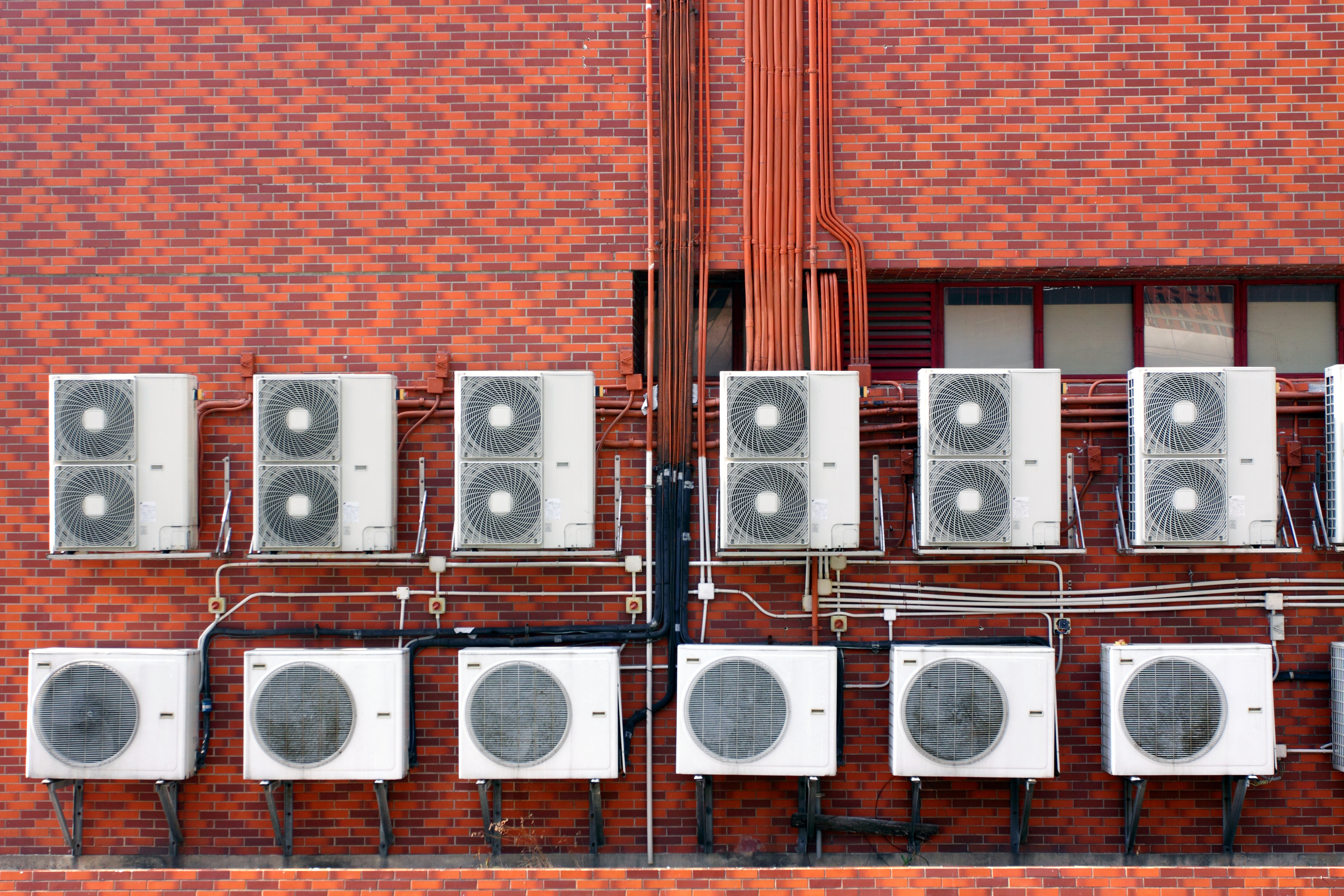
Advancing climate action in the cooling sector
Managing refrigerants and cooling technologies represents a major, yet underutilized, opportunity for climate mitigation. IIASA research shows that improved lifecycle management of refrigerants, combined with faster transitions to lower global warming potential and natural refrigerant alternatives and energy-efficient cooling technologies, can deliver substantial, cost-effective emission reductions.
Two recent studies highlighted how improved management of fluorocarbons – chemicals widely used in cooling technologies – can significantly reduce greenhouse gas emissions while providing additional environmental benefits. One study found that enhanced lifecycle management of “banked” fluorocarbons could avoid up to eight gigatons of CO₂-equivalent emissions in China by 2060. Much of this mitigation could be achieved at very low cost, while enabling reuse of materials and reducing the need for new production.
A second study focused on China’s rapidly growing cooling sector. It shows that combining a phase down of high impact refrigerants with improvements in energy efficiency could reduce emissions by over 12 gigatons of CO₂-equivalent, while also lowering air pollution and energy demand. Together, these measures could reduce global warming by up to 0.015°C by 2060.
“Fluorocarbon management offers a clear opportunity to deliver large scale emission reductions at relatively low cost,” says Pallav Purohit, coauthor of both studies. “By combining improved lifecycle management with efficient cooling technologies, we can achieve significant climate and air quality benefits.”
Together, these findings highlight that targeted action in the cooling sector can play a critical role in closing the global emissions gap while supporting sustainable development.
Further information: pure.iiasa.ac.at/20783, pure.iiasa.ac.at/21295