


RISKREACT focuses on understanding the complex interactions between climate risks, biodiversity loss, and societal vulnerabilities, and how these interconnected risks affect ecosystems and communities across Norway.
 © Dreamstime
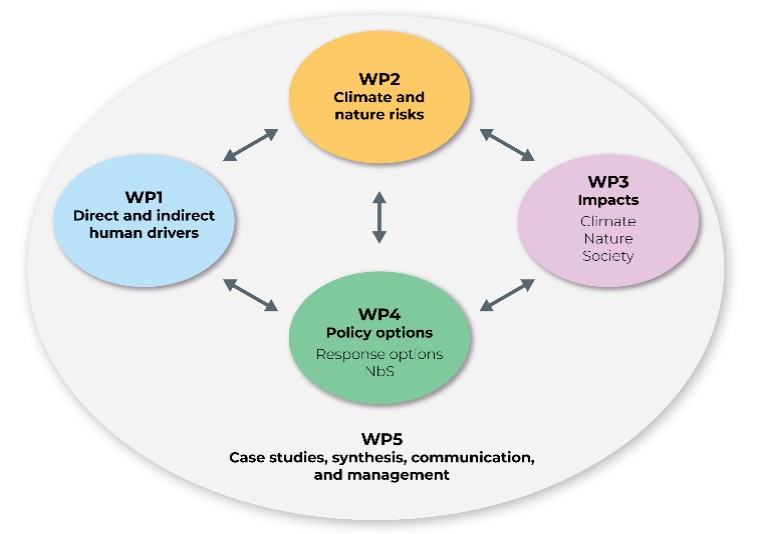
A central objective of the project is to develop a conceptual risk assessment framework that helps policymakers and practitioners better understand, assess, and respond to these interconnected challenges. The project also evaluates how different policy options, management approaches, and nature-based solutions (NbS) can contribute to preventing, limiting, or adapting to climate and nature risks at regional and municipal levels. Through a combination of national-scale analyses and case studies in Innlandet County and Bergen Municipality, RISKREACT aims to generate actionable knowledge that supports more resilient, sustainable, and integrated decision-making across governance levels.
Public engagement & communication
Public engagement, communication, and knowledge transfer are central components of the RISKREACT project. A dedicated Communication and Dissemination Plan (CDP) will guide outreach activities throughout the project, identifying key target audiences, communication channels, and dissemination measures to ensure that project findings reach policymakers, practitioners, researchers, and the broader public. Results will be shared through open-access scientific publications, policy briefs, conferences, workshops, webinars, and stakeholder-oriented communication activities.
The project places a strong emphasis on collaboration and dialogue across governance levels and sectors. RISKREACT will actively engage with national and international networks, including KLIMA-2050 and NetworkNature, and contribute to public-facing initiatives such as webinars, popular science articles, and presentations at events including Arendalsuka. Communication activities will also support knowledge exchange between research and practice through co-created outputs and stakeholder engagement processes.
As part of its international collaboration activities, the project will organise a study trip to IIASA in 2027, providing consortium members and stakeholders with opportunities for exchange on climate and nature risk assessment, systems thinking, and governance approaches. The project will conclude with a final scientific and stakeholder conference in Norway to share lessons learned and support uptake of the project’s findings in 2029.
IIASA contribution & context
IIASA researchers Thomas Schinko and Juliette Martin are involved in the project’s interdisciplinary work on interconnected climate and societal risks. IIASA contributes methodological expertise on systemic climate and nature risk assessment, with a particular focus on identifying leverage points, governance enablers and barriers, and interactions within complex socio-ecological systems. Using approaches such as Qualitative Systems Mapping (QSM) and systems analysis, IIASA supports the analysis of interconnected drivers, cascading risks, and policy intervention points, while also examining institutional, financial, and cross-sectoral factors influencing the implementation of adaptation measures and nature-based solutions (NbS). This work helps identify more integrated and effective governance strategies to strengthen resilience and long-term adaptive capacity across governance levels.
RISKREACT strengthens collaboration between Norwegian and Austrian research institutes and contributes to international knowledge exchange on climate and nature risks. Through its interdisciplinary approach and policy relevance, the project aligns closely with IIASA’s mission to advance systems-based research supporting sustainable and science-informed decision-making at regional and international scales.
 © RISKREACT
Methodology & approach
RISKREACT combines interdisciplinary environmental research, risk assessment, and governance analysis to better understand interconnected climate and nature risks and their impacts on ecosystems and society. The project integrates analyses of direct and indirect drivers of change, cumulative and cascading risks, and policy responses across multiple governance levels. Using a systems-oriented approach, IIASA will contribute to a conceptual risk assessment framework that links environmental, societal, and governance dimensions of risk. The framework is co-developed through collaboration between research institutions, stakeholders, and policy actors to ensure practical relevance and applicability for regional and municipal decision-making.
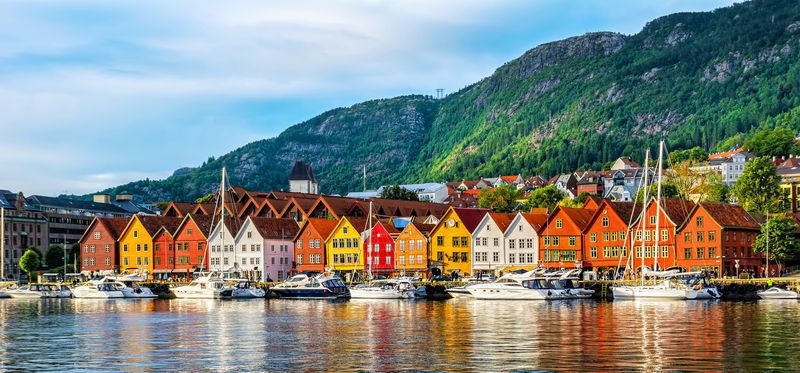
Research activities combine national-scale analyses with two Norwegian case studies in Innlandet County and Bergen Municipality, where stakeholder workshops and interviews will be undertaken.
Expected outputs & impacts
- Strengthens understanding of interconnected climate and nature risks
- Supports evidence-based policymaking in Norway
- Focuses on climate adaptation, biodiversity, and risk governance
- Enhances resilience through better understanding of cascading risks
- Aligns with the UN Sustainable Development Goals:
- SDG 13 – Climate Action
- SDG 15 – Life on Land
- SDG 11 – Sustainable Cities and Communities
 © The Research Council of Norway
This project has received funding from the Research Council of Norway (FORSKER25), Project number: 358532.