



The world is running out of time to meet the goals of the 2030 Agenda and the Paris Agreement, and siloed approaches to climate and development will not be enough. IIASA researchers contributed to the Third Global Report on Climate and SDG Synergies, which demonstrates how integrated action can unlock large-scale efficiencies, making limited resources go further while delivering multiple benefits for people and the planet.
With just five years remaining to achieve the 2030 Agenda and the Paris Agreement goals, the world is lagging dangerously behind: only 35% of the Sustainable Development Goal (SDG) targets are on track or showing moderate progress, while nearly two-thirds are showing limited progress or even regressing. On the climate front, emissions would need to fall by 7.5% annually until 2035 to stay within the 1.5°C limit, yet global greenhouse gases continue to rise, with escalating impacts putting the SDGs at risk.
The Third Global Report on Climate and SDG Synergies, prepared by the independent Expert Group co-convened by the United Nations Department of Economic and Social Affairs (UNDESA) and the United Nations Framework Convention on Climate Change (UNFCCC), quantifies the immense potential of integrated action.
Co-led by IIASA Emeritus Research Scholar and Senior Advisor to the IIASA Advancing Systems Analysis Program, Luis Gomez-Echeverri, and Heide Hackmann of Stellenbosch University, the report shows that acting jointly on climate and sustainable development can unlock efficiencies at scale. By integrating action, governments can achieve almost 40% greater efficiency in spending, freeing up resources and maximizing co-benefits across people, planet, and prosperity. With annual financing gaps for the SDGs and climate action together measured in the trillions of dollars, the report emphasizes that synergy is not optional but the most effective path forward.
The authors also emphasize that synergistic approaches can be tailored to national priorities, ensuring that resources are directed where they are needed most and avoiding duplication of efforts. This alignment can help countries meet local and global commitments more fairly and efficiently. At the same time, the report highlights the importance of investing in adaptation, which is inherently linked to development and generates co-benefits for livelihoods, health, infrastructure, and resilience.
Private sector engagement is identified as critical for scaling synergistic strategies. By aligning incentives, demonstrating economic value, and reducing risks, governments can attract private investment to complement public resources and magnify the impact of integrated action.
In addition to global modeling, the report draws insights from thematic studies on biodiversity, cities, and finance. Conserving ecosystems and expanding nature-based solutions can stabilize climate and health systems, though current financing remains insufficient. Cities, which drive most global emissions but also concentrate resources, present opportunities for rapid gains through cleaner energy, active mobility, healthier diets, and resilient design. Closing the vast protection gap in disaster insurance could extend coverage to billions, improving resilience at relatively modest cost.
By quantifying the benefits of integrated action, the report provides policymakers with the evidence needed to design coordinated, whole-of-government approaches. Demonstrating measurable impacts strengthens the case for ambitious, synergistic policies and informs decisions that balance trade-offs while ensuring equity.
Part of this evidence base comes from IIASA. IIASA Advancing Systems Analysis Program Director, Elena Rovenskaya, and Nikita Strelkovskii, a researcher in the same program at IIASA, conducted a modeling exercise to estimate potential synergies in government expenditures between climate and development action. Their findings demonstrate how integrated strategies could not only reduce costs but also deliver multiple co-benefits across sectors such as health, biodiversity, and urban development.
“The message of this report is simple: climate and development are inseparable,” said Gomez-Echeverri. “If countries treat them as two different agendas, they will miss opportunities, waste resources, and fall short of their goals. Integrated action is the only way forward.”
Rovenskaya emphasized the importance of the new evidence base: “Our analysis shows that synergies are not just a political aspiration but a measurable opportunity. By aligning strategies, governments can make limited resources go further, while also delivering tangible improvements for people and the planet.”
The report was officially launched on 24 September at UN Headquarters in New York during the 80th session of the UN General Assembly and will be the focus of a plenary discussion at the SDG7 Action Forum on 25 September. At this event, Gomez-Echeverri and Rovenskaya will deliver a keynote presentation on the report’s findings and recommendations.
Looking ahead, the report notes that the case for synergies will remain strong beyond 2030. As discussions on a post-2030 development framework begin, synergistic approaches will be central to ensuring that transition pathways are people-centered, just, and inclusive.
Read the full report
News

15 October 2026
MowingQuest system-test campaign 2026 concludes, data collection continues
IIASA’s MowingQuest citizen-science campaign has wrapped up its August–September 2026 system test, with 25 pioneer users submitting almost 800 observations across eight countries. The results will help improve the app and data-quality workflows ahead of the main 2027 campaign. Two participants have also won Garmin GPS watches in the campaign raffle.
06 October 2026
Nanjing University delegation visits IIASA to explore future collaboration
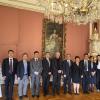
A high-level delegation from Nanjing University (NJU), led by Professor Tan Zhemin, President of NJU and Fellow of the Chinese Academy of Sciences, visited IIASA to discuss opportunities for strengthening scientific cooperation and advancing joint research on global challenges.

23 September 2026
IIASA researchers strengthen cooperation with Kyrgyzstan on AI and industrial development
IIASA Cooperation and Transformative Governance (CAT) Research Group Leader and Senior Research Scholar Nadejda Komendantova and CAT Research Scholar Dmitry Erokhin have contributed to a series of scientific and policy forums in Kyrgyzstan in 2026. Their research on artificial intelligence in the production sector builds on IIASA’s longstanding cooperation with the country on sustainable industrial development.