
IIASA is proud to announce that Christian Koeberl, IIASA Council member for Austria, has been awarded the Austrian Cross of Honour for Science and Art, First Class.
 © Silveri | IIASA
The Austrian Cross of Honour for Science and Art is awarded by the Austrian President on the recommendation of the Federal Government or a government-authorized Federal Minister. The awards honor Austrians and leading foreign figures who have “distinguished themselves and earned general acclaim through especially superior creative and commendable services in the areas of the sciences or the arts.”
Koeberl has been serving as IIASA Council member for Austria since January 2019. Apart from his continued involvement at IIASA, he is the former Director General of the Natural History Museum in Vienna, where he was responsible for increasing the quality and visibility of research at the museum, providing a larger number and greater variation of special exhibitions covering modern natural sciences, and renovating and updating the museum’s permanent exhibitions. He is a full professor of geosciences (planetary geology) at the University of Vienna, where he is also the deputy head of the Department of Lithospheric Research. He is a full member of the Austrian Academy of Sciences, where he heads the Committee on Geosciences. He has written or edited 23 books, published more than 510 peer-reviewed papers, and has received numerous awards including the Novartis Award for Chemistry, the Barringer Medal of the Meteoritical Society, and the Meteoritical Society's Service Award.
Koeberl is renowned for his research around processes and rocks related to meteor impact cratering through detailed and multidisciplinary investigations (mainly using geochemistry, petrography, and mineralogy, but also field geology and geophysics), as well as the development and testing of new methods that can be applied for such studies. He has made valuable contributions to the literature on a large number of impact structures, particularly in terms of impact geochemistry, and has in some cases contributed to the discovery of previously unknown impact craters. He even has an asteroid named in his honor – asteroid 15963 also known as “Koeberl”.
The Austrian Cross of Honour for Science and Art, First Class will be formally conferred on Koeberl by the Austrian Federal Minister for Education, Science, and Research, Martin Polaschek, during a ceremony on Monday, 24 October 2022.
IIASA extends its sincere congratulations to Christian Koeberl on this extraordinary achievement.
News
15 October 2026
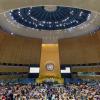
IIASA strengthens science diplomacy ties at UNGA in New York
IIASA Science Diplomacy Director and Head of Communications and External Relations Susie Kitchens represented the Institute at the United Nations General Assembly (UNGA) High-level Week and Science Summit in New York in September, contributing to discussions on how science and international cooperation can help address shared global challenges.

13 October 2026
Connecting disciplines and inspiring new ideas with the Environment and Climate Research Hub
IIASA Deputy Director General Karen Lips delivered a keynote at the University of Vienna's recent Environment and Climate Research Hub (ECH) Research Frontiers Workshop in Bad Vöslau, Austria, emphasizing the importance of interdisciplinary collaboration in addressing complex environmental and climate challenges.
12 October 2026
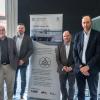
Connecting science across borders: IIASA Committee meets University of Salzburg
How can universities and international research organisations work together to address the complex challenges of a changing world? This question shaped a full day of scientific exchange at the University of Salzburg on 6 October, when the Austrian IIASA Committee met with members of the University community to discuss research, collaboration and opportunities for researchers and students.