
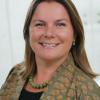



Over the past decades, researchers have revealed different dimensions of natural disaster risk with great dedication. This diversity in risk dimensions can cause conflict of opinions and interests and calls for a collaborative approach to finding the solution. This year’s Disaster Research Days focused on disaster risk reduction and invited IIASA’s CAT research group leader, Nadejda Komendantova, to share the approach they developed in the MEDiate project.
The “multi-hazard and risk informed system for enhanced local and regional disaster risk management” (MEDiate) project is dedicated to developing a robust framework that guides the co-design, co-development, implementation, and operational phases of a multi-hazard disaster resilience decision-support system. The project will provide support to policymakers and decision-makers for finding a sustainable solution to multi-natural hazards’ risk mitigation. In MEDiate, IIASA’s Cooperation and Transformative Governance (CAT) research group is leading efforts to build a cooperative and inclusive framework to find such risk mitigation solutions.
As the dynamics of natural disasters are getting impacted by global phenomena and issues like climate change and societies’ behavior, the need for international collaboration and coordination among policymakers, decision-makers, experts, and researchers has become the point of focus when it comes to natural disasters’ risk mitigation. In that spirit, “United Nations Office for Disaster Risk Reduction (UNDRR)”, “Disaster Competence Network Austria”, “European Commission’s Directorate-General for European Civil Protection and Humanitarian Aid Operations (DG ECHO)”, “Austrian Ministry of Finance”, and “Austrian Ministry of Education, Science and Research” organized this year’s Disaster Research Days to focus on “shaping the future of science and research for disaster risk reduction”. The event was held in Vienna on 8–10 October.
IIASA’s CAT research group has been invited to share the innovative approach for a cooperative and interactive Decision Support System and its core decision analysis characteristics, developed in MEDiate for finding sustainable natural hazard risk mitigation solutions and addressing local priorities and pressing issues. In this event, the CAT group’s leader, Nadejda Komendantova, showed how MEDiate built the decision model for finding locally suitable natural hazard risk mitigation strategies in a cooperative and interactive manner.
In her talk, Komendantova showed how the problem of finding risk mitigation strategies for natural hazards can be tailored to local priorities by translating the problem into a decision model. She also explained how the MEDiate framework can guide the local decision-makers, experts, and community representatives to work with each other, share their concerns, and prioritize the local issues.
For more details on Disaster research Days 2024, see here.
Read more about MEDiate project here.
News

24 September 2026
IIASA researcher joins Austrian Academy of Sciences working group on integrated carbon neutrality
On 15 September, Principal Research Scholar Thomas Schinko represented IIASA at a high-level event of the Commission on the De-Fossilization and Carbon Neutrality of the European Energy Systems (DEE) of the Austrian Academy of Sciences (OEAW). The meeting denoted the kick-off workshop of the newly established DEE Working Group "Transsectoral and Transcontinental Integration”.

10 September 2026
Hop & Mop project’s Co-creation of mini-blocks: schoolchildren’s teamwork as the center of developing ideas
Schoolchildren are the stakeholders that will be benefit from the city not only for today, but also for a long time in the future. As such it is crucial to include them in designing their environment. They have a fresh eye on spotting the issues and can think creatively and at the same time critically to come up with ideas to develop their environment. Hop & Mop project is aimed to work with the schoolchildren to design mini-block prototype in the streets near their schools.

24 August 2026
Project "G/ArtenLeben": Turning gardens into biodiversity hotspots together
How can private gardens help support biodiversity in Austria? The new IIASA citizen science project G/ArtenLeben brings science and gardening practice together. At three G/ArtenCafés in Lower Austria, hobby gardeners are invited to contribute their knowledge and experience to research and work alongside scientists to explore how gardening can help biodiversity thrive.