

Digital sector incumbents have established themselves in the artificial intelligence (AI) space through new forms of commercial partnerships. Now, antitrust authorities are raising concerns about such arrangements and the impact this will have on the future direction of AI. To discuss the latest developments, Elena Rovenskaya delivered a presentation on the adoption of systems analysis approaches to identify complex interactions between players in the digital economy.
In recent years, competition authorities have increased their scrutiny of Big Tech and other incumbents in the digital economy. The EU’s Digital Markets Act is one such strong example of the changing mood among competition authorities toward the immensely powerful digital platform ecosystems. Such regulations have especially impacted the leniency with which competition authorities used to process merger and acquisition applications from digital platform ecosystems.
However, incumbents have quickly learned to circumvent new scrutiny by entering into investment, commercial partnerships, or minority shareholder contracts rather than full acquisitions as a way of expanding their reach into new sectors. In the AI innovation space, goliaths such as Microsoft, Amazon, and Google have all quickly consolidated their presence through such partnerships. Since such partnerships are not outright mergers, they do not trigger the current thresholds in place which allow competition authorities to act in favor of consumers.
On 22 November 2024, the Fundação Getulio Vargas (FGV), School of Law in Rio de Janeiro and the BRICS Competition Law and Policy Center invited Elena Rovenskaya, Program Director of Advancing Systems Analysis (ASA), to present the latest explorations of ECOANTITRUST on systems mapping and approaches for informing new competition regulatory tools designed to detect cooperative activities between digital players. In her (virtual) presentation, Rovenskaya presented how systems mapping could transform how regulators perceive interactions between digital players and identify cooperative partnerships which fly under-the-radar of the current merger thresholds in place.
Systems mapping can help competition authorities to better navigate the interactions and resource exchanges between digital players without needing to trigger a full merger inquiry. Such interactions can be traced through company announcements, press released, and news and media publications. Furthermore, systems maps, consolidated by expert opinion, can reveal causal chains and even feedback loops. Such links, consolidated via expert opinion, could alert competition authorities of the potential negative impacts an interaction may yield for consumer welfare which would otherwise go unnoticed. Rovenskaya presented a demonstrative systems map based on the partnership between Microsoft and OpenAI. Her preliminary map which was built using news and media articles from 2023, revealed expert concerns around the potential for Microsoft to curtail the strategic independence of OpenAI. The application of systems mapping was well received by experts present at the conference.
The academic seminar also hosted discussions from reputed senior academics and competition policy experts including Cristina Caffara, Co-founder and Vice Chair, Competition Research Policy Network, Centre for Economic Policy Research (CEPR) London, Lilian Marques, Chief Economist at the Brazilian Administrative Council for Economic Defense (CADE), Alexey Ivanov, Director at the BRICS Competition Law and Policy Centre, and many others.
To read more about the ECOANTITRUST Project, click here.
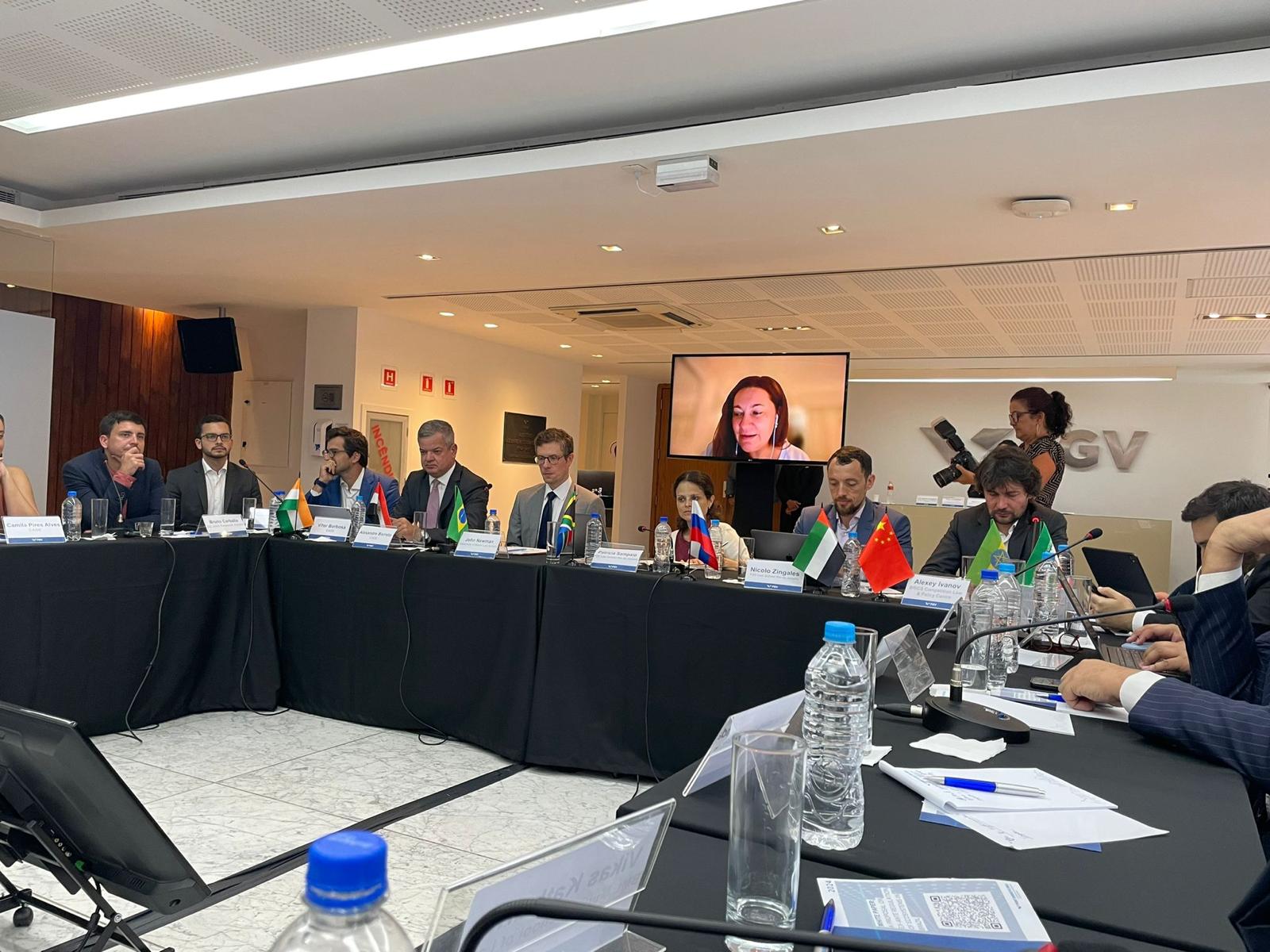 © BRICS Competition Law and Policy Centre
Elena Rovenskaya presenting the latest explorations of ECOANTITRUST on systems mapping and approaches for informing new competition regulatory tools designed to detect cooperative activities between digital players at an academic seminar in Rio de Janeiro.
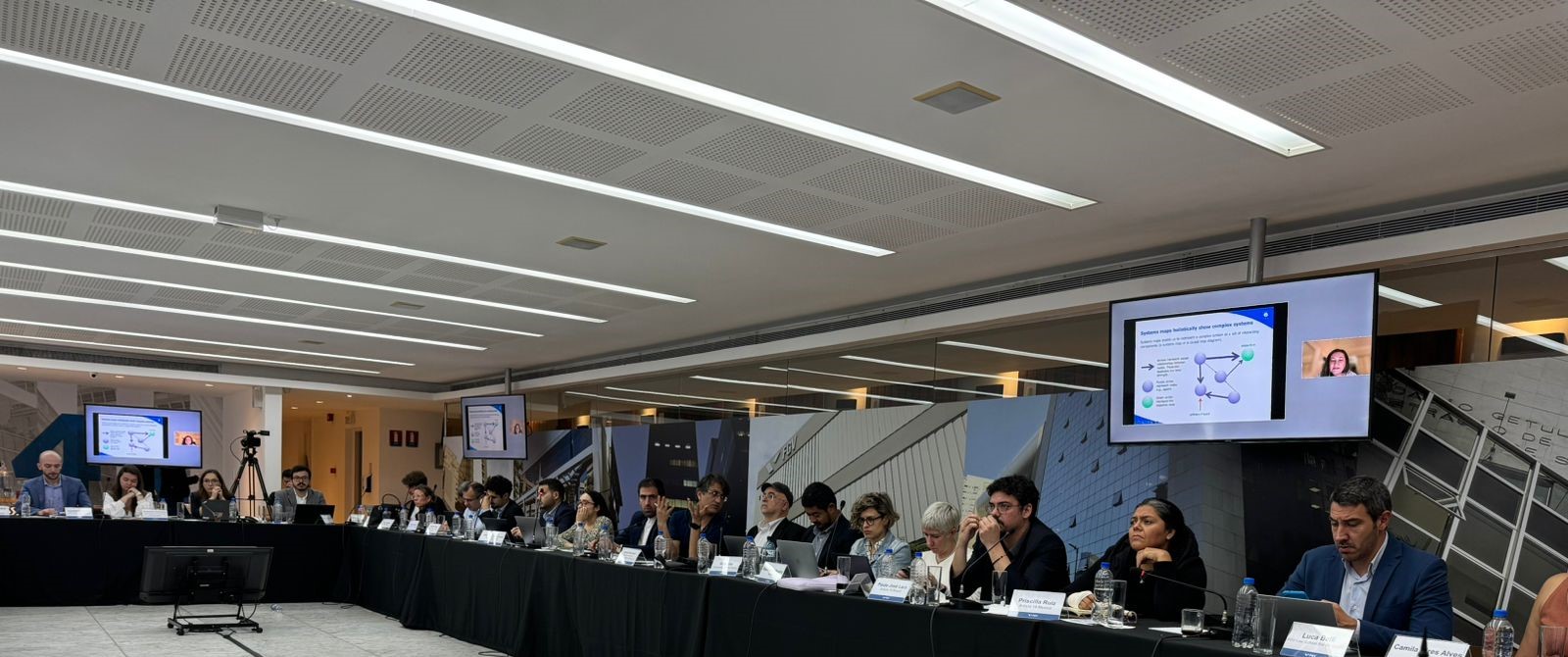 © BRICS Competition Law and Policy Centre
Elena Rovenskaya delivering her virtual presentation.
News

05 May 2026
Amazon understory forests show short-term boost in CO₂ uptake – but this comes at a cost
Tropical forests are one of the planet's most important carbon sinks – often also called "the lungs of the Earth". But their future in a high-CO₂ world remains uncertain. IIASA researchers contributed to a new study, which suggests even small understory trees in the Amazon may initially buffer climate change more strongly. Their long-term capacity to store carbon could, however, be restricted by nutrient availability, highlighting the vulnerability of these ecosystems under future climate conditions.
18 March 2026
IIASA leadership strengthens partnerships during mission to Brazil
During a recent visit to Brazil, IIASA Director General, Hans Joachim (John) Schellnhuber, and Deputy Director General, Karen Lips, met with representatives from government agencies, research institutes, universities, and NGOs to explore opportunities for collaboration on some of the world’s most pressing sustainability challenges.
28 January 2026
Science without borders: Brazilian Ambassador visits IIASA
IIASA recently welcomed H.E. Ambassador Eduardo Paes Saboia, Ambassador of Brazil to Austria, for a high-level visit to the Institute’s headquarters in Laxenburg. The visit provided an opportunity for an in-depth exchange on IIASA’s research portfolio and on future avenues for strengthening cooperation between IIASA and Brazilian institutions.