

IIASA recently welcomed H.E. Ambassador Eduardo Paes Saboia, Ambassador of Brazil to Austria, for a high-level visit to the Institute’s headquarters in Laxenburg. The visit provided an opportunity for an in-depth exchange on IIASA’s research portfolio and on future avenues for strengthening cooperation between IIASA and Brazilian institutions.
The Ambassador was accompanied by Fabio Alves Schmidt da Silva, Head of the Trade Promotion and Science Technology Section at the Embassy of Brazil in Vienna. They were received by IIASA Director General Hans Joachim (John) Schellnhuber and Deputy Director General Karen Lips, who presented IIASA’s vision, long-standing role in science diplomacy, and current collaborations with Brazil. Discussions focused on the Institute’s systems analysis expertise and its contribution to addressing interconnected global challenges, including climate change, land use, energy transitions, health, and sustainable development.
Reflecting on the visit, Schellnhuber emphasized IIASA’s role as a neutral platform for international scientific cooperation.
“IIASA was founded on the idea that science can build bridges even in times of geopolitical tension,” he said. “Our long-standing collaboration with Brazil demonstrates how systems analysis can support evidence-based solutions to complex global challenges while fostering trust and dialogue across borders.”
During the meeting, participants reflected on the strong track record of collaboration between IIASA and Brazil. Brazil was a member of IIASA from January 2011 to December 2024, with extensive engagement through joint research projects, policy-relevant modeling, capacity development initiatives, including the Young Scientists Summer Program. The discussions highlighted opportunities to revive and deepen this cooperation by leveraging IIASA’s analytical tools and Brazil’s scientific and institutional strengths to support evidence-based policymaking at national and international levels.
Karen Lips Karen Lips emphasized IIASA’s role as a platform for dialogue and exchange.
“One of IIASA’s core strengths is its role as a convening space where researchers and institutions from different regions can come together to address shared sustainability challenges,” she noted. “Latin America, and Brazil in particular, is an important part of global conversations on issues such as biodiversity, the food-energy-water nexus, and climate resilience. The visit offered a constructive opportunity to explore how such exchanges could be further strengthened, particularly through joint research, researcher exchange, and training opportunities that empower the next generation of scientists and decision makers.”
An open discussion explored concrete ways to strengthen future collaboration in areas of strategic relevance such as climate resilience, land-use change, health systems adaptation, and the use of advanced systems methodologies. The Ambassador also met with IIASA researchers from Brazil and those currently working closely with Brazilian partners, emphasizing the importance of people-to-people connections in sustaining long-term scientific cooperation.
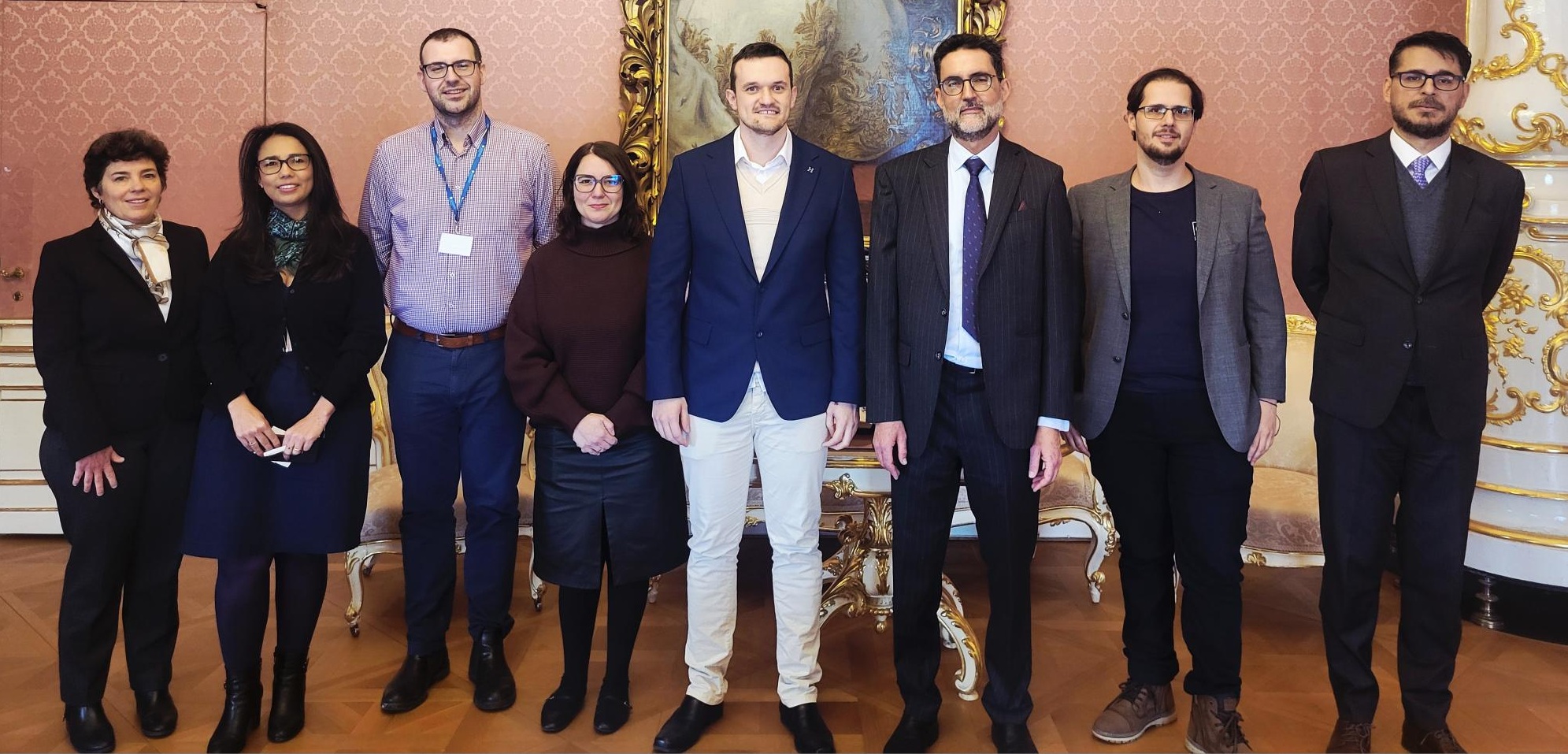 © IIASA
From left to right: IIASA Deputy Director General Karen Lips, Joelva Brandstetter (IIASA HR Officer), Robert Sakic Trogrlic (Senior Research Scholar), Raquel Guimaraes (Research Scholar), Alan Dill (Researcher), H.E. Ambassador Eduardo Paes Saboia, Thiago Brito (Researcher), Fabio Alves Schmidt da Silva.
News

05 May 2026
Amazon understory forests show short-term boost in CO₂ uptake – but this comes at a cost
Tropical forests are one of the planet's most important carbon sinks – often also called "the lungs of the Earth". But their future in a high-CO₂ world remains uncertain. IIASA researchers contributed to a new study, which suggests even small understory trees in the Amazon may initially buffer climate change more strongly. Their long-term capacity to store carbon could, however, be restricted by nutrient availability, highlighting the vulnerability of these ecosystems under future climate conditions.
18 March 2026
IIASA leadership strengthens partnerships during mission to Brazil
During a recent visit to Brazil, IIASA Director General, Hans Joachim (John) Schellnhuber, and Deputy Director General, Karen Lips, met with representatives from government agencies, research institutes, universities, and NGOs to explore opportunities for collaboration on some of the world’s most pressing sustainability challenges.

17 November 2025
Búzios Scientific Statement: Providing evidence-based insights for COP30
Against the backdrop of negotiations at COP30 in Belém, a group of leading climate scientists has released the Búzios Scientific Statement, offering a clear assessment of the world’s remaining options to return to 1.5°C of warming by the end of the century. The statement reflects growing recognition that a temporary overshoot of 1.5°C is now unavoidable, while also showing that pathways back to safer temperature levels remain open if action accelerates quickly.