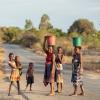
IIASA researchers have made significant contributions to the newly released Vienna Yearbook of Population Research 2024 edited by Roman Hoffmann and colleagues.

The 2024 volume of the Vienna Yearbook of Population Research delves into the intricate interactions between population dynamics and climate change, addressing one of the most pressing challenges of our time. This edition features 1 overview article, 10 peer-reviewed research articles and 7 insightful debate contributions from esteemed scholars, exploring topics such as climate change mitigation and adaptation, health impacts, mobility, fertility, differential vulnerability to climatic hazards, and climate justice. This volume underscores the critical need for demographic analysis in climate research, employing diverse methodologies—including empirical studies, models, and projections—to shed light on the complex population-climate nexus across various global regions.

The contributions of the IIASA researchers:

Climate change represents one of the most pressing challenges for societies in the 21st century. This special issue of the Vienna Yearbook of Population Research (VYPR) brings together interdisciplinary contributions from 51 authors to explore the demographic dimensions of climate change. In many ways, human populations are at the center of the current climate crisis. On the one hand, anthropogenic forces are responsible for the unprecedented changes in the climate system that are currently being observed. It is the
burning of fossil fuels that has significantly increased greenhouse gas concentrations, driving global warming and altering natural climate patterns. On the other hand, human populations are also profoundly affected by these changes, as they are facing increased risks from extreme weather events, rising sea levels and shifting ecosystems, which, in turn, impact livelihoods, food and water security, and health and well-being. This special issue provides a comprehensive overview of both the role of population as a driving force of climate change and the significance of its impacts in the areas of health and mortality, migration, and fertility and reproductive behaviors. In addition to 10 research articles, the special issue features seven debate articles by leading scholars, who provide reflections on the climate-population nexus and the role of demographic science in climate change mitigation.
Demography offers a wide range of perspectives and methodological tools to understand and address the climate-population nexus, including in the areas of health and population data, mathematical and statistical modeling, and projections. We advocate for a holistic research perspective that incorporates issues related to increasing climate risks into demographic thinking, and vice versa. A thorough understanding of the intricate relationship between populations, population dynamics and climate change is necessary for the development of effective and equitable mitigation and adaptation strategies that address both global and local challenges over time.

As the global population hit eight billion in 2022 and climate change-induced extreme events have become more visible worldwide, there has been renewed public interest in the impact of population growth on climate change. This has also sparked a debate about the role of population control policies as a key strategy to curb global warming. This essay argues that the relationship between population dynamics and climate change is highly complex, and that having specific background knowledge could be beneficial for participating in this debate. To this end, this essay presents three points that readers may wish to consider when forming their judgements: (1) the role of demographers in assessing how human population impacts climate change; (2) the importance of acknowledging the demographic heterogeneity and complexity of the relationship between human populations and climate change; and (3) the disparities in resource consumption and the resulting emissions in the context of climate justice.

Our thinking about future trends in both population and climate change has traditionally been dominated by the view of smooth trajectories towards ultimate stabilization. But reality turns out to be different: climate warming will not stop at the Paris goal of 1.5 degrees Celsius, but is expected to overshoot, and will therefore need to be addressed through negative emissions (taking carbon out of the atmosphere) later in the century; similarly, fertility decline has not stopped at the replacement level, and instead seems to be falling to lower and lower levels, with nobody knowing when it will stop and whether there will be an upturn. In both cases, societies will need to adapt to rather extreme discontinuities, rather than being able to count on smooth stabilization.
Furthermore, the reality that climate change overshooting will require serious mitigative action during the second half of this century brings alternative demographic trends back into the picture as potentially relevant factors in mitigation, since alternative fertility and education trends in the near future will take decades to be reflected in changing population sizes and structures, including in human capital.

Robust empirical evidence on the potential causal linkages between environmental change, conflict and migration is scarce. We evaluate this relationship in the context of internal migration in Colombia for the period from 2000 to 2005. Using municipality level data in a gravity model that considers the issue of endogenous selection regarding both the outbreak of conflicts and the existence of non-zero migration flows, we establish an empirical causal link between droughts, conflict and migration. Our results show a positive relationship between the severity of droughts and the likelihood of conflicts, as well as between conflicts and human mobility, suggesting an indirect effect of climate on internal migration in Colombia.

While dynamic water security models related to food and livelihood security have advanced significantly in recent decades, the inclusion of demographic variables in these models is often limited to merely population growth. As many countries have either completed or are in the process of completing the demographic transition, population growth alone may no longer be the predominant demographic variable influencing water security models. Therefore, there is a discernible need for more comprehensive water security models to consider the simultaneous impact of various demographic variables on different aspects of water security. Inspired by the contemporary environmental demography perspectives, we introduce a generic integrated framework for integrated water-population interactions (IWPI) which explores the overlooked impacts of demographic transitions on different aspects of water security. Demographic shifts can impact food and water consumption and agricultural employment. Recognizing these dynamics is essential as countries advance through demographic transitions and face mounting pressures on water resources. The Integrated Water-Population Interaction (IWPI) framework was implemented in Iran through the Water-Population System Dynamics (WPSD) model. The model shows that population size, household composition and urbanization significantly affect domestic water consumption. It also reveals how changes in educational and occupational structures impact livelihood security and food self-sufficiency under water constraints. We introduce a novel population metric for water security assessment in Iran, offering policy-makers a tool to assess and address water insecurities that can affect the population in different ways. Our findings recommend realistic food self-sufficiency targets, flexible water resource planning and policies that integrate population dynamics with water, food and livelihood security to ensure sustainable outcomes in Iran.

News

 Using data analytics to inform and create efficient and sustainable solutions for global change and public health

16 June 2026

Peking University and IIASA advance plans for a new Centre on Global Change and Health

On 28 May, Peking University (PKU) and IIASA held a joint online seminar to discuss health research under global change and to review the progress, priorities, and coordination arrangements for a proposed Centre on Global Change and Health.
Illustrative representation of the diversity of different people colored silhouettes

10 June 2026

Annual global migration has nearly tripled since 2000

Global migration has risen sharply from approximately 13 million people per year in 2000 to around 35 million people per year in 2023. This is according to a new dataset on human migration published in Nature by researchers from the London School of Economics and Political Science (LSE), IIASA, and the University of Hong Kong.
Group of senior retired friends. Happiness concept

09 June 2026

Life after work: Why social connections matter

Social networks may help protect cognitive functioning in later life, particularly among older adults who are no longer working, according to a new IIASA-led study. Drawing on data from 27 European countries, the researchers found that social connections can help compensate for the loss of mentally stimulating interactions linked to work, with different types of relationships benefiting women and men.