
The Wittgenstein Centre for Demography and Global Human Capital (IIASA, OeAW, University of Vienna) will start Master's Programme "Global Demography" at the University of Vienna with its third cohort of students in October 2023.
The principal aim of the master’s programme in Global Demography at the University of Vienna is to give students a strong scientific grounding in the analysis and forecasting of demographic developments across the globe – in particular, fertility, mortality and migration trends. Guided by leading experts in the field, students will be given the opportunity to explore the multidimensional ramifications and implications of demographic change on economic, social, and environmental issues.
Students enrolled in the Global Demography master’s programme will explore the international demographic literature, learn important methodological tools, and gain an array of transferable skills reaching beyond academia. A graduate of the Global Demography programme will thus be able to successfully deal with large volumes of complex scientific data, evaluate their practical meaning, and apply the findings to advance research and influence regional and global policymaking. Alumni will be well-prepared for a large variety of careers in academia, international organizations, NGOs, think tanks and research centres, national planning and statistical agencies, government bodies, and consultancy.
Application Period: 1 March - 17 May 2023
Start of the 1st Semester: October 2023
For more information please visit the website of the University of Vienna.
News

24 September 2026
IIASA researcher joins Austrian Academy of Sciences working group on integrated carbon neutrality
On 15 September, Principal Research Scholar Thomas Schinko represented IIASA at a high-level event of the Commission on the De-Fossilization and Carbon Neutrality of the European Energy Systems (DEE) of the Austrian Academy of Sciences (OEAW). The meeting denoted the kick-off workshop of the newly established DEE Working Group "Transsectoral and Transcontinental Integration”.

23 September 2026
Eco-Welfare Network Conference
Julia Beier participated in the first in-person Eco-Welfare Network Conference, held in Brussels from 9-11 September at the Université Libre de Bruxelles as part of the Transform-Labor project.
14 September 2026
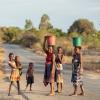
Can a warming climate put women at greater risk?
Unusually warm periods could have a link to an increased risk of intimate partner violence against women, according to a new IIASA-led study covering 31 countries in sub-Saharan Africa. The findings highlight how rising temperatures may compound existing risks of violence, with effects varying between demographic groups.