


Reflections on how circular economy modelling research can better inform policy for the transition to net-zero
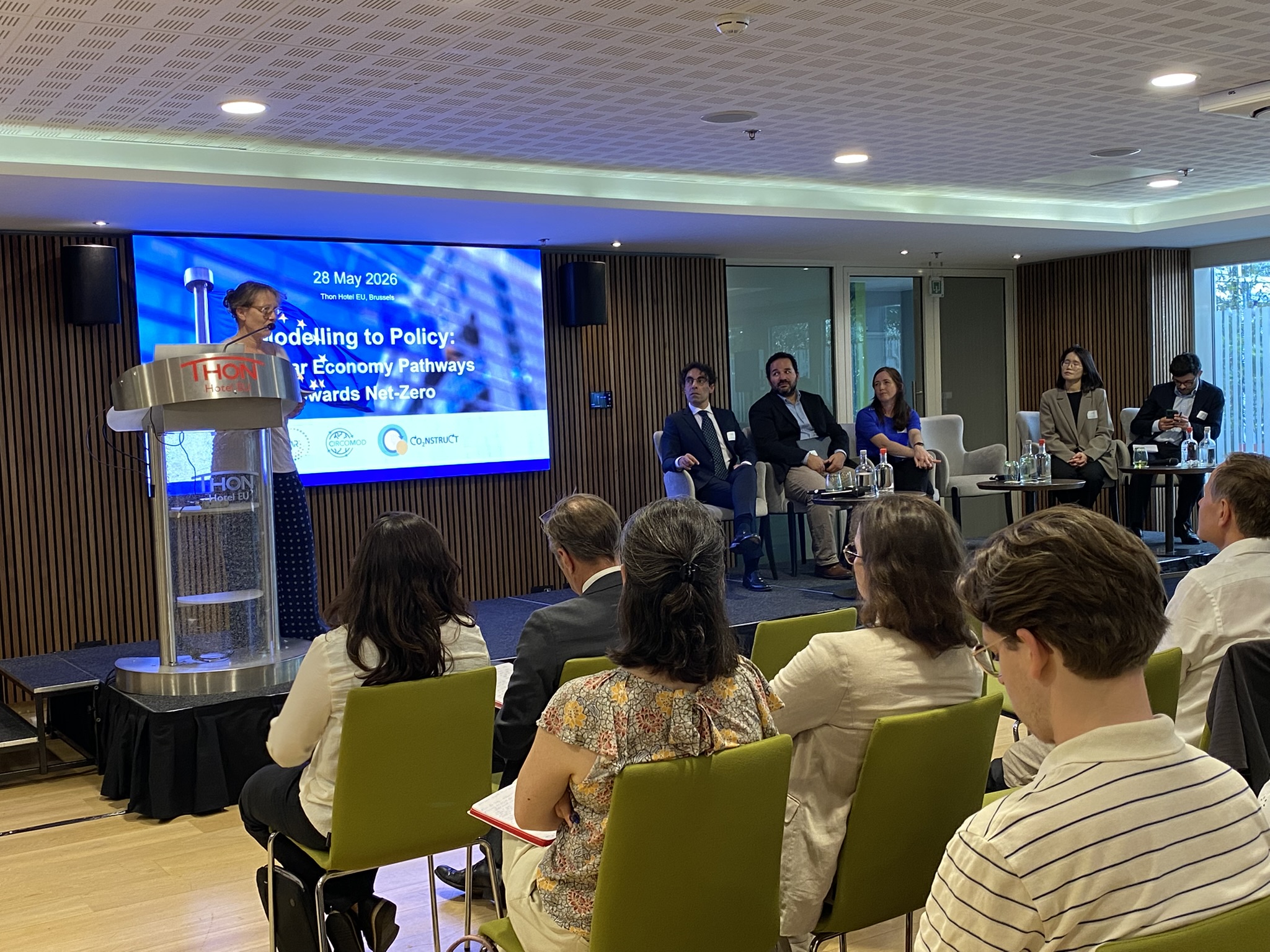
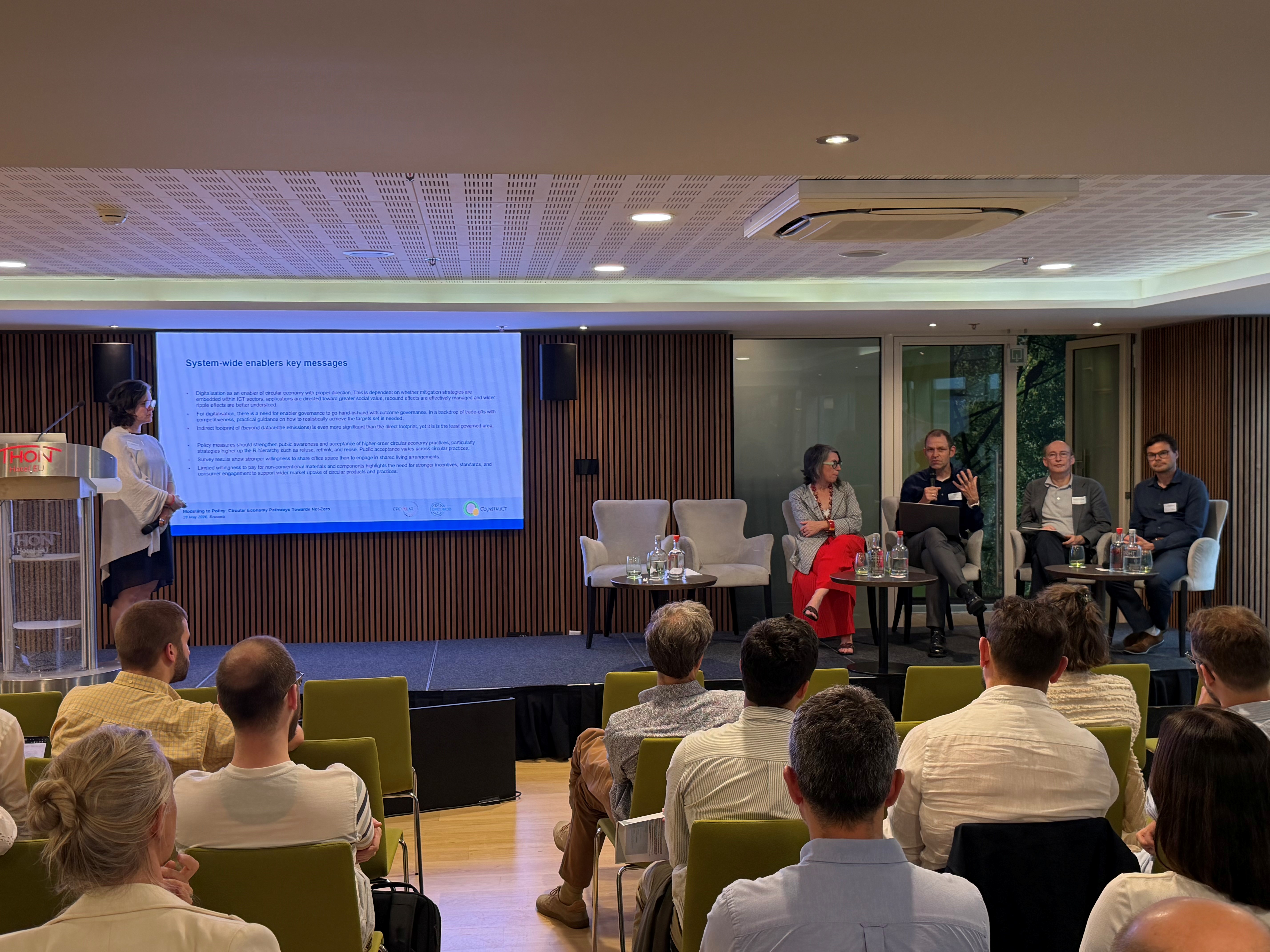
On 28 May 2026, CircEUlar, CIRCOMOD and CO2NSTRUCT brought together more than 160 participants (90 online, 72 in person) from policymaking, research, industry and civil society for their joint final event, Modelling to Policy: Circular Economy Pathways Towards Net-Zero.
Across the afternoon, participants repeatedly highlighted the need for a broader understanding of circular economy pathways. While policy discussions can sometimes focus on material recovery and recycling, the modelling evidence presented pointed to a much wider set of interventions, including sufficiency measures, service-focused solutions, lifetime extension, digitalization and behavioral change. Circular economy pathways can help Europe move further and faster towards net-zero.
The discussions unearthed more questions and pointed to the need for better alignment between modelling and policy, more transparent assumptions, stronger evidence on behavioral and macroeconomic effects, and practical attention to skills, incentives, governance and policy cycle sequencing. Participants also reflected on the importance of broadening the policy conversation around circularity. While circular economy discussions often focus on recycling and waste management, the evidence presented throughout the event highlighted the significant role that sufficiency measures, service-based approaches, lifetime extension, digitalization and behavioral change can play in reducing material demand and emissions.
The event also demonstrated both the value and the challenges of bringing together different modelling communities. Participants noted that closer coordination and synthesis of results could help strengthen future policy messages, while recognizing that each project was designed with distinct objectives, assumptions, methodologies and scales of analysis. The discussions also highlighted the complementary insights generated by different modelling approaches, including macroeconomic models, system-oriented models and material flow models, each of which illuminates different aspects of circular economy transitions and their implications for policy. At the same time, discussions highlighted that data availability remains a major constraint, particularly for material use, activity levels, building stocks and product lifetimes.
In this context, the collaboration between CircEUlar, CIRCOMOD and CO2NSTRUCT was seen as a clear strength. By sharing data and building on common evidence sources - including datasets on the European building stock – the projects were able to improve consistency and strengthen the overall evidence base. Rather than producing a single answer, these complementary perspectives provide a richer and more nuanced foundation for policymakers, helping to illuminate different pathways, trade-offs and implementation challenges.
If you missed the event, or would like to revisit the plenary discussions, the recording is available on our YouTube channel:
 © Source: circeular.org
 © Source: circeular.org
Adapted from a news item shared on the CircEUlar website.
News
21 October 2026
New UN report lays out emissions cuts needed for return to 1.5°C
IIASA researchers contributed to the UNEP Emissions Gap Report 2026: The Point of Return, which finds that urgent emissions cuts are needed to minimize global warming above 1.5°C and return to this threshold by the end of the century.

16 October 2026
Getting back on track to reduce methane emissions
A new study, led by IIASA researchers and coauthored by UNEP colleagues, finds that if governments fully implement their methane reduction plans, they could reduce global emissions by 11% between 2020 and 2030. This would reverse the current trend of increasing methane emissions, but would not be sufficient to achieve the goal of the Global Methane Pledge.
06 October 2026
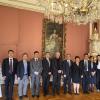
Nanjing University delegation visits IIASA to explore future collaboration
A high-level delegation from Nanjing University (NJU), led by Professor Tan Zhemin, President of NJU and Fellow of the Chinese Academy of Sciences, visited IIASA to discuss opportunities for strengthening scientific cooperation and advancing joint research on global challenges.