

IIASA Population and Just Societies Program Guest Emeritus Research Scholar Sergei Scherbov has been elected to the Academia Europaea.
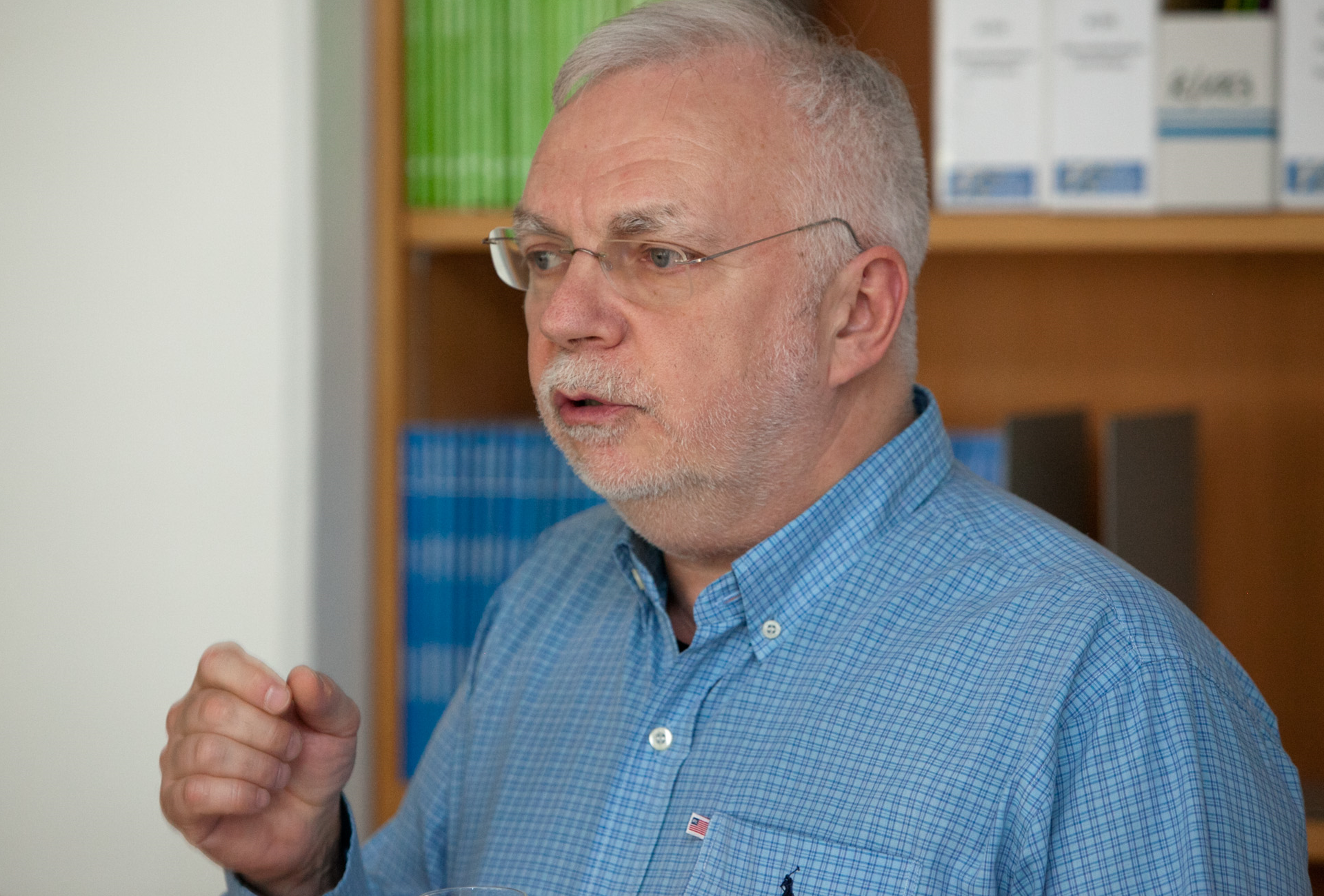 © Scherbov
The Academia Europaea is the Pan-European Academy of Sciences for Humanities and Letters with more than 5000 members who are leading experts from the physical sciences and technology, biological sciences and medicine, mathematics, the letters and humanities, social and cognitive sciences, economics, and the law. The object of Academia Europaea is the advancement and propagation of excellence in scholarship in the humanities, law, the economic, social, and political sciences, mathematics, medicine, and all branches of natural and technological sciences anywhere in the world for the public benefit and for the advancement of the education of the public of all ages in the aforesaid subjects in Europe.
In May 2023, following a rigorous peer-review process the Board of Trustees elected 349 eminent international scholars as new members. Sergei Scherbov was elected as a member of Human Mobility, Governance, Environment and Space. He was recognized for his significant contributions to the fields of demographic modeling, population projections, new measures of aging, and analysis of aging that takes into consideration the changing characteristics of people.
We extend our warmest congratulations to Sergei Scherbov on this prestigious appointment.
News

24 September 2026
IIASA researcher joins Austrian Academy of Sciences working group on integrated carbon neutrality
On 15 September, Principal Research Scholar Thomas Schinko represented IIASA at a high-level event of the Commission on the De-Fossilization and Carbon Neutrality of the European Energy Systems (DEE) of the Austrian Academy of Sciences (OEAW). The meeting denoted the kick-off workshop of the newly established DEE Working Group "Transsectoral and Transcontinental Integration”.

23 September 2026
Eco-Welfare Network Conference
Julia Beier participated in the first in-person Eco-Welfare Network Conference, held in Brussels from 9-11 September at the Université Libre de Bruxelles as part of the Transform-Labor project.
14 September 2026
Can a warming climate put women at greater risk?
Unusually warm periods could have a link to an increased risk of intimate partner violence against women, according to a new IIASA-led study covering 31 countries in sub-Saharan Africa. The findings highlight how rising temperatures may compound existing risks of violence, with effects varying between demographic groups.