


The 29th Conference of the Parties to the UN Framework Convention on Climate Change (COP29) provided a global stage for advancing carbon farming initiatives in Kazakhstan, a country uniquely positioned to drive nature-based climate solutions in the Asian Drylands Belt (ADB). The side event, titled “Carbon Farming in Kazakhstan: Unlocking the Opportunity,” was held at the QAZAQSTAN Pavilion in Baku, co-organized by IIASA, the BRICS Competition Law and Policy Centre, the Center for Applied Research TALAP, and the Government of the Republic of Kazakhstan.
Moderated by Alexey Ivanov, Director of the BRICS Competition Law and Policy Centre, the side event convened a distinguished panel of experts, state officials, and industry leaders to explore how carbon farming can contribute to Kazakhstan’s socio-economic development while enhancing climate resilience and supporting global decarbonization efforts.
Carbon farming has become a key priority on Kazakhstan’s environmental agenda, offering a promising approach of land-based carbon sequestration across the country’s vast, underutilized steppes and semi-deserts. By adopting practices such as no-till agriculture, cover crops, and enhanced rock weathering, Kazakhstan could sequester up to 35 million tons of CO2 per year, partially offsetting its carbon emissions. “Kazakhstan’s extensive degraded lands present an enormous opportunity for carbon removal,” said Michael Obersteiner, Director of the Environmental Change Institute at the University of Oxford and Principal Research Scholar at IIASA.
Obersteiner emphasized the critical role of negative emissions in global climate strategies: “Many think achieving net-zero solves the carbon problem, but to limit warming to two degrees, we need substantial negative emissions after 2050. Carbon farming can play a significant part in that effort, transforming degraded lands into powerful carbon sinks while generating environmental, economic, and social benefits.”
The event’s objectives aligned closely with Kazakhstan’s climate and development strategies, as highlighted by Mansur Oshurbaev, Vice Minister of Ecology and Natural Resources of Kazakhstan, and Murat Temirzhanov, Chairman of the Committee on Land Resources Management. Both emphasized the government’s commitment to sustainable land management and carbon neutrality by 2060, echoing the themes outlined by President Kassym-Jomart Tokayev earlier at COP29. “Kazakhstan’s 200 million hectares of agricultural land present a unique opportunity for carbon farming practices that reduce emissions and enhance soil health,” President Tokayev declared. He invited international stakeholders to explore these opportunities and engage in collaborative projects.
Obersteiner presented findings from the collaborative report Carbon Farming in Kazakhstan: Unlocking the Potential, prepared by IIASA and partner organizations. The report details the opportunities and challenges of implementing carbon farming in Central Asia’s largest economy and explores the integration of carbon farming practices into global carbon markets, especially in light of new standards adopted under Article 6.4 of the Paris Agreement. “Kazakhstan’s participation in these markets is critical,” Obersteiner noted. “Raising carbon prices and establishing robust monitoring and verification systems will be key to attracting investment and ensuring the credibility of carbon farming initiatives.”
The discussions underscored the importance of leveraging Kazakhstan’s leadership in the Asian Drylands Belt to inspire neighboring countries to adopt similar practices. “By working collaboratively, we can transform this region into a powerhouse for carbon sequestration and climate adaptation,” Obersteiner emphasized. The session also highlighted the broader co-benefits of carbon farming, such as job creation, enhance health and social well-being, soil health, and better water management, which are essential for sustaining local farming communities.
Looking ahead, Mongolia will host UNCCD COP17 on desertification in 2026, a critical event that will bring further attention to the challenges faced by dryland regions across Central Asia. The Camea project and its partners are committed to fostering regional collaboration among ADB countries to build on the momentum generated at COP29 and prepare for future opportunities. As climate challenges become increasingly urgent, Kazakhstan’s pioneering carbon farming efforts could serve as a blueprint for sustainable development and climate resilience across Central Asia.
 © BRICS Competition Law and Policy Centre
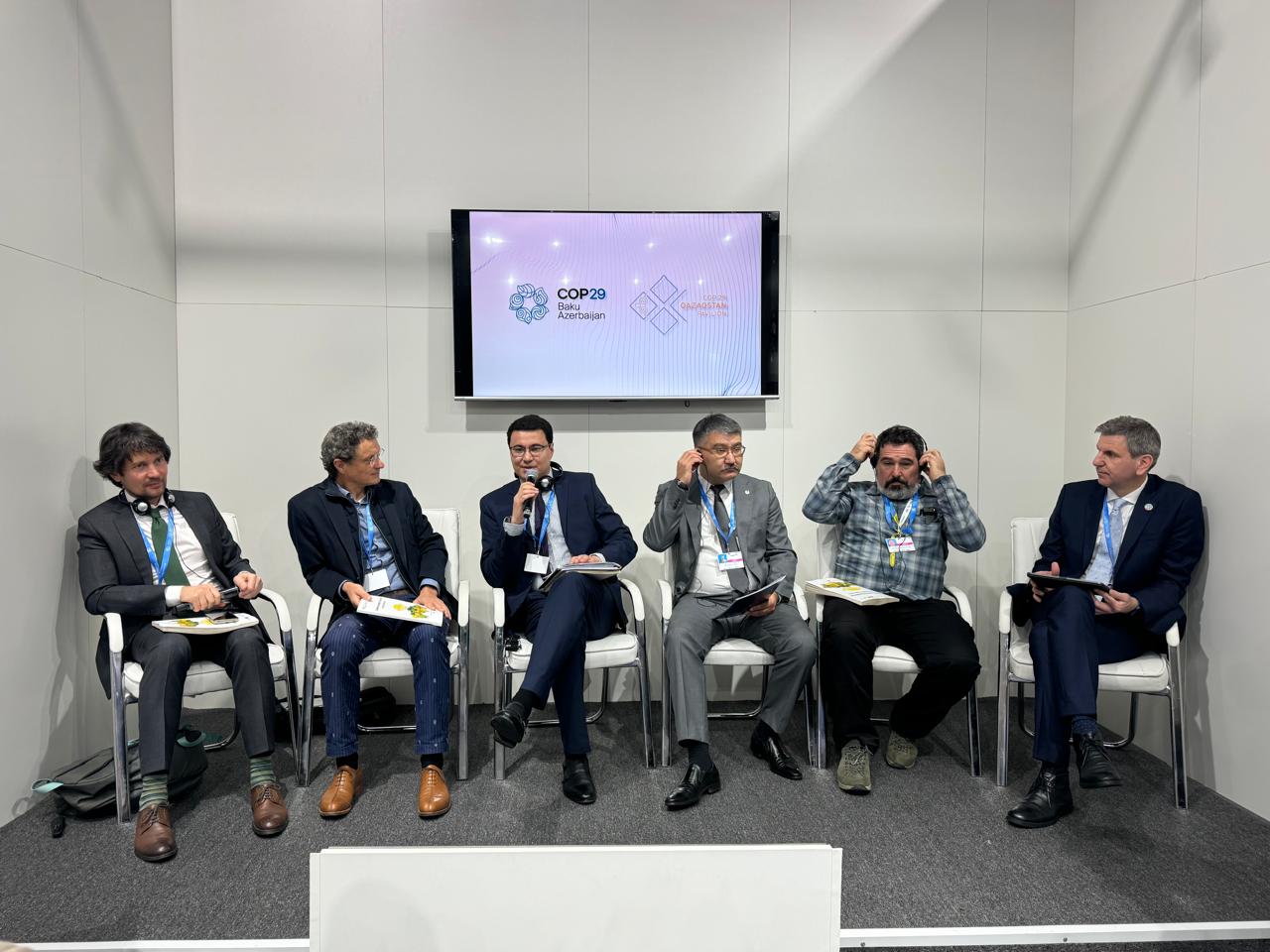
Key speakers of the COP29 side event “Carbon Farming in Kazakhstan: Unlocking the Opportunity,” co-organized by IIASA, the BRICS Competition Law and Policy Centre, the Center for Applied Research TALAP, and the Government of the Republic of Kazakhstan.
 © BRICS Competition Law and Policy Centre
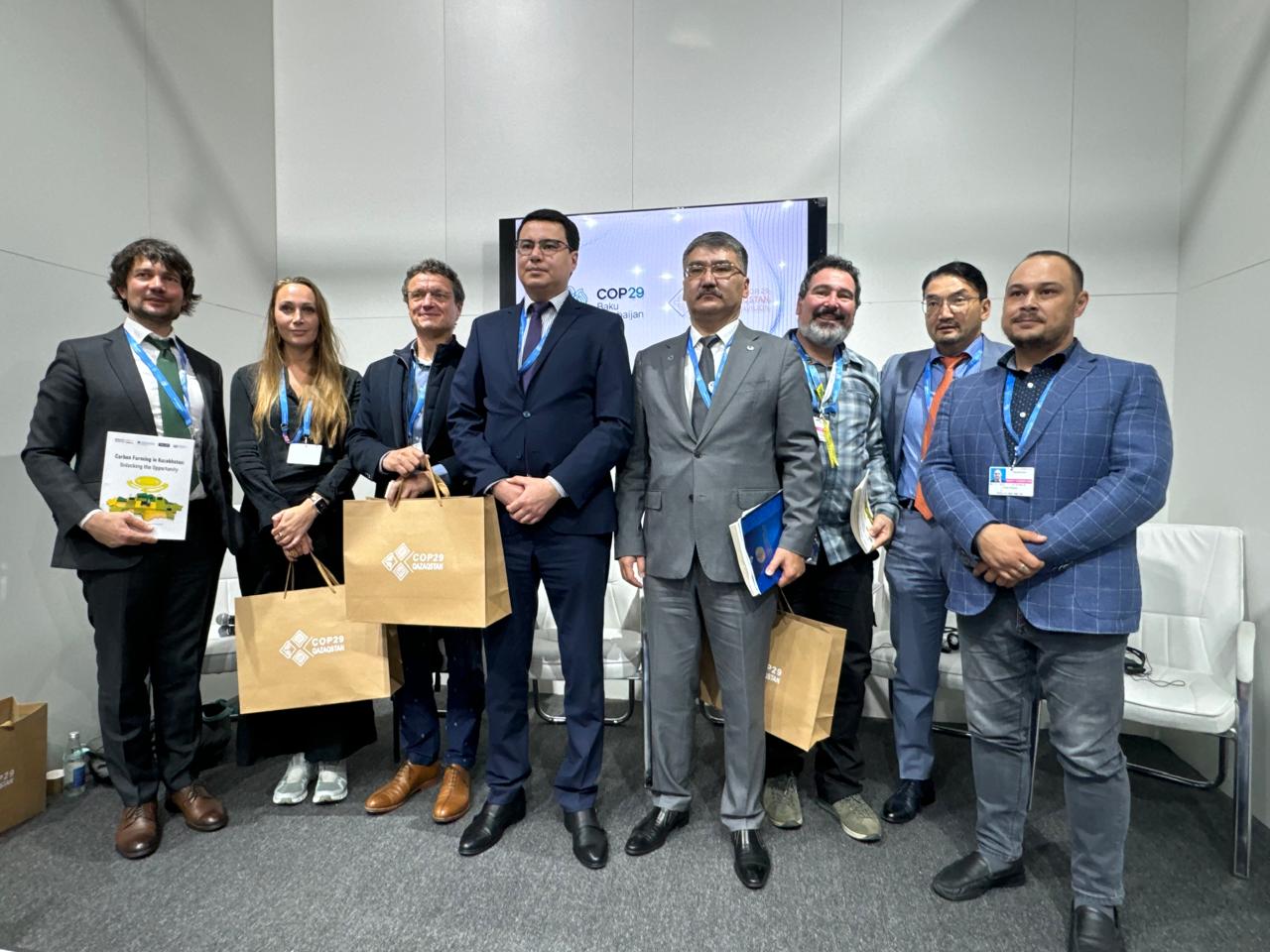
COP29 side event “Carbon Farming in Kazakhstan: Unlocking the Opportunity,” co-organized by IIASA, the BRICS Competition Law and Policy Centre, the Center for Applied Research TALAP, and the Government of the Republic of Kazakhstan.
 © BRICS Competition Law and Policy Centre
COP29 side event “Carbon Farming in Kazakhstan: Unlocking the Opportunity” speakers.
 © BRICS Competition Law and Policy Centre
View from the venue of the COP29 side event “Carbon Farming in Kazakhstan: Unlocking the Opportunity”.
 © BRICS Competition Law and Policy Centre
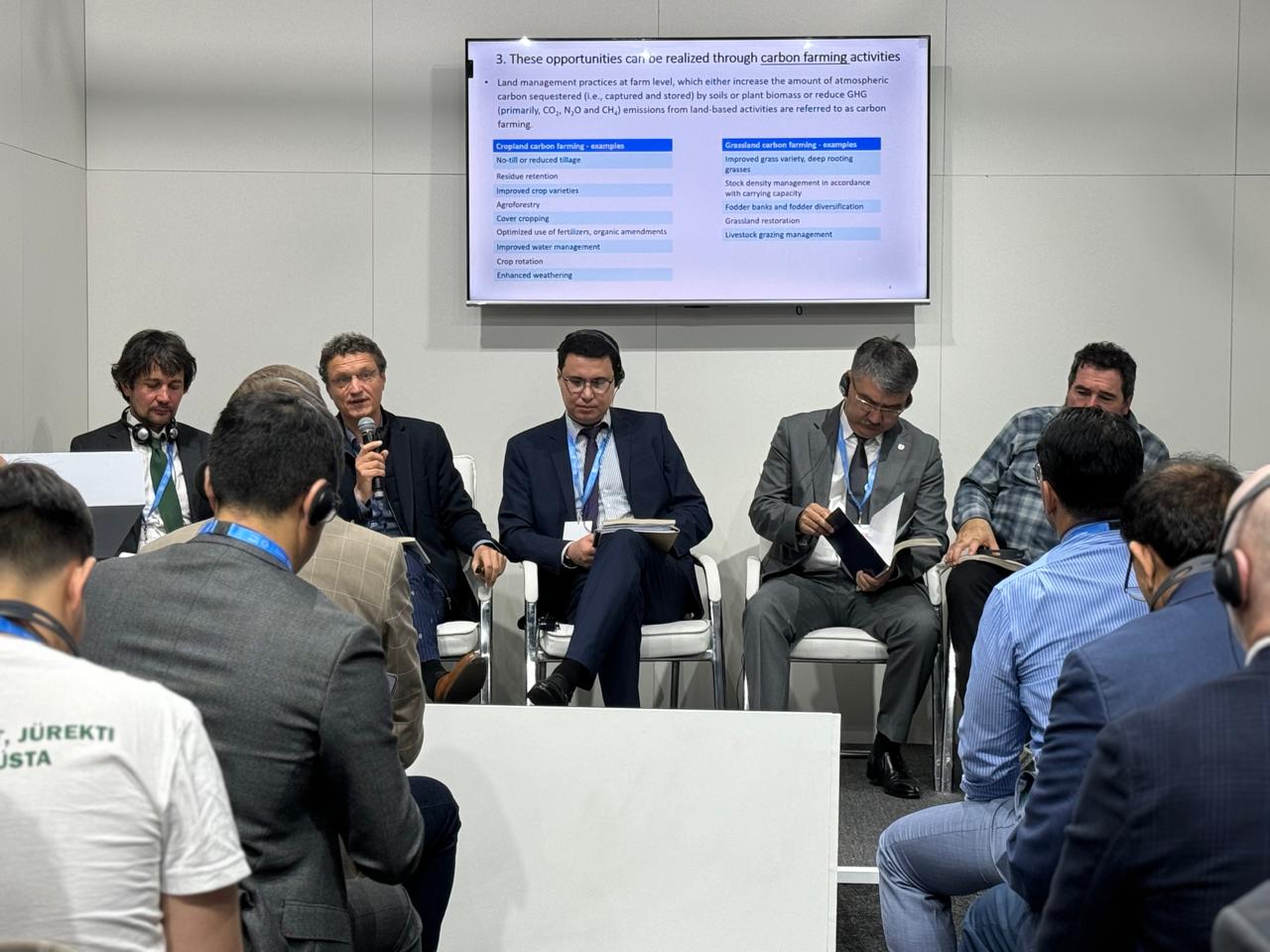
Discussion at the COP29 side event “Carbon Farming in Kazakhstan: Unlocking the Opportunity”.
News

27 October 2026
IIASA and Kazakhstan strengthen scientific cooperation through new agreement
IIASA and the Ministry of Science and Higher Education of the Republic of Kazakhstan have signed a Memorandum of Understanding (MoU) to advance joint research, academic exchange, and capacity development.
15 October 2026
IIASA strengthens science diplomacy ties at UNGA in New York
IIASA Science Diplomacy Director and Head of Communications and External Relations Susie Kitchens represented the Institute at the United Nations General Assembly (UNGA) High-level Week and Science Summit in New York in September, contributing to discussions on how science and international cooperation can help address shared global challenges.

22 September 2026
IIASA at UNCCD COP17: Advancing land restoration and resilience
Building on its engagement at the 16th session of the Conference of the Parties to the United Nations Convention to Combat Desertification (UNCCD COP16) in Riyadh, IIASA contributed to a series of events and bilateral discussions at UNCCD COP17, held in Ulaanbaatar, Mongolia, towards the end of August. Under the theme, Restoring Land, Restoring Hope, COP17 advanced action on land degradation, drought resilience, and sustainable land management, with particular emphasis on rangelands and pastoral livelihoods.