
The EU Horizon Project PRISMA (Net zero Pathway Research through Integrated Assessment Model Advancements) officially kicked-off!
The PRISMA kick-off meeting was host by RFF-CMCC European Institute on Economics and the Environment, in Milan, on the 13 and 14 of February 2023.
The PRISMA project aims to improve the Integrated Assessment Models (IAMs) in order to develop robust policies toward the achievement of net-zero greenhouse gas (GHG) emission pathways, in line with the Paris Agreement goals. The project, coordinated by the RFF-CMCC European Institute on Economics and the Environment (Italy), includes of a consortium of 10 collaborators from 8 different European countries. IIASA is contributing with its research on technological change and financial efforts needed in the transformation towards net-zero GHG emissions and the coordination of data handling across the project.
For more info about the PRISMA project visit its page here.
PRISMA KICK-OFF MEETING AGENDA
MONDAY, 13 FEBRUARY 2023
From 12:30 Registration
13:30 – 14:00 Opening Remarks and Overview of the PRISMA project
Massimo Tavoni and Johannes Emmerling (RFF-CMCC)
14: 00 – 15:00 Introductions of partner institutions and people (2 slides).
Chairperson: Johannes Emmerling (RFF-CMCC)
15:00 – 15:30 Ice-breaking activity
15.30 – 16.40 Brief introduction of PRISMA Work Packages (10 min per WP)
Chairperson: Johannes Emmerling (RFF-CMCC)
WP1 - Co-design, stakeholder engagement, and model usability
WP Leader: BRUEGEL
WP2 - Entry-points to just and efficient transitions to net zero
WP Leader: PIK
WP3 - Climate finance and innovation
WP Leader: E3M
WP4 - Lifestyle, digitalisation, material efficiency, and circularity
WP Leader: IIASA
WP5 - SDGs synergies and trade-offs, and biophysical climate impacts
WP Leader: PBL
WP6 - Robust and resilient climate mitigation and adaptation pathways
WP Leader: CMCC
WP7 - Management and Dissemination
WP Leader: CMCC
16:40 - 17:10 Coffee Break
17:10 – 17:40 Horizon Europe Project Implementation and CINEA role
Andreas Palialexis, Project Officer (CINEA, European Commission)
TUESDAY, 14 FEBRUARY 2023
09:00 – 09:30 Ice breaker group self-presentations
Chairperson: xxxx (RFF-CMCC)
09.30 – 11.00 Parallel Sessions
Group 1: WP1
Chairperson: BRUEGEL
Group 2: WP
Chairperson: PIK
11:00 - 11:30 Coffee Break
11:30 – 13:00 Parallel Sessions
Group 1: WP3
Chairperson: E3M
Group 2: WP4
Chairperson: IIASA
13:00 – 14:15 Light Lunch
14:15 – 15:45 Parallel Sessions
Group 1: WP5
Chairperson: PBL
Group 2: WP6
Chairperson: CMCC
15:45 – 17:00 Reporting back from the WP parallel sessions [10 min each + 5 min Q&A]
17:00 – 17:30 Coffee Break
17:30 – 17:45 Summary of the day and Closing discussion
Chairperson: Johannes Emmerling (RFF-CMCC)
News
06 November 2026
“Mega heatwaves” strengthened by interaction between soil moisture, atmospheric pressure, and temperature
A new study has found a self-reinforcing interaction between temperature, soil moisture, and atmospheric pressure is being triggered at high temperatures, making extreme heatwaves 10% hotter than they would otherwise be.
04 November 2026
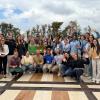
SPARCCLE Consortium Meets in Athens to Set the Course for the Final Phase
Project partners from across Europe gathered in Athens on 29-30 September 2026 for the in-person General Assembly of the SPARCCLE project. Hosted by the E3-Modelling team of WSP, the two-day meeting provided an important opportunity to take stock of progress, consolidate research findings, and align on the project’s final outputs as it enters its concluding phase.

04 November 2026
Play your part in circular change!
To achieve a circular economy, we need actions by all societal actors, including governments, businesses, and citizens. Citizens can contribute to a circular economy not only by engaging in circular consumption, but also by engaging in circular citizenship behaviors. These are aimed at urging governments, businesses, and other citizens to take actions that facilitate and encourage systemic change towards a circular economy. Thereby, they could allow for far-reaching transformations and make circular consumption more attractive and feasible.