
The Wittgenstein Centre for Demography and Global Human Capital (IIASA, OeAW, University of Vienna) will start Master's Programme "Global Demography" at the University of Vienna with its fourth cohort of students in October 2024.
In a world of over 8 billion people, studying population change is essential for a proper understanding of the problems of today, and for tackling the challenges of tomorrow. Demography affects each and every aspect of our lives – from the world economy and social policy, to city planning and climate change. Demographic analysis is key to understanding the complex dynamics shaping the future social landscape.
The principal aim of the master’s programme in Global Demography at the University of Vienna is to give students a strong scientific grounding in the analysis and forecasting of demographic developments across the globe – in particular, fertility, mortality and migration trends. Guided by leading experts in the field, students will be given the opportunity to explore the multidimensional ramifications and implications of demographic change on economic, social, and environmental issues.
Students enrolled in the Global Demography master’s programme will explore the international demographic literature, learn important methodological tools, and gain an array of transferable skills reaching beyond academia. A graduate of the Global Demography programme will thus be able to successfully deal with large volumes of complex scientific data, evaluate their practical meaning, and apply the findings to advance research and influence regional and global policymaking. Alumni will be well-prepared for a large variety of careers in academia, international organisations, NGOs, think tanks and research centres, national planning and statistical agencies, government bodies, and consultancy.
Application Period: 4 March - 8 April 2024
Start of the 1st Semester: October 2024
For more information please visit the website of the University of Vienna.
News
15 October 2026
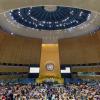
IIASA strengthens science diplomacy ties at UNGA in New York
IIASA Science Diplomacy Director and Head of Communications and External Relations Susie Kitchens represented the Institute at the United Nations General Assembly (UNGA) High-level Week and Science Summit in New York in September, contributing to discussions on how science and international cooperation can help address shared global challenges.

13 October 2026
Connecting disciplines and inspiring new ideas with the Environment and Climate Research Hub
IIASA Deputy Director General Karen Lips delivered a keynote at the University of Vienna's recent Environment and Climate Research Hub (ECH) Research Frontiers Workshop in Bad Vöslau, Austria, emphasizing the importance of interdisciplinary collaboration in addressing complex environmental and climate challenges.
12 October 2026
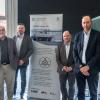
Connecting science across borders: IIASA Committee meets University of Salzburg
How can universities and international research organisations work together to address the complex challenges of a changing world? This question shaped a full day of scientific exchange at the University of Salzburg on 6 October, when the Austrian IIASA Committee met with members of the University community to discuss research, collaboration and opportunities for researchers and students.