
Story ideas, media briefings, and press releases specifically for media. If you are a journalist, you can subscribe to receive upcoming press releases by email.
Press Releases
20 May 2022
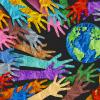
Making the most of crowdsourcing campaigns
In recent years, crowdsourcing, which involves recruiting members of the public to help collect data, has been tremendously helpful to provide researchers with unique and rich datasets, while also engaging the public in the process of scientific discovery. In a new study, an international team of researchers explored how crowdsourcing projects can make the most effective use of volunteer contributions.
05 May 2022
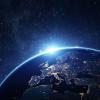
Identifying global poverty from space
Despite successes in reducing poverty globally in the last two decades, almost one billion people are still living without access to reliable and affordable electricity, which in turn negatively affects health and welfare, and impedes sustainable development. Knowing where these people are is crucial if aid and infrastructure are to reach them. A new IIASA-led study proposes a novel method to estimate global economic wellbeing using nighttime satellite images.
03 May 2022
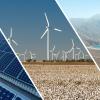
How solving Central Asia's water-energy conflict can also boost renewable energy generation
Researchers from the IIASA Energy, Climate, and Environment Program found that agricultural efforts in downstream countries in Central Asia, traditionally hampered by a lack of water for irrigation during the summer growing season, would be significantly boosted with a “dual water and energy storage scheme”, which also paves the way for high shares of renewable energy generation in the region.

06 April 2022
New IPCC Report: we can halve emissions by 2030
Between 2010 and 2019, average annual global greenhouse gas emissions were at their highest levels in human history, but the rate of growth has slowed. Without immediate and deep emissions reductions across all sectors, limiting global warming to 1.5°C is beyond reach. However, there is increasing evidence of the success of climate action, said scientists in the latest Intergovernmental Panel on Climate Change (IPCC) report.
01 April 2022
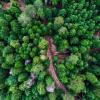
Crowdsourcing campaign identifies drivers of tropical forest loss
To combat forest loss in the tropics, a new study uses crowdsourcing to identify the drivers of deforestation. The resulting dataset can be used to create high-resolution maps and help policymakers apply the best protection measures.
31 March 2022
How can we improve biodiversity monitoring in Europe?
National biodiversity monitoring programs in Europe face many challenges, according to the first report of the Europe-wide EuropaBON project released today. The analysis includes data from more than 350 experts from policy, science, and environmental protection practice. The team is also drafting a proposal for a transnational monitoring of Europe's biodiversity and ecosystems.
17 March 2022
Use your cellphone to improve weather forecasts
Ahead of World Meteorological Day, you can help improve weather forecasting models with CAMALIOT, an infrastructure and app that uses GPS from smartphones to support scientific research. Join our crowdsourcing campaign on 17 March 2022 ̶ any person with access to an Android cellphone is invited to download the free app and participate.
10 March 2022
Cutting HFCs to cool the Earth
To have a better chance of holding global warming to 1.5°C, we need to accelerate the phase-down of HFC refrigerants under the Montreal Protocol. This could also reduce pollution and improve energy access.
10 March 2022
We are running out of time to counteract global change
The increase in emissions of greenhouse gases into the atmosphere is only one of several serious global threats to our continued existence on Earth, and their reduction is at the core of international agreements like the Paris Agreement and the UN Sustainable Development Goals. Together with Ukrainian colleagues, IIASA researchers took a novel approach to further the understanding of the planetary burden and its dynamics caused by emissions from human activity.