The following statistics are from the last 5 full calendar years: 2021-2025
Publications
Projects
Engagement
31
Number of times participants from Hungary joined IIASA events
5
Number of times visitors from Hungary came to IIASA
28
IIASA staff visits to Hungary
People
10
- Women
- Men
Staff members from Hungary
73
- Women
- Men
- Unknown
Total number of alumni from Hungary
News

04 July 2024
ALFAwetlands: assessing mid-term project milestones
IIASA researchers are part of the ALFAwetlands project, which aims to map wetlands in the European Union and assess restoration measures to provide maximum benefits for climate and biodiversity. The project partners recently gathered for a Midterm Conference to review implementation progress, present and exchange current results, and discuss further plans.

01 February 2024
Navigating the Nexus of Geopolitics and Technological Developments in Eurasia
Innovations in technology are emerging at an exponential pace and the diffusion of technology is faster than ever across the world. At the heart of these transformations lies Eurasia, home to over 70% of the world’s population and a highly complex array of diverse geopolitical systems. How can Eurasian nations strategically align themselves to harness the benefits of this rapid technological evolution? And what role will its geopolitics play?

21 October 2022
Elena Rovenskaya, Program Director of Advancing Systems Analysis (ASA) contributes to the Budapest Eurasia Forum 2022 organized by the Central Bank of Hungary
As the world faces enormous transposition of the economic, political, and environmental world order, Hungary seeks a golden opportunity to act as a bridge which fuses the two diverse continents of Asia and Europe. On 19 and 20 September, Budapest hosted internationally esteemed speakers and participants to discuss exactly such opportunities.
Events
Sofia, Bulgaria
Training on Transboundary Water Balance Modelling
Budapest, Hungary / Virtual
Budapest Eurasia Forum 2020
Focus
Annual Report 2023
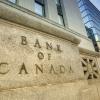
IIASA works with the Bank of Canada to strengthen monetary policy using agent-based modeling
Scientists from the Advancing Systems Analysis Program, in collaboration with the Bank of Canada, developed a next-generation model for monetary policy analysis and projections.

Feasible futures
Policy Brief #41, October 2023. Embracing the notion of feasibility, this research shows that the world will probably overshoot
1.5°C, largely owing to low institutional capacity. Energy demand reduction and electrification are two options to turn down the heat, and addressing weak institutions is crucial.
Projects

Transformative Innovation for Climate Change Adaptation in the Danube Region (TiCCA4Danu)

The Human-Tech Nexus - Building a Safe Haven to Cope with Climate Extremes (HuT)

Development of a Harmonized Water Balance Modelling System for the Danube River Basin (Danube Water Balance)