
A drought can threaten harvests, strain water supplies, and disrupt ecosystems all at once, yet decisions affecting these interconnected systems are often made in isolation. Drawing on years of collaborative research between IIASA and its international partners, Gang Wang, Tatiana Ermolieva, Gui-Ying Cao, and Renkuan Liao explore how integrated systems analysis can help decision makers navigate complex challenges, anticipate risks, and build resilience to future shocks.
Land, food, water, and climate systems are closely interconnected, meaning that decisions affecting one can have far-reaching consequences for others and for the environment. Land is a critical resource, that supports food production, water regulation, energy resources, carbon storage, biodiversity, and ecosystem services. Increasing food production often requires additional land, water, and energy, potentially accelerating soil degradation, groundwater depletion, and ecosystem loss.
Expanding irrigation may increase harvests in the short term while reducing water availability for downstream users and ecosystems and depleting ground water resources. Converting forests, wetlands, or other natural areas into agricultural or urban land can diminish carbon storage, undermine biodiversity, and weaken natural flood protection. Similarly, renewable energy infrastructure and climate adaptation measures may create additional demands for land and water, generating trade-offs across sectors and territories. These pressures can be amplified by climate change, resource scarcity, and competing societal priorities, increasing the potential for supply–demand imbalances, resource shortages, and systemic risks.
Despite these growing interdependencies, land-use, agricultural, water, climate, and environmental policies are often developed and implemented separately. This sectoral approach can obscure cumulative impacts, connections between sectors, and the transfer of risks from one system to another, leaving societies less prepared for climate extremes and other shocks. Addressing these challenges requires integrated systems analysis that explicitly considers how land is allocated, how resources are shared, how ecosystems function, and how food, energy, water, climate, and environment systems interact.
 © Lei Xu | Dreamstime
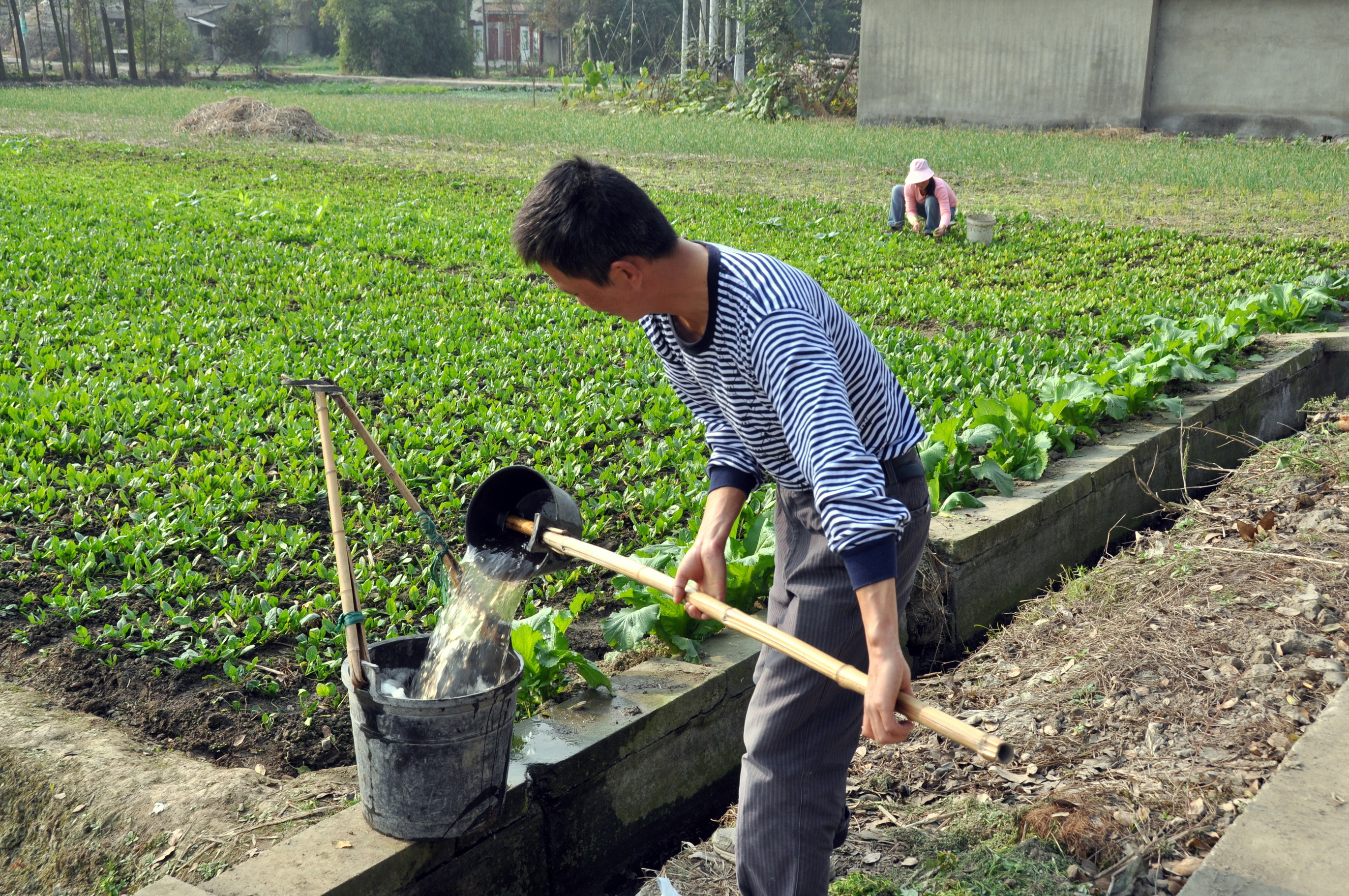
Farmer filling buckets from a small irrigation canal to water his field of young seedlings.
A new book titled, Integrated Systems Analysis of Ecosystems: The Land, Water, Food, and Climate Nexus, brings together advanced systems analysis methods, models, tools, and practical applications to better understand these connections. It also shows how this knowledge can support more coordinated planning and better-informed decisions about risks.
The publication was made possible by years of scientific collaboration between IIASA, representatives from its National Member Organizations (NMOs), and Chinese research partners, including China Agricultural University (CAU) and the National Natural Science Foundation of China (NSFC). It demonstrates the value of sustained international cooperation. Researchers across institutions and disciplines have developed a shared toolbox that scientists, educators, and policymakers can use. The book also serves as a teaching resource for future systems analysts. As pressures on land, water, and other resources become increasingly interconnected, this shared foundation is more important than ever.
Why separate planning breaks down
A change in one part of the system rarely stays there. Soil processes shape water retention, nutrient cycling, and crop yields. Water systems determine how much water is available and where. Farm decisions reshape land use and ecosystem services, while economic conditions influence resource allocation and agricultural policy. Climate change alters the conditions under which all of these systems operate. When planners ignore these links, unintended consequences may emerge too late, triggering knock-on effects and, in the worst cases, widespread risks that threaten food, water and energy security at the same time.
What integrated analysis adds
The book offers three key advances that decision makers can use.
First, it connects models that often sit in separate disciplines. The Global Agro-Ecological Zones model, for example, assesses how climate and land resources influence which crops can grow in a particular region and the resources they require. When combined with economic models that examine connections between regions and industries, it can help estimate future land and water requirements under different climate and socioeconomic scenarios.
Second, the book explicitly incorporates uncertainty into systems analysis. Land, food, water, climate, and environmental systems are affected by incomplete information, unpredictable weather, and changing economic conditions, all of which can influence how well policies work. The approaches presented include advanced methods for planning under uncertainty, helping decision makers identify strategies that work well across a range of possible futures and can be adapted as new information becomes available. The aim is to develop resilient strategies capable of responding to different types of shocks, including droughts, economic disruptions, poorly designed or maladaptive policies, and pandemics.
Third, the book strengthens the ability of systems analysis to capture how conditions change over time. By capturing feedback loops, interdependencies, and changing relationships over time, these methods make it possible to trace trade-offs, identify where benefits increase or diminish, and reveal effects that static models may overlook. They also help show how pressures propagate between sectors, which interventions are effective, and when they should be implemented.
 © xiaoyong | Dreamstime
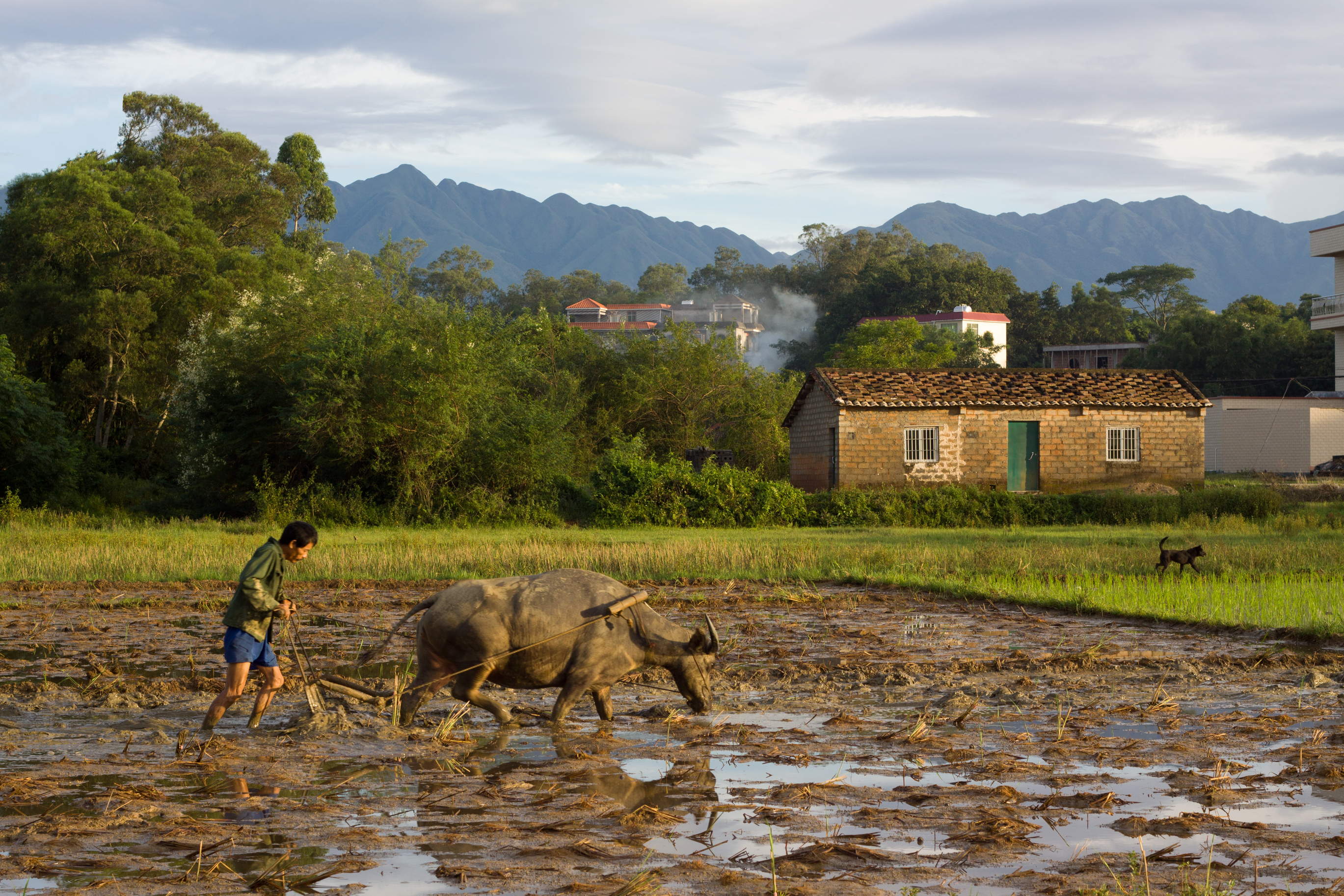
Chinese farmer ploughing in the south China countryside.
Consider irrigation. Viewed on its own, expanding irrigation may appear to offer a straightforward way to increase agricultural output. However, integrating land, water, and economic models to examine changes over time reveals a more complex picture: how far can production expand before the water requirements of ecosystems or downstream communities are compromised? How might these competing demands evolve over time, and what adjustments in other sectors are needed to avoid unintended consequences? The book advocates precisely this shift in perspective—from maximizing individual outputs to understanding and managing how interconnected systems influence one another.
What policymakers can do with this
The book's approach points to four practical steps. Policymakers can use scenarios that consider multiple sectors together in national food, water, and climate-adaptation plans. They can invest in shared datasets and models that work together across ministries and disciplines. They can define clear thresholds for taking action, so interventions respond to emerging evidence before a crisis hits. Finally, they can sustain the research partnerships and training that build the expertise and develop the tools needed to carry out this work. Together, these steps can help turn integrated systems analysis into more coordinated planning and greater resilience in the face of an uncertain future.
Book reference:
Wang, G., Ermolieva, T., Cao, G., & Liao, R. (Eds.). (2026). Integrated Systems Analysis of Ecosystems: The Land, Water, Food, and Climate Nexus. Elsevier. DOI: 10.1016/C2021-0-02522-0.
Note: This article gives the view of the authors and not the position of the IIASA Insights blog, nor of the International Institute for Applied Systems Analysis.