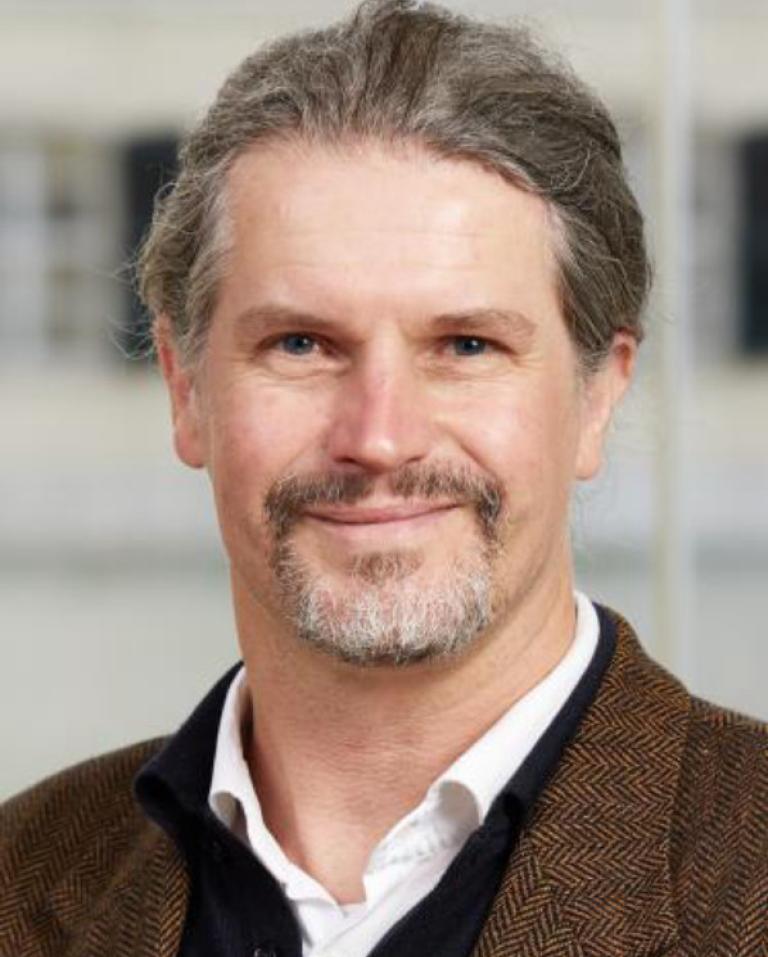
Michael Kuhn
Research Group Leader and Principal Research Scholar
Economic Frontiers Research Group
Biography
Michael Kuhn is the Program Director of the newly (2021) established IIASA Economic Frontiers (EF) Program. He is affiliated with the Wittgenstein Centre for Demography and Global Human Capital, a cooperation between IIASA, the University of Vienna, and the Austrian Academy of Sciences, as well as with the Vienna Institute of Demography, where he is currently on leave.Having received a doctorate in economics from the University of Rostock, Germany in 2001, Dr. Kuhn has since held positions at the Centre of Health Economics, University of York, UK (1999-2004; lectureship), the Max-Planck-Institute for Demographic Research / University of Rostock, Germany (2005-2008; junior professorship) and the Vienna Institute of Demography (2008-2020; research group leader on Economic Demography).
His research interests lie in the areas of theoretical and applied health, population and development economics and its interface with mathematics, demography and medicine. He has published widely, inter alia, in the Economic Journal, Journal of Health Economics, Journal of Economic Theory, Lancet Planetary Health, PLOS ONE, Health Affairs, Journal of Optimization Theory and Applications and Theoretical Population Biology. Recently, he has been (co-)leading two Austrian Science Fund (FWF) stand-alone projects ''Medical Progress, Health Expenditure and Population Ageing'' (2014-2017) and ''Life-cycle behaviour in the face of large shocks to health'' (2018-2020). He is a co-opted member of the field committees on ''Health Economics” and ''Population Economics'' of the German Economic Association, and associate editor of the “Journal of the Economics of Ageing” and “Covid Economics”.
Dr. Kuhn’s current research includes: (1) Assessing the economic burden of disease, its determinants and ways for mitigating it. (2) Modeling heterogeneous life-cycle behaviors and outcomes to study the determinants of unequal life chances and the policy changes required for fairer outcomes. (3) The application of age-structured optimal control methods in modeling individual and societal responses to regime changing (health, environmental, pandemic) shocks. (4) Optimal-control-based models of health policy strategies against COVID-19.
Last update: 08 MAR 2021
Publications
Bloom, D.E., Kuhn, M., & Prettner, K. (2025). The Debate over Falling Fertility. IMF Finance & Development
Agula, C., Kulikova, Y. , Patange, O. , Biney, A., Kuhn, M., Kyei, P., Asuming, P., & Bawah, A.A. (2025). Who pays more? Exploring cost disparities in medication abortion access across socio-demographic groups in Ghana. International Journal for Equity in Health 24 (1) e144. 10.1186/s12939-025-02500-8.
SDG7 Technical Advisory Group (2025). Maximising the Benefits of Energy Action for Good Health, Gender Equality and Decent Work to Leave No one Behind: SDG7 Policy Briefs in Support of the High-Level Political Forum. United Nations Department of Economic and Social Affairs (UN DESA) , New York, USA.
Freiberger, M., Kuhn, M., Fürnkranz-Prskawetz, A., Sanchez-Romero, M. , & Wrzaczek, S. (2025). Optimization in Age-Structured Dynamic Economic Models. In: The Unaffordable Price of Static Decision-making Models. Eds. El Ouardighi, F. & Feichtinger, G., pp. 35-62 Cham, Switzerland: Springer. ISBN 978-3-031-88637-9 10.1007/978-3-031-88638-6_4.
APCC (2025). Second Austrian Assessment Report on Climate Change (AAR2). Vienna: Austrian Academy of Sciences Press. ISBN 978-3-7001-5110-4 10.1553/aar2.