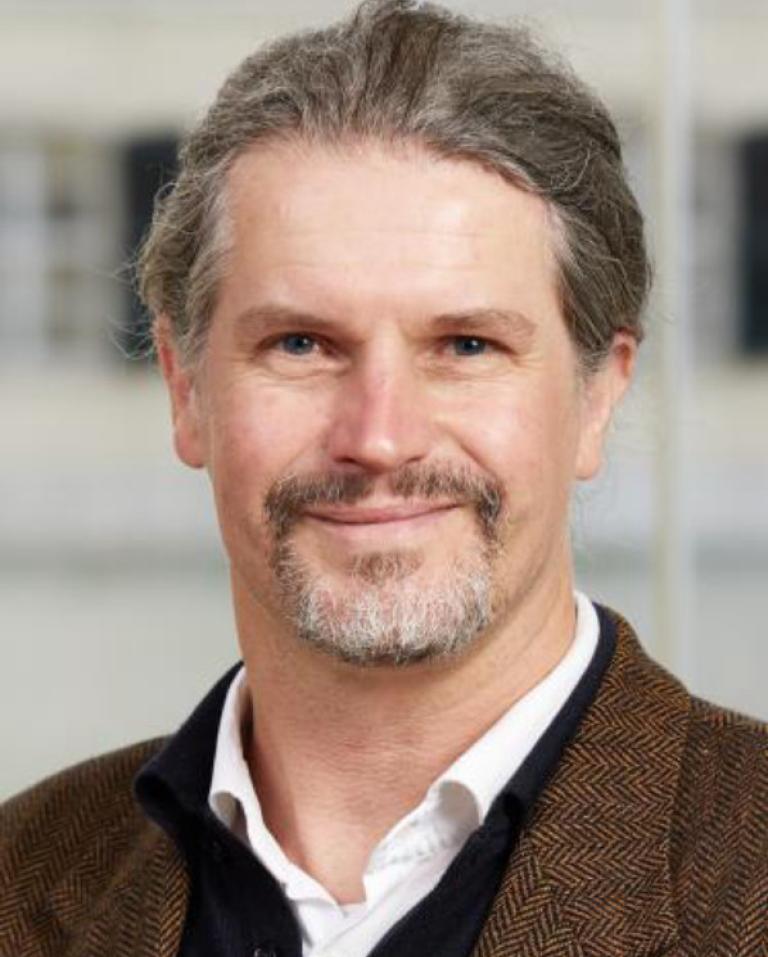
Michael Kuhn
Research Group Leader and Principal Research Scholar
Economic Frontiers Research Group
Biography
Michael Kuhn is the Program Director of the newly (2021) established IIASA Economic Frontiers (EF) Program. He is affiliated with the Wittgenstein Centre for Demography and Global Human Capital, a cooperation between IIASA, the University of Vienna, and the Austrian Academy of Sciences, as well as with the Vienna Institute of Demography, where he is currently on leave.Having received a doctorate in economics from the University of Rostock, Germany in 2001, Dr. Kuhn has since held positions at the Centre of Health Economics, University of York, UK (1999-2004; lectureship), the Max-Planck-Institute for Demographic Research / University of Rostock, Germany (2005-2008; junior professorship) and the Vienna Institute of Demography (2008-2020; research group leader on Economic Demography).
His research interests lie in the areas of theoretical and applied health, population and development economics and its interface with mathematics, demography and medicine. He has published widely, inter alia, in the Economic Journal, Journal of Health Economics, Journal of Economic Theory, Lancet Planetary Health, PLOS ONE, Health Affairs, Journal of Optimization Theory and Applications and Theoretical Population Biology. Recently, he has been (co-)leading two Austrian Science Fund (FWF) stand-alone projects ''Medical Progress, Health Expenditure and Population Ageing'' (2014-2017) and ''Life-cycle behaviour in the face of large shocks to health'' (2018-2020). He is a co-opted member of the field committees on ''Health Economics” and ''Population Economics'' of the German Economic Association, and associate editor of the “Journal of the Economics of Ageing” and “Covid Economics”.
Dr. Kuhn’s current research includes: (1) Assessing the economic burden of disease, its determinants and ways for mitigating it. (2) Modeling heterogeneous life-cycle behaviors and outcomes to study the determinants of unequal life chances and the policy changes required for fairer outcomes. (3) The application of age-structured optimal control methods in modeling individual and societal responses to regime changing (health, environmental, pandemic) shocks. (4) Optimal-control-based models of health policy strategies against COVID-19.
Last update: 08 MAR 2021
Publications
Chen, S., Cao, Z., Chen, W., Zhao, J., Jiao, L., Prettner, K., Kuhn, M., Pan, A., Bärnighausen, T.W., & Bloom, D.E. (2025). The global macroeconomic burden of diabetes mellitus. Nature Medicine 10.1038/s41591-025-04027-5.
Grass, D., Kuhn, M., Patange, O. , Fürnkranz-Prskawetz, A., & Wrzaczek, S. (2025). Out of the black into the green? Modeling the pathways for regional coal transitions. European Journal of Operational Research 10.1016/j.ejor.2025.12.045. (In Press)
Grass, D., Kuhn, M., Patange, O. , Fürnkranz-Prskawetz, A., & Wrzaczek, S. (2025). Out of the black into the green? Modeling the pathways for regional coal transitions. IIASA Working Paper. Laxenburg, Austria: WP-25-002
Luckeneder, S., Maus, V. , Siqueira-Gay, J., Krisztin, T. , & Kuhn, M. (2025). Forest loss and uncertain economic gains from industrial and garimpo mining in Brazilian municipalities. Nature Communications 16 (1) e6543. 10.1038/s41467-025-61930-8.
Hoffmann, R., Patange, O. , Zimm, C. , Pachauri, S. , Belmin, C. , Pelz, S. , Brutschin, E. , Kikstra, J. , Kuhn, M., Min, J. , Muttarak, R. , Riahi, K. , Schinko, T. , & Mintz-Woo, K. (2025). Subnational survey data reveal persistent gaps in living standards across 75 low and middle-income countries. Nature Communications 16 (1) e4986. 10.1038/s41467-025-60195-5.