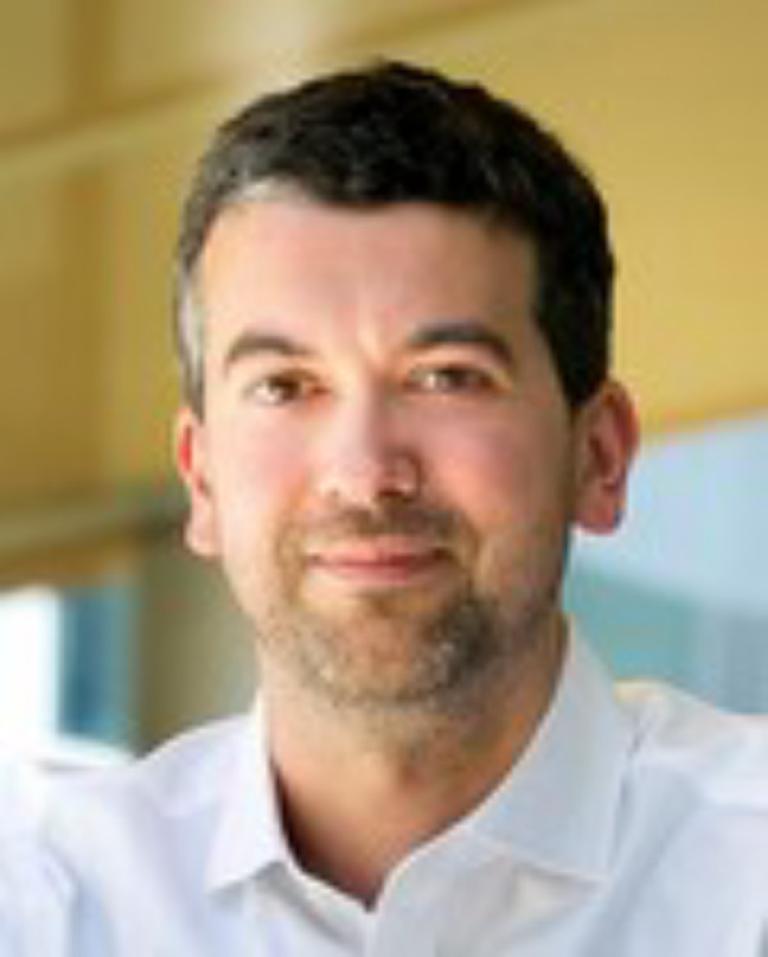
Bilal Barakat
Guest Research Scholar
Multidimensional Demographic Modeling Research Group
Population and Just Societies Program
Contact
Biography
Bilal Barakat joined the World Population Program in February 2008 to support with the definition of scenarios for global education trends for the purpose of human capital projections. After having studied mathematics at Cambridge and Oxford Universities for undergraduate and graduate degrees, he obtained his doctorate from Oxford University's Department of Education.Dr. Barakat's current research interest focuses on educational modeling and planning, especially in developing countries. He has worked as a consultant on various aspects of international and UK educational development including higher education quality assurance, education in post-conflict settings, teacher training and recruitment, for UNDP, UNESCO, the World Bank, and for national agencies in the UK.
Last update: 04 MAR 2010
Publications
K.C., S., Lutz, W. , Potančoková, M. , Abel, G. , Barakat, B., Eder, J., Goujon, A. , Jurasszovich, S., Reiter, C. , Sobotka, T., Speringer, M., Striessnig, E. , Wurzer, M., Yildiz, D. , Yoo, S.H., & Zeman, K. (2020). Global population and human capital projections for Shared Socioeconomic Pathways – 2015 to 2100, Revision-2018.
Bengtsson, S., Barakat, B., Muttarak, R. , & Kebede, E. (2018). Education and the sustainable development agenda. IIASA Policy Brief. Laxenburg, Austria: PB-19
Bengtsson, S., Barakat, B., & Muttarak, R. (2018). The Role of Education in Enabling the Sustainable Development Agenda. Routledge. ISBN 9781138307957
Barakat, B. & Bengtsson, S. (2018). What do we mean by school entry age? Conceptual ambiguity and its implications: the example of Indonesia. Comparative Education 54 (2) 203-224. 10.1080/03050068.2017.1360564.
Barakat, B. & Crespo Cuaresma, J. (2017). Credit where credit is due: an approach to education returns based on Shapley values. Education Economics 1-9. 10.1080/09645292.2017.1343276.