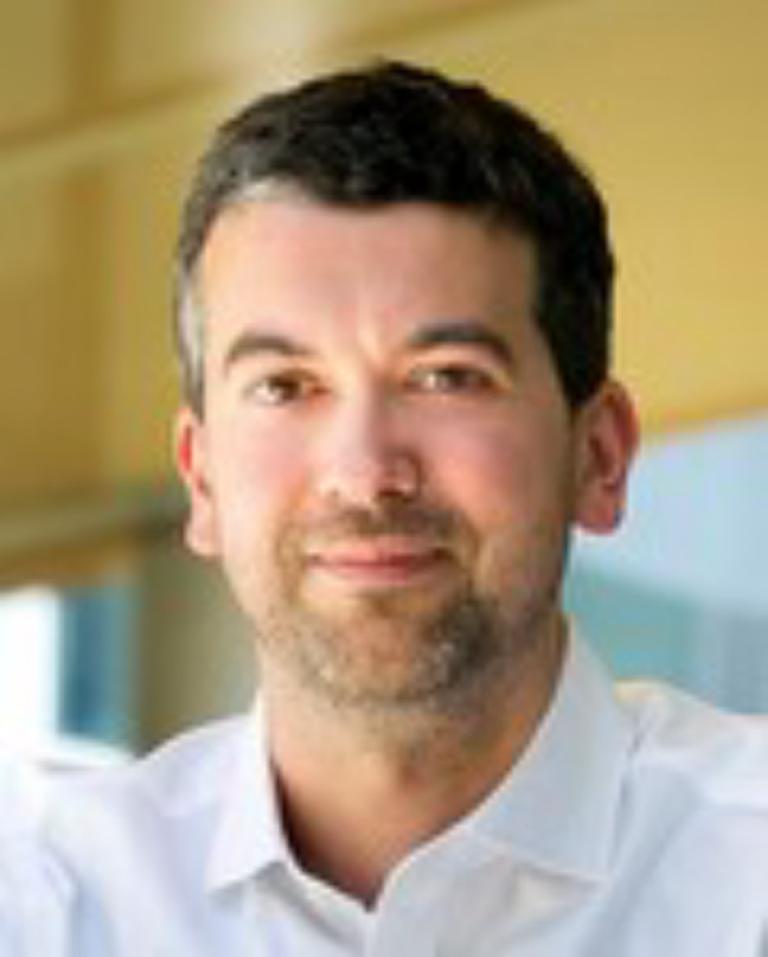
Bilal Barakat
Guest Research Scholar
Multidimensional Demographic Modeling Research Group
Population and Just Societies Program
Biography
Bilal Barakat joined the World Population Program in February 2008 to support with the definition of scenarios for global education trends for the purpose of human capital projections. After having studied mathematics at Cambridge and Oxford Universities for undergraduate and graduate degrees, he obtained his doctorate from Oxford University's Department of Education.Dr. Barakat's current research interest focuses on educational modeling and planning, especially in developing countries. He has worked as a consultant on various aspects of international and UK educational development including higher education quality assurance, education in post-conflict settings, teacher training and recruitment, for UNDP, UNESCO, the World Bank, and for national agencies in the UK.
Last update: 04 MAR 2010
Publications
Barakat, B. (2017). Time is Money: Disentangling Higher Education Cost-Sharing and Commodification Through Deferred Graduate Retirement. Higher Education Policy 1-19. 10.1057/s41307-017-0054-8.
Barakat, B. & Lutz, W. (2017). The Development of Tertiary Attainment - Statistical Scenarios for the Coming Decades. In: Prospects and Future Tasks of Universities. pp. 67-80 Austrian Council for Research and Technology Development. ISBN 978-3-643-90937-4
Barakat, B. (2017). Generalised count distributions for modelling parity. Demographic Research 36 745-758. 10.4054/DemRes.2017.36.26.
Abel, G. , Barakat, B., KC, S., & Lutz, W. (2016). Meeting the Sustainable Development Goals leads to lower world population growth. Proceedings of the National Academy of Sciences 113 (50) 14294-14299. 10.1073/pnas.1611386113.
Barakat, B. (2016). Improving Adult Literacy Without Improving The Literacy of Adults? A Cross-National Cohort Analysis. World Development 87 242-257. 10.1016/j.worlddev.2016.06.015.