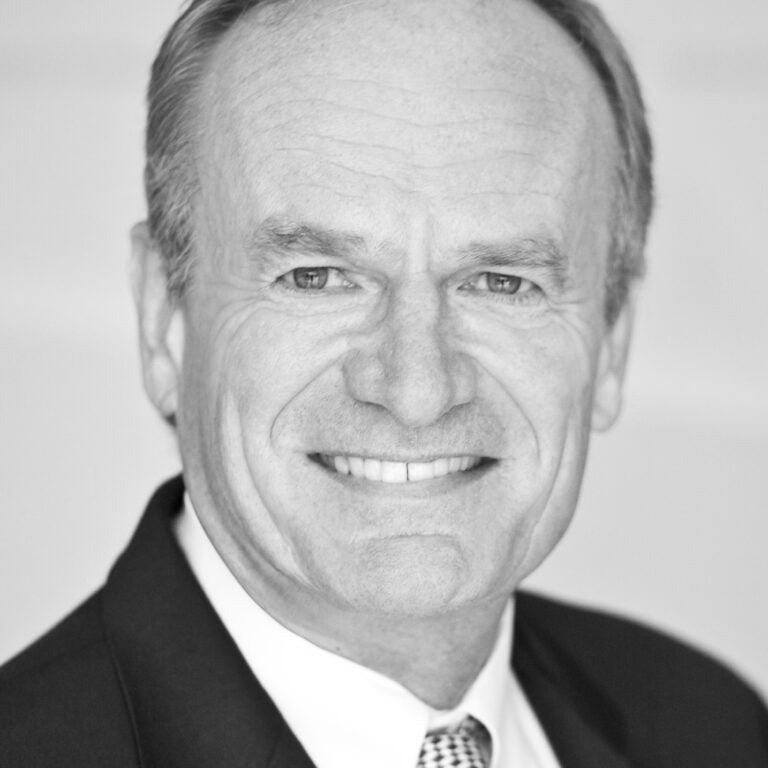
 © IIASA
Detlof Von Winterfeldt
Detlof von Winterfeldt is a Professor (Emeritus) of the Daniel J. Epstein Department of Industrial and Systems Engineering in the Viterbi School of Engineering of the University of Southern California (USC). He also is Professor (Emeritus) of the Price School of Public Policy at USC. From 2016 to 2025 he was the inaugural J.A. Tiberi Chair in Ethics and Decision Making. In 2004 he co-founded the National Center for Risk and Economic Analysis of Terrorism Events (CREATE), the first university-based center of excellence funded by the US Department of Homeland Security. He served as CREATE’s director from 2004 to 2008 and he was reappointed to this position from 2015 to 2019. In the interim, he was on leave of absence from USC as the Director of the International Institute for Applied Systems Analysis (IIASA) and as Centennial Professor of the London School of Economics and Political Science.
Throughout his academic career he has been active in teaching, research, administration, and consulting. He has taught courses in statistics, decision analysis, risk analysis, systems analysis, research design, and behavioral decision research. His research interests are in the foundation and practice of decision and risk analysis applied to the areas of technology development, environmental risks, natural hazards and terrorism. He is the co-author of 2 books, 3 edited volumes, and author or co-author of over 130 refereed articles and book chapters. He has served on 15 committees of U.S. National Academies, including an appointment to the National Academies’ Board on Mathematical Sciences and their Applications and as Chair of the Committee on the Study of Performance Based Safety Regulations. He is an elected Fellow of the Institute for Operations Research and the Management Sciences (INFORMS) and of the Society for Risk Analysis. In 2000 he received the Ramsey Medal for distinguished contributions to decision analysis from the Decision Analysis Society of INFORMS. In 2009 he received the Gold Medal from the International Society for Multicriteria Decision Making for advancing the field. In 2012 he received the distinguished achievement award by the Society for Risk Analysis.
 © David Kelly Crow
Elke U. Weber
Elke Weber is a cognitive psychologist and behavioral decision theorist. Her research draws from psychology, economics, sociology, ecology, and evolutionary biology to examine and model the decisions of individuals and groups as they deal with uncertainty and trade-offs in complex threats like climate change. She holds honorary doctorates from the University of Basel and Leuphana University. Over her career, Weber has contributed her expertise to numerous organizations in the US and beyond. She has served on various National Academy of Sciences advisory committees on the Human Dimensions of Global Change, as a member of the U.S. Environmental Protection Agency's (EPA) Science Advisory Board, and on a Committee on Carbon Neutrality to the German government. Weber has also been a lead author on the United Nations Intergovernmental Panel on Climate Change (IPCC) Fifth and Sixth Assessment Reports.
She is a fellow of the American Academy of Arts and Sciences and a member of both the German National Academy of Sciences Leopoldina and the U.S. National Academy of Sciences. In 2016, she received the Distinguished Achievement Award from the Society for Risk Analysis, in 2023 the Patrick Suppes Prize from the American Philosophical Society, in 2024 the BBVA Frontiers of Knowledge Award in the Social Sciences, in 2025 the Howard Crosby Warren Medal from Society for Experimental Psychology for the most significant advances in Experimental Psychology over the prior five years and the INSPIRE Award from University of Lausanne.
 © Linda Lehtovirta
Eeva Vilkkumaa
Dr. Eeva Vilkkumaa is an Associate Professor of Management Science at the Department of Information and Service Management at Aalto University School of Business, Finland. She received her doctoral degree in 2014 at the Department of Mathematics and Systems Analysis at Aalto School of Science. Her research interests include multicriteria decision analysis, portfolio decision analysis, scenario methods, strategic foresight, behavioral decision theory, and applications to healthcare and strategy development.
She has 18 years of experience in teaching courses on operations research, business analytics, and strategic foresight at Aalto University and Aalto Executive Education and Professional Development. Vilkkumaa has published in leading scientific journals such as Management Science, Operations Research, and European Journal of Operational Research. She is an Editorial Board member of the Journal of Multicriteria Decision Analysis. She has also been a partner and consultant in two companies specializing in the use of mathematical modeling for decision support and strategy development: Decision&Action (2016-) and Swanlake Strategy (2020- 2024).
 © Daniel L. Goroff
Daniel L. Goroff
Daniel Goroff is President and CEO of the Social Science Research Council. He is also Senior Advisor to the President of the Alfred P. Sloan Foundation, a grant-making philanthropy, following over a decade there as Vice President and Program Director. A Professor Emeritus of Mathematics and Economics, he served as Vice President for Academic Affairs and Dean of the Faculty at Harvey Mudd College. Before that, he taught at Harvard University for over a decade. In Washington, Goroff has held leadership positions at the National Science Foundation, the National Academy of Science, and three times at the White House Office of Science and Technology, where he most recently served as Deputy Director for Science and Society.
 © IIASA
Elena Rovenskaya
Elena Rovenskaya is an applied mathematician with scientific interests in op5miza5on, decision science, and mathematical modeling of complex socio-environmental systems. Rovenskaya graduated from the Faculty of Physics at Lomonosov Moscow State University in 2003. She received her PhD in 2006 from the Faculty of Computational Mathematics and Cybernetics at Lomonosov Moscow State University, Russia. In her PhD dissertation, she developed a new numerical method for solving a broad class of non-convex optimization problems. Since 2021, Rovenskaya has led the Advancing Systems Analysis program, one of four research programs at the International Institute for Applied Systems Analysis (IIASA). Currently, the new ASA Program includes more than 130 scientists and aims to identify, develop, and deploy new systems-analytical methods, tools, and data that address the most pressing global sustainability challenges with greater agility. Rovenskaya’s research aspires to leverage systems thinking and eco-logic to understand and govern human-made systems harmoniously.
 © IIASA
Fabian Wagner
Fabian Wagner is the Dean of Capacity Development and Academic Training (CDAT) at IIASA, and a principal research scholar in the Energy, Climate, and Environment Program. He serves as associate faculty at the Vienna Complexity Science Hub, and is editor-in-chief of npj Clean Energy, an open access journal of the Nature Portfolio. His research interests include the socioeconomic and environmental implications of GHG mitigation technologies, including energy savings, renewables, and district heating, but also generally public health co-benefits and interactions of the Sustainable Development Goals (SDGs). Wagner is experienced in science policy, strategic planning, and research evaluation, and serves in a variety of advisory roles with national and international organizations. From 2014 to 2016, Wagner was the Gerhard R. Andlinger '52 Professor for Energy and the Environment at Princeton University. Before joining IIASA in 2004, he held positions with IPCC at the Institute for Global Environmental Strategies (IGES) in Hayama, Japan and the International Energy Analysis Group at the Lawrence Berkeley National Laboratory (LBNL) in California. From 2020 to 2024 he served as editor-in-chief of the journal Mitigation and Adaptation Strategies for Global Change. Wagner received both his PhD (theoretical physics) and two master's degrees (mathematics, history, and philosophy of science) from Cambridge University, UK. In 1998, he won the J.T. Knight's Prize in mathematics from Cambridge University.