
Implementing Nature-based Solutions for Water Retention and Climate Resilience in Europe
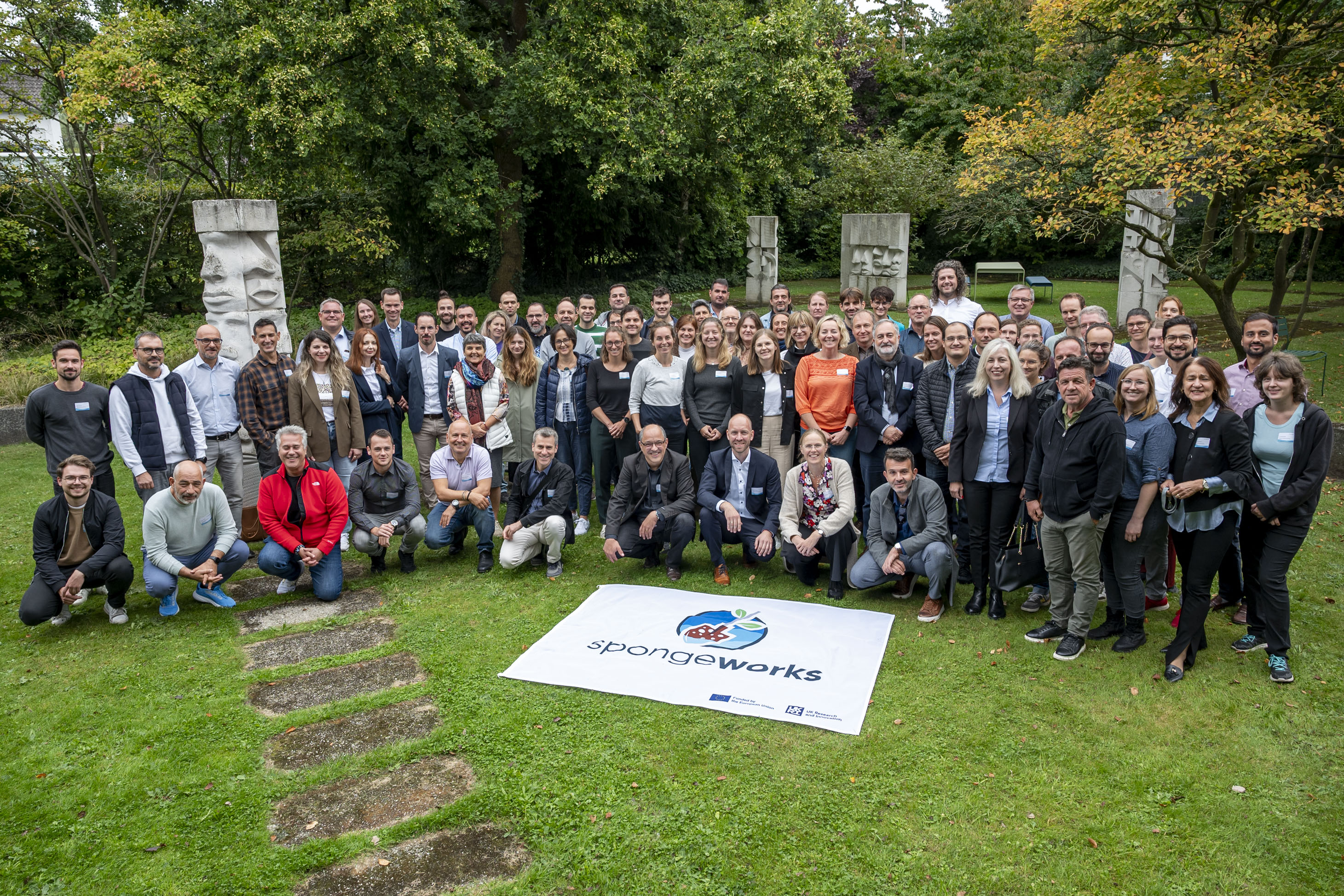 © Sputtfarken, Hannover
The SpongeWorks project aims to demonstrate practical, effective, economically feasible and socially inclusive nature-based “Sponge” solutions that enhance the water retention of interconnected groundwater, soil, and surface water systems at river basin scale.
The project seeks to upscale these solutions to regional and landscape levels.
Overview
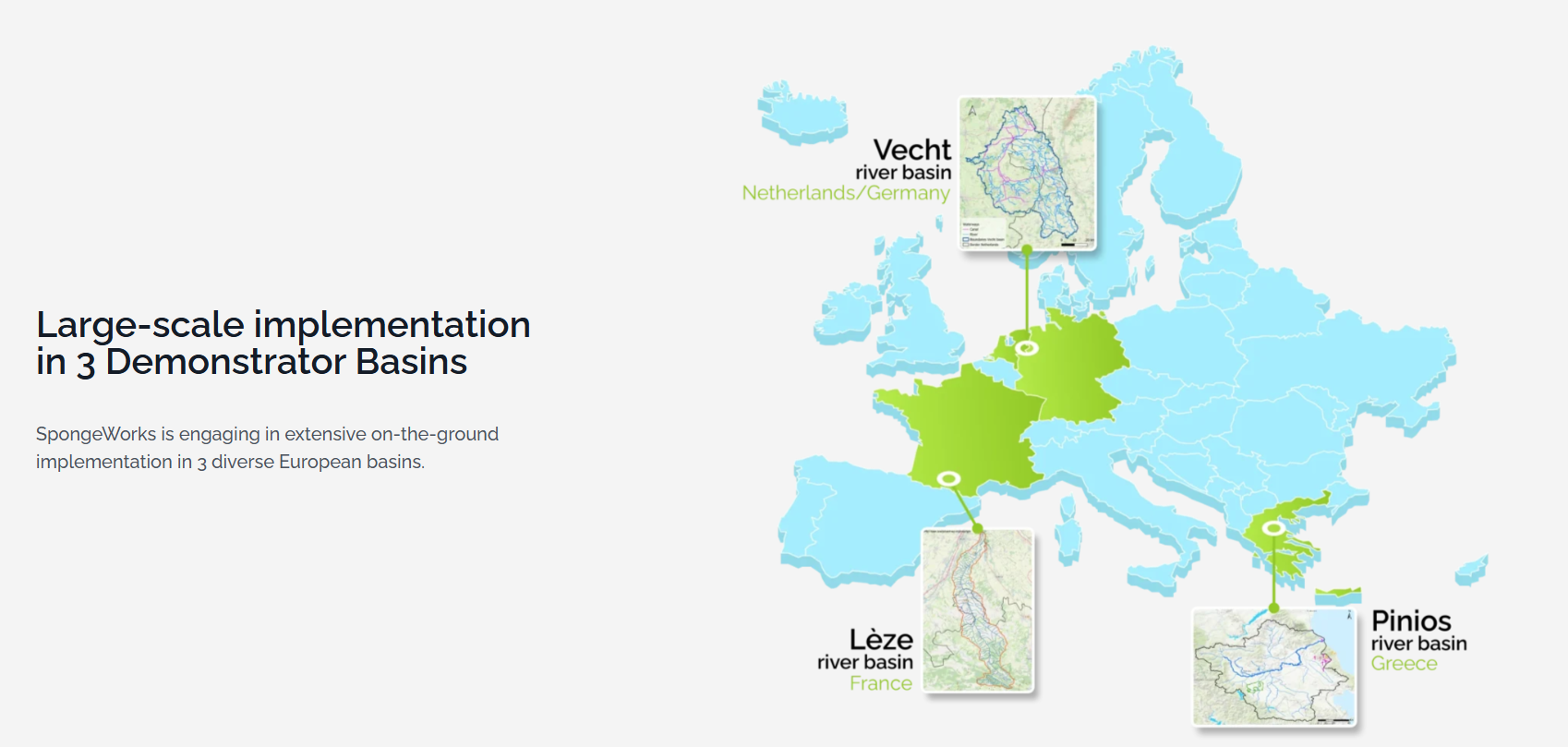
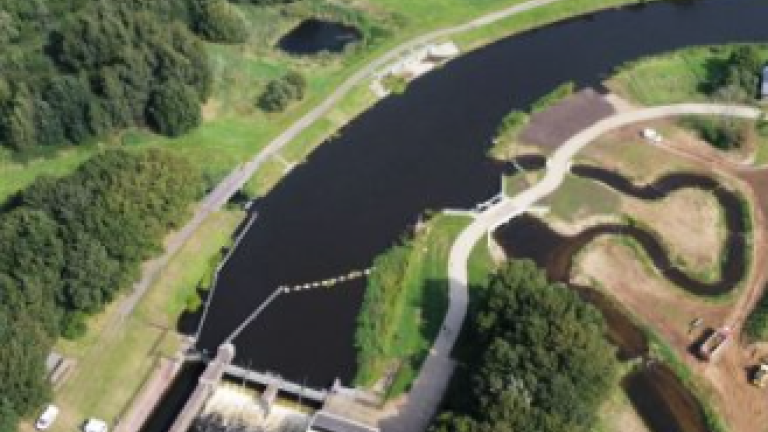
SpongeWorks will be implemented and evaluated in three large demonstration sites, in the following river basins:
- Vecht River Basin - Netherlands and Germany
- Lèze River Basin - France
- Pinios River Basin - Greece
The project seeks to upscale these solutions to regional and landscape levels.
The three demonstration sites will be used to transfer knowledge and lessons learned through co-created strategies (action plans and roadmaps) to at least eight associated regions and shared with the wider European Community of Practice (CoP) via the SpongeWorks Academy.
 © SpongeWorks consortium
IIASA Project Team

Julian Joseph
Research Scholar (WAT)

Taher Kahil
Research Group Leader and Senior Research Scholar (WAT)

Samar Asad
Research Assistant (WAT)
IIASA’s Water Security Research Group will contribute its expertise in hydro-economic modeling to explore the role of economic policy instruments in developing business cases for sponge strategies.
It leads Work Package 5: Upscaling throughout the EU and beyond building on four different tasks:
- T5.1: Exploring the role of economic policy instruments for creating the business case for sponge strategies.
- T5.2: Defining financial planning modules for sponge strategies.
- T5.3: Transferring knowledge to associated regions for a wider applicability of sponge strategies.
- T5.4: Designing an overarching guidance framework to mainstream the adoption of sponge strategies at the European level.
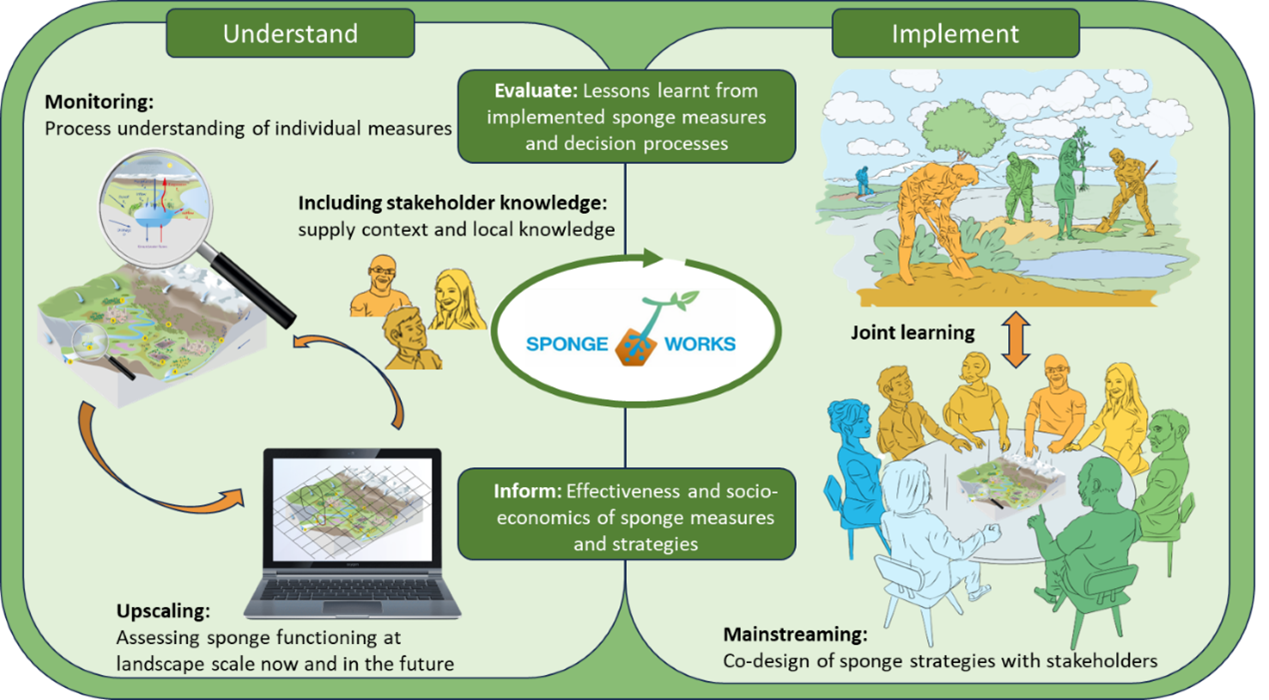
SpongeWorks Processes

Action in the Lèze River basin, France
SpongeWorks Project Team
The SpongeWorks consortium is composed of 28 Consortium Partners (CPs) and supported by more than 23 Knowledge Partners (KPs).
- Gottfried Wilhelm Leibniz Universitaet Hannover (University, Germany) (Coordinator)
- Deltares (Research Institute, Netherlands) (Co-coordinator)
- Office International de l'Eau (OIEau) (France)
- International Network of Basin Organisations (INBO) (France)
- Ellinikos Georgikos Organismos Dimitra, Soil & Water Research Institute (Agricultural Research
Institute, Greece) - IIASA (Research Centre, Austria)
- GWP-Med (International Network of Water-related Organisations, Greece)
- Universiteit Twente (University, Netherlands)
- Technische Universitaet Dresden (University, Germany)
- UK Centre For Ecology & Hydrology (Research Centre, UK)
- Ecologic Institut gemeinnützige GmbH (Research Centre, Germany)
- WWF Greece (Environmental NGO, Greece)
- Agrotikos Synetairismos Paragogis Emporias Metapiisis Frouton Kai Kastanon Melivias Athanati
(Agricultural Cooperative, Greece) - Dimos Agias (Municipality, Greece)
- Anaptyxiaki Etaireia Dimou Trikkaion Anaptyxiaki Anonymi Etaireia Ota (Municipality, Greece)
- Paseco Sp Ltd (Environmental consultants, Greece)
- Topikos Organismos Eggeion Veltioseon Tavropou Karditsas (Irrigation Association - Greece)
- Adict Solutions (Consultancy, France)
- Chambre Agriculture Ariège (Agricultural Chamber, France)
- Chambre d'agriculture de Haute-Garonne (Agricultural Chamber, France)
- Centre National De La Recherche Scientifique (Research Centre - France)
- Syndicat Mixte Interdépartemental de la Vallée de la Lèze (Regional Authority, France)
- Fruchtwasserverwertungsverband Emlichheim (Irrigation Association, Germany)
- Hardenberg gemeente (Municipality, Netherlands)
- Landkreis Grafschaft Bentheim (Regional Authority, Germany)
- Naturschutzstiftung Grafschaft Bentheim (Nature Management Organisation, Germany)
- Vechteverband ULV 114 (Water-related Network Organisation, Germany)
- Waterschap Vechtstromen (Water Authority, Netherlands)
IIASA models being used on this project

Funding
 © European Union