

The COIN 2.0 project addresses the lack of a comprehensive and consistent assessment of total climate-related costs and their distribution, despite advances in understanding sector-specific impacts and adaptation needs. It does so by developing integrated, policy-relevant quantifications of climate change impacts and adaptation pathways for Austria.
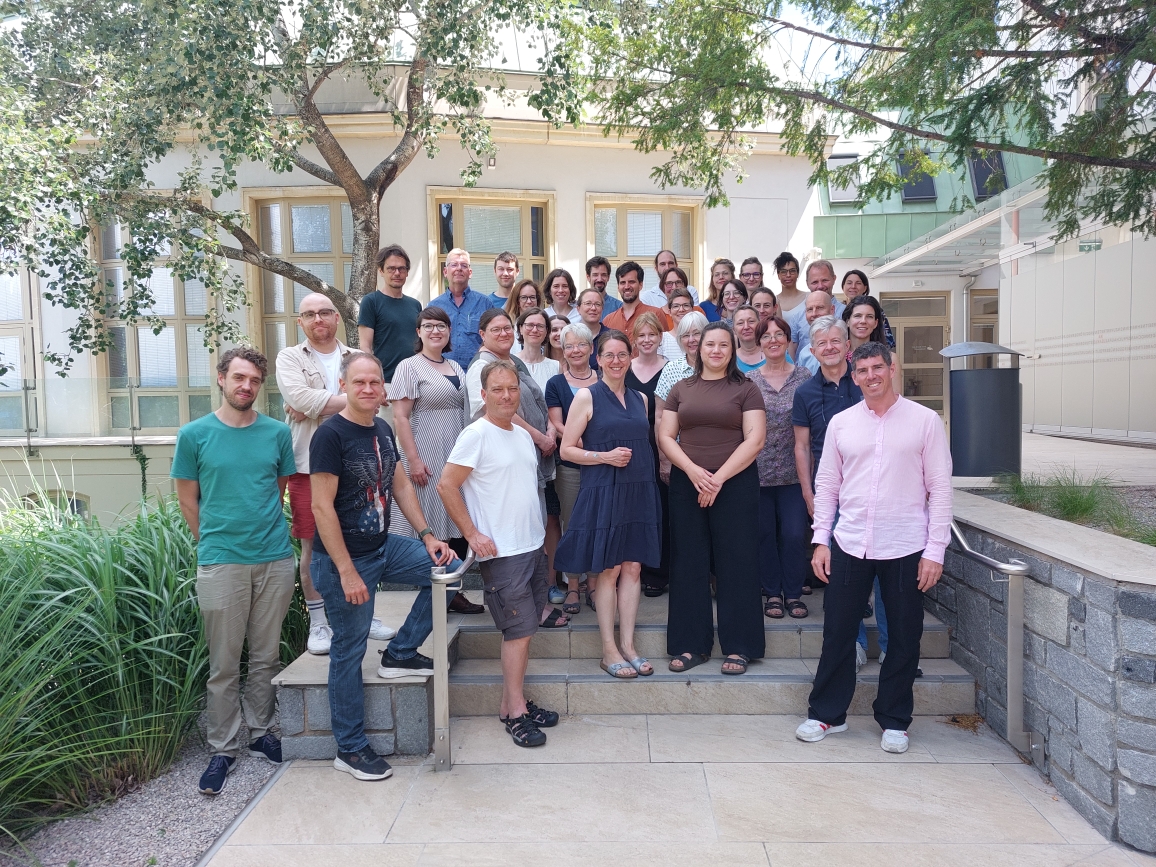 © COIN
Climate change is already strongly affecting Austria through rising temperatures, changing precipitation patterns, and more frequent extreme weather events. This leads to increasing costs for public authorities, including damage repair and adaptation measures across all levels of government and public institutions.Impacts affect all sectors of the economy and society, though in different ways. Earlier studies estimated annual climate-related costs in Austria could exceed €5 billion by mid-century, but substantial uncertainty remains due to unquantified impact pathways.
While methods and models have significantly improved in recent years, a fully consistent integration across all impact areas is still missing. Further research is therefore needed to provide more robust and policy-relevant assessments, as targeted in the COIN 2.0 framework.
Approach and methodology
Phase 1 develops the foundational climate and socio-economic scenarios, including RCP4.5 and RCP8.5 (2050, 2080), regionalized SSPs, land-use, and adaptation pathways. In addition to average impacts, a “worst-case” storyline is constructed for selected sectors (river flooding, health, and partly energy), allowing analysis of historical extreme events under future climate and socio-economic conditions. Baseline estimates of current climate-related costs are derived from empirical damage data (e.g. reinsurance sources) for the past two decades. Here EQU provides a synthesis of indicators of social vulnerability and well-being applicable to Austria, and adapts the climate impact chain concept to fit project needs and for cross-project application
Phase 2 focuses on modelling sectoral climate impacts under different adaptation levels using established impact models and methods. IIASA’s role here is monitoring the various approaches across impact areas and their capacity to consider social vulnerability and well-being.
Phase 3 assesses macroeconomic and social effects, comparing scenarios of low/no adaptation with high adaptation, including distributional impacts across societal groups and multiple burdens, complemented by qualitative analysis, in order to project social impacts beyond limited quantitative indicators. EQU employs an semi-quantitative expert elicitation approach to generate information on affordability, limits to adaptation, and compound impacts.
Throughout the project, continuous exchange with stakeholders ensures integration of practical knowledge and supports the translation of results into adaptation practice both nationally and regionally.
IIASA contribution
The Equity and Justice Research Group (EQU) at IIASA has taken the lead in synthesizing social vulnerability and well-being as part of a comprehensive study on the costs of inaction with respect to climate change adaptation in Austria. The consortium holds most major Austrian research institutions holding key knowledge on more than eight impact areas including health, agriculture, biodiversity and ecosystems, energy, water supply management, and disaster risk management. The project is the second iteration of a 2015 study COIN I, and expands this work, which is of crucial importance to Austrian policy makers, who also fund this project.
The first EQU-led contribution is about to be published and holds conceptual synthesis work on quantitative and qualitative indicators of social vulnerability and well-being, as well as their representation in climate impact chains. This work is the baseline for an ongoing dialogue process across the projects impact areas.
Partners and collaborators
- University of Graz, Wegener Center, Economics of Climate and Global Change
- University of Graz, Wegener Center, Regional Climate Research Group
- AIT Austrian Institute of Technology GmbH
- The Austrian National Public Health Institute
- JOANNEUM RESEARCH
- Austrian Academy of Sciences
- Environment Agency Austria
- Austrian Institute of Economic Research
- BOKU University
- TRAFFIX Verkehrsplanung GmbH
- TU Wien
- Climate Change Centre Austria (CCCA)
Funders
 © COIN