


The Urban ReLeaf project, which IIASA is coordinating, helps European cities make citizen science part of everyday planning and policymaking. Three recent publications from the project show how to use residents’ local knowledge to inform decisions about greener, healthier, and more inclusive neighborhoods.
The Urban ReLeaf Adoption Roadmap: Embedding Citizen Science in Urban Policy and Planning provides strategic guidance for city authorities, policymakers, urban planners, researchers, and other stakeholders seeking to make citizen participation a lasting part of urban decision-making. It draws on the experience of six European cities that put citizen science into practice, engaging more than 3,900 residents.
The Adoption Roadmap includes two practical tools: a Canvas to help teams work through the adoption process, and a set of Illustrations showing how the roadmap can be applied to concrete topics such as heat, greenspace, and air quality.
It is published alongside the Urban ReLeaf Toolkit, a separate document that provides cities with step-by-step guidance on designing and running citizen science campaigns. The Roadmap sets the strategic direction for embedding citizen science, while the Toolkit supports the practical work of carrying it out.
From local knowledge to lasting change
Cities face growing environmental and social challenges that require solutions informed by diverse perspectives and reliable data. Through citizen science, residents can contribute local data, share their experiences, and help build a better understanding of their neighborhoods. The challenge is ensuring that this knowledge informs decisions beyond individual projects.
“We want to help cities move from individual citizen science projects to approaches that can become part of everyday urban planning and policymaking. The Roadmap offers a starting point for turning citizens’ knowledge and participation into a lasting part of how cities make decisions,” says Gerid Hager, IIASA Senior Researcher, Urban ReLeaf coordinator and Roadmap lead.
Building greener cities together
Embedding citizen science in urban governance can help cities respond more effectively to local needs, bring underrepresented perspectives into decision-making, and strengthen collaboration between citizens and public institutions.
“Greener and more inclusive cities are built together. Residents don’t just share their experiences but also generate knowledge that can shape decisions, and this Roadmap helps cities put that knowledge to work,” emphasizes Inian Moorthy, IIASA Senior Researcher and Urban ReLeaf project coordinator.
Different roles in citizen science
Cities can play different roles in citizen science, depending on their institutional capacity, governance structures, political priorities, and relationships with local communities. Drawing on Urban ReLeaf experience, the Toolkit presents five possible roles to help cities identify the approach that best suits their local context, clarify responsibilities and build effective collaborations with citizens, NGOs, universities, and other partners.
“Successful citizen science starts with understanding the role a city is best suited to play. There is no one-size-fits-all approach: each city needs to find the right balance between leadership, coordination, and community participation, adapting its role to local needs and capacities,” notes Todd Harwell, IIASA Researcher and Urban ReLeaf work package lead.
Explore the Urban ReLeaf resources
- Urban ReLeaf Adoption Roadmap: Embedding Citizen Science in Urban Policy and Planning
DOI: https://doi.org/10.5281/zenodo.21771130 - Adoption Roadmap – Canvas
DOI: https://doi.org/10.5281/zenodo.21771644 - Adoption Roadmap – Illustrations
DOI: https://doi.org/10.5281/zenodo.21771691 - Urban ReLeaf Toolkit: Designing and running citizen science campaigns
DOI: https://doi.org/10.5281/zenodo.21770907
About Urban ReLeaf
Urban ReLeaf — Citizen-powered data ecosystems for inclusive and green urban transitions is a collaborative project exploring how citizen-generated data and public participation can support more sustainable and inclusive cities.
Urban ReLeaf has received funding from the European Union’s Horizon Europe Research and Innovation Programme under Grant Agreement No. 101086638. UK participants in the Urban ReLeaf project are supported by United Kingdom Research and Innovation (UKRI) Innovate UK under grant agreements 10061290 and 10041792.
News
19 November 2026
IIASA appoints new leadership to advance its Scientific Vision
The IIASA Council has appointed Keywan Riahi as Interim Director General and Anne Goujon as Interim Deputy Director General, effective 1 December 2026. The appointments follow the decision of Hans Joachim (John) Schellnhuber to step down as Director General for family reasons, after a period of visionary leadership that has significantly strengthened IIASA's scientific direction, international partnerships, and role in science diplomacy.

17 November 2026
Expanding human settlements are reshaping the global geography of agriculture
As growing towns and cities compete with agriculture for land, farming is increasingly expanding into tropical and arid regions, raising concerns for forests, biodiversity, and water resources. New research shows how these shifts are transforming the global geography of agriculture and creating new challenges for sustainable land-use planning.
10 November 2026
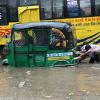
New UN report warns of widening climate adaptation gap and increasing losses and damages
IIASA researchers contributed to the UNEP Adaptation Gap Report 2026, which warns that climate adaptation efforts and financing are failing to keep pace with accelerating climate impacts, leaving vulnerable countries increasingly exposed to losses and damages.