


At the International Conference on Theory and Practice of Electronic Governance (ICEGOV 2025), IIASA researchers highlighted the critical role of cultural context in combating climate change disinformation. Presenting the Adaptation AGORA project, they showcased a suite of innovative digital tools, including a mobile app and a dedicated Disinformation Academy, designed to empower citizens and build climate resilience through inclusive, participatory governance. The project moves beyond top-down approaches to co-create adaptation strategies that are both scientifically robust and socially legitimate.
ICEGOV 2025 Spotlight on Misinformation
At the 18th International Conference on Theory and Practice of Electronic Governance (ICEGOV 2025), IIASA scientists underscored a critical flaw in the global fight against misinformation. A one-size-fits-all approach does not work. During a workshop on “Cultural Values and Online Misinformation”, Nadejda Komendantova, leader of the IIASA Cooperation and Transformative Governance (CAT) group, argued that effective strategies must be as nuanced as the cultural landscapes they aim to protect.
“To build effective resilience, our strategies must be as diverse and nuanced as the cultural landscapes they aim to protect”, Komendantova stated, presenting work co-authored with IIASA Research Scholar Dmitry Erokhin. “A narrative that is dismissed in one region may gain alarming traction in another due to its alignment with local values or historical experiences”.
As a prime example of this principle in action, she presented the Adaptation AGORA Climate Change Disinformation Academy – a digital platform that provides educational resources tailored to debunk region-specific disinformation tactics and communication styles.
About the Adaptation AGORA Project
The Disinformation Academy is a key component of the broader EU-funded Adaptation AGORA project, which aims to transform how climate adaptation policies are designed and implemented. The project's mission is to move beyond top-down decision-making by fostering inclusive, participatory governance. It brings together citizens, scientists, businesses, and policymakers to co-create adaptation strategies that reflect local realities and social priorities.
In the Adaptation AGORA project, IIASA works together with a consortium of European partners, including the Fondazione Centro Euro-Mediterraneo sui Cambiamenti Climatici (CMCC) in Italy, which acts as the coordinator, along with Barcelona Supercomputing Center (Spain), Stockholm Environment Institute (Sweden), CIMA Foundation (Italy), ICLEI European Secretariat (Germany), Agenzia per la Promozione della Ricerca Europea (Italy), European Citizen Science Association (Germany), Ibercivis Foundation (Spain), Athens Technology Center (Greece), and the Stockholm Environment Institute Tallinn Centre (Estonia), as well as partner organizations Université de Genève (Switzerland) and SEI Oxford Office (United Kingdom).
The core belief is that adaptation cannot succeed without public trust and ownership. By studying various participatory formats from deliberative workshops to digital platforms the project seeks to bridge the divide between institutions and citizens, providing decision-makers with actionable insights into public values and concerns.
A significant part of this effort is the development of a suite of innovative digital tools to facilitate this engagement, which includes the Adaptation Collaboration Hub (ACH) for stakeholders to connect and collaborate, Climate Data and Disinformation Academies, and the Adaptation AGORA Mobile App.
These tools are designed to empower communities, build capacity, and ensure that the lessons learned from the project are scaled up into wider European adaptation strategies through a dedicated Policy Whitepaper.
In the Adaptation AGORA project, IIASA steers the crucial work on policy analysis and citizen engagement. The institute's researchers work to bring science, governance, and society into closer conversation, using systems analysis to identify the barriers to effective participation and institutional trust.
Publications
Zobeidi, T. & Komendantova, N. (2025). Comparative analysis of adaptation policies and policy instruments for water management in Europe. Journal of Hydrology: Regional Studies 62 e102819. 10.1016/j.ejrh.2025.102819.
Mattera, M., Erokhin, D. , Baldelli, M., & Komendantova, N. (2025). Climate experiences to adaptation participation: a survey study in Catalonia. Theoretical and Applied Climatology 156 (11) 10.1007/s00704-025-05706-6.
Komendantova, N. , Zobeidi, T., & Yazdanpanah, M. (2025). Analyzing the use of fact-checking tools in disaster-risk reduction in Europe through the lens of the heuristic-systematic model. Scientific Reports 15 (1) e19121. 10.1038/s41598-025-03099-0.
Komendantova, N. & Erokhin, D. (2025). Artificial Intelligence Tools in Misinformation Management during Natural Disasters. Public Organization Review 10.1007/s11115-025-00815-2.
Bruley, E., Scolobig, A., Allen, S.K., Erokhin, D. , Komendantova, N. , Bharwani, E., Pickard, S., Ellena, M., Reder, A., Moreno, L., Bielsa, J., Verones, A., Englund, M., Karlsson, S., & Stoffel, M. (2024). Enablers and barriers to co-design, co-develop and coimplement solutions for climate resilience. Adaptation Agora
Komendantova, N. , Erokhin, D. , Scolobig, A., Bruley, E., Mattera, M., & Baldelli, M. (2024). Deliverable D4.2 - Policy instruments and influences on coproduction. Adaptation Agora
Baulenas, E. & Pickard, S. (2024). Mapping of existing citizen engagement initiatives. Adaptation Agora
Markou, S., Doulgerakis, A., & Triantafyllou, A. (2024). D3.5 Digital Academy against Climate Change Disinformation. Adaptation Agora
Erokhin, D. & Komendantova, N. (2024). Application of science, technology and innovation solutions to increase participation in climate change adaptation. In: STI Forum 2024, May 2024.
Zobeidi, T., Komendantova, N. , Yazdanpanah, M., & Lamm, A. (2024). A multi-dimensional model of anticipating intention to use social media for disaster risk reduction. International Journal of Disaster Risk Reduction 104 e104356. 10.1016/j.ijdrr.2024.104356.
Erokhin, D. , Komendantova, N. , & Mattera, M. (2024). Spanish Climate Change Adaptation Policies: A Comprehensive Analysis of Participatory Elements. In: Socioecos 2024: Climate change, sustainability and socio-ecological practices. Eds. Tejerina, B., de Almeida, C., & Acuña, C., pp. 103-114 International Conference Socioecos.
Moreno, A., Pelacho, M., Gaibar, A., Markou, S., Doulgerakis, A., Ellena, M., Di Giorgio, M., Erokhin, D. , & Komendantova, N. (2023). D1.3 Report on capacity building resources on climate change adaptation and disinformation campaigns. Agora
Komendantova, N. , Erokhin, D. , & Albano, T. (2023). Misinformation and Its Impact on Contested Policy Issues: The Example of Migration Discourses. Societies 13 (7) e168. 10.3390/soc13070168.
 © IIASA
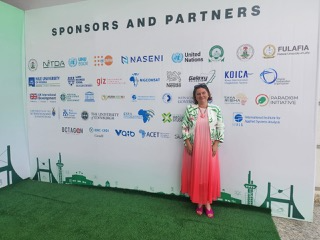
Nadejda Komendantova at ICEGOV
 © IIASA
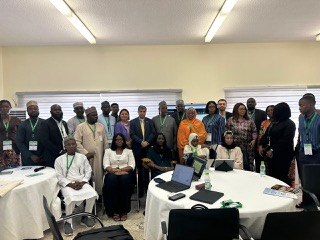
Participants in the workshop on “Cultural Values and Online Misinformation” at ICEGOV 2025
News

24 September 2026
IIASA researcher joins Austrian Academy of Sciences working group on integrated carbon neutrality
On 15 September, Principal Research Scholar Thomas Schinko represented IIASA at a high-level event of the Commission on the De-Fossilization and Carbon Neutrality of the European Energy Systems (DEE) of the Austrian Academy of Sciences (OEAW). The meeting denoted the kick-off workshop of the newly established DEE Working Group "Transsectoral and Transcontinental Integration”.

23 September 2026
IIASA researchers strengthen cooperation with Kyrgyzstan on AI and industrial development
IIASA Cooperation and Transformative Governance (CAT) Research Group Leader and Senior Research Scholar Nadejda Komendantova and CAT Research Scholar Dmitry Erokhin have contributed to a series of scientific and policy forums in Kyrgyzstan in 2026. Their research on artificial intelligence in the production sector builds on IIASA’s longstanding cooperation with the country on sustainable industrial development.

10 September 2026
Emotionalization of Political Discourse: IIASA Researcher Presents Study at the Day of Parliamentary Research 2026
Dmitry Erokhin, PhD, Research Scholar at IIASA, presents a poster on the emotionalization of political discourse at the Day of Parliamentary Research 2026 at the Austrian Parliament. His study analyzes public comments on YouTube videos related to major Austrian political parties and applies sentiment and topic analysis to examine how emotions, facts, polarization, and toxicity shape online political debate. The findings provide insights into how digital media influences public perceptions of parties and democratic processes, and how parliaments can better respond to emotionally charged political communication.