

Josephine Borghi, lead of the SHAW Research Group, recently participated as a panelist in the “Unlocking Climate Finance for Health” webinar, organized by DGI Consult, where she shared her insights on integrating health into climate finance efforts.
The health burden of climate change is enormous, with low- and middle-income countries (LMICs) facing a particularly severe impact. The annual adaptation financing gap for health in these regions is estimated at USD 11 billion. Despite this, health continues to receive only a small fraction of multilateral climate financing. Key barriers include limited awareness of health priorities within climate funds, technical capacity gaps, and challenges in aligning health needs with existing climate funding criteria.
To address these issues, DGI Consult organized a webinar titled “Unlocking Climate Finance for Health”, aimed at exploring opportunities to secure climate finance for health initiatives and defining actionable strategies to move forward. Josephine Borghi, lead of the SHAW Research Group, participated as a panelist alongside policymakers and climate finance experts. The discussion emphasized the need for integrated approaches to ensure that health systems are not left behind in global climate finance efforts.
Related Publications
Borghi, J. , Cuevas, S., Anton, B., Iaia, D., Gasparri, G., Hanson, M., Soucat, A., Bustreo, F., & Langlois, E. (2024). Climate and health: a path to strategic co-financing? Health Policy and Planning 39 (Supple) i4-i18. 10.1093/heapol/czae044.
Borghi, J. , Garcia-Dorado, S.C., Anton, B., Gerardo, D., Gasparri, G., Hanson, M., Soucat, A., Bustreo, F., & Langlois, E. (2024). Climate finance opportunities for health and health systems. Bulletin of the World Health Organization 102 (5) 330-335. 10.2471/BLT.23.290785.
News

24 September 2026
IIASA researcher joins Austrian Academy of Sciences working group on integrated carbon neutrality
On 15 September, Principal Research Scholar Thomas Schinko represented IIASA at a high-level event of the Commission on the De-Fossilization and Carbon Neutrality of the European Energy Systems (DEE) of the Austrian Academy of Sciences (OEAW). The meeting denoted the kick-off workshop of the newly established DEE Working Group "Transsectoral and Transcontinental Integration”.
23 September 2026
Eco-Welfare Network Conference
Julia Beier participated in the first in-person Eco-Welfare Network Conference, held in Brussels from 9-11 September at the Université Libre de Bruxelles as part of the Transform-Labor project.
14 September 2026
Can a warming climate put women at greater risk?
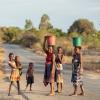
Unusually warm periods could have a link to an increased risk of intimate partner violence against women, according to a new IIASA-led study covering 31 countries in sub-Saharan Africa. The findings highlight how rising temperatures may compound existing risks of violence, with effects varying between demographic groups.