

The Agriculture, Forestry, and Ecosystem Services (AFE) group has hosted researchers from Inland Norway University of Applied Sciences and the Swedish Environmental Protection Agency as part of the TaigaClimate project meeting from 29 to 30 April.
TaigaClimate has a unique character, pioneering the integration of biophysical needs and population dynamics modeling. It develops computation models of natural ecosystems and human activities, which are used to make forecasts of the future consequences of a changing climate and different management alternatives.
 © Oskar Franklin | IIASA
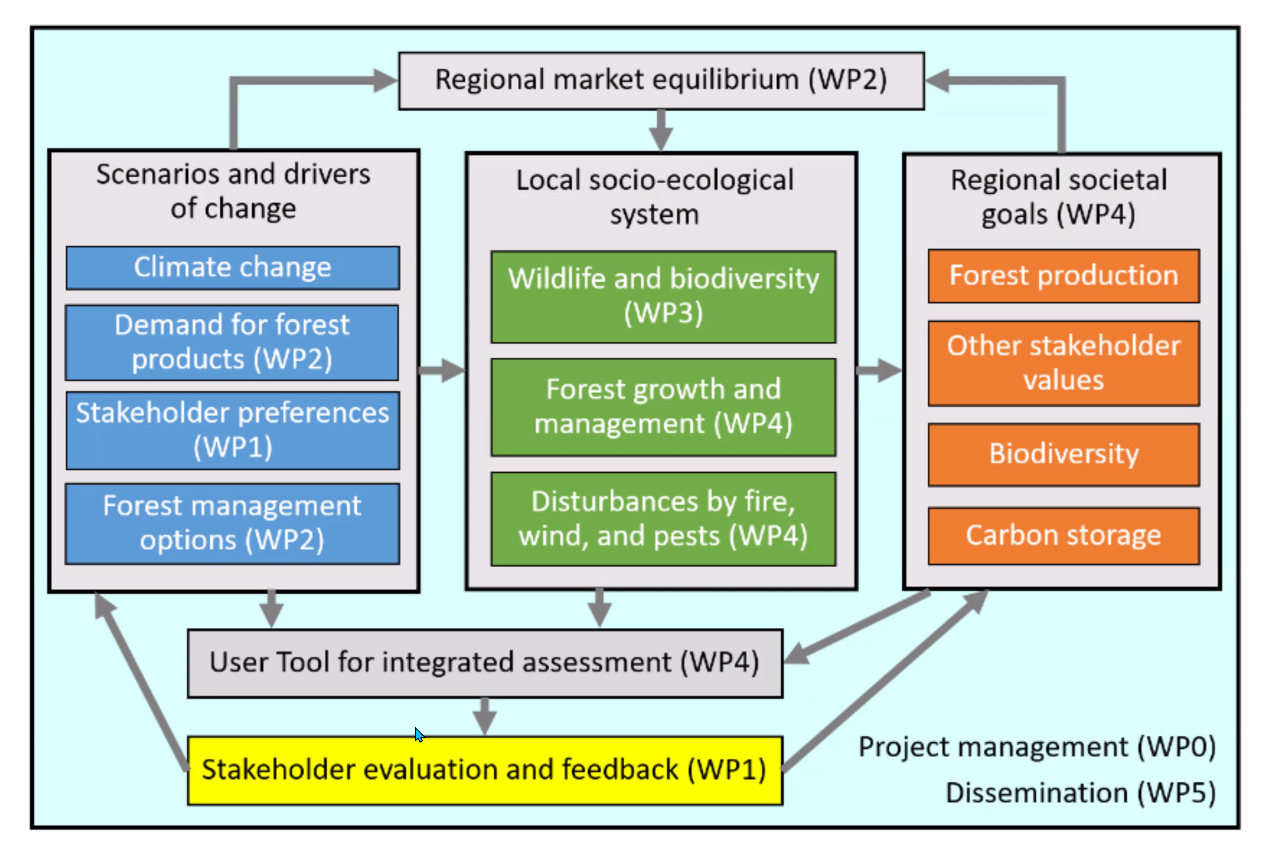
Systems perspective of forest and wildlife management. Climate controls biological processes and the capacity of the ecosystems to supply services to society. Societal transformations and stakeholder preferences drive demands for products and ecosystem services. The market forces make forest and wildlife management adjust until supply balances demand. The User tool allows us to evaluate the impacts of different policy and management options for all stakeholders.
Throughout the two-day meeting, participants presented the progress of all project collaborators and focused on integrating the different components from a technical perspective.
The project meeting underscored the importance of interdisciplinary collaboration in addressing climate change by ensuring optimal management for the long-term sustainability of forests and wildlife and their utilities for stakeholders.
 © Oskar Franklin | IIASA
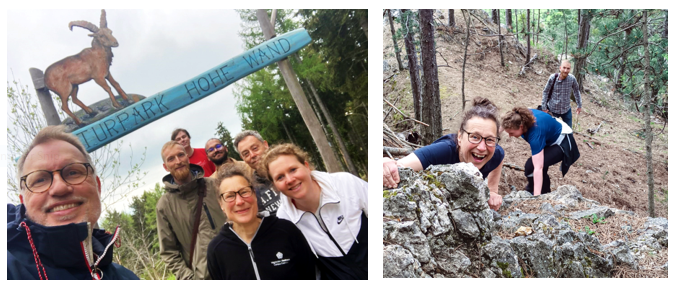
To generate new ideas and inspiration, the researchers made a field trip to the Austrian mountains to observe local wildlife and wildlife management.
News

04 February 2026
An integrated, society-centered approach to reducing pollution in European cities
End of January saw the launch of the new EU-funded ATMOPOLIS project, an innovative study that integrates environmental and social sciences to understand how air and noise pollution exposure affect citizens across European cities and propose actions to help improve their quality of life. IIASA researchers are leading a work package to develop an integrated decision support tool for cities.

24 October 2025
Defining future directions for open, fair, and sustainable research in Europe
IIASA Deputy Director General, Karen Lips, represented the Institute at the 2025 European Regional Meeting of the Global Research Council (GRC), convened by Science Europe earlier this week. The meeting provided an important forum for engagement with global research-policy networks to advance themes of open science, artificial intelligence, fairness, and sustainable research systems.
30 May 2024
New method could significantly reduce agricultural greenhouse gas emissions
New research by the Norwegian University of Life Sciences (NMBU) and IIASA proposes using soil bacteria to cut greenhouse gas emissions from food production.