

IIASA alumnus and donor István Sebestyén discusses the first permanent computer network connections for science and research between East and West – during and after the Cold War era and 10 years before the Internet.
 © IIASA
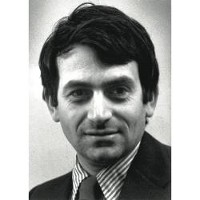
István Sebestyén in 1978 at IIASA
Sebestyén studied Electrical Engineering at the Technical University in Budapest, receiving his MS in 1970 and PhD in 1974. He then joined the Computer Laboratory of the Institute for Coordination for Computer Techniques. His field of interest was software engineering. From 1974 to 1977, he participated in a number of joint development projects on the subject with Siemens AG. Between 1978 and 1984 he worked at IIASA, first in the Secretariat, then as a scientist in the Computer Science Group of the Systems and Decision Sciences area, and later in the Management and Technology Area.
Below is his presentation on establishing and operating the first permanent computer network connections from and to Austria and between East and West for science and research:
News

13 October 2026
Connecting disciplines and inspiring new ideas with the Environment and Climate Research Hub
IIASA Deputy Director General Karen Lips delivered a keynote at the University of Vienna's recent Environment and Climate Research Hub (ECH) Research Frontiers Workshop in Bad Vöslau, Austria, emphasizing the importance of interdisciplinary collaboration in addressing complex environmental and climate challenges.
12 October 2026
Connecting science across borders: IIASA Committee meets University of Salzburg
How can universities and international research organisations work together to address the complex challenges of a changing world? This question shaped a full day of scientific exchange at the University of Salzburg on 6 October, when the Austrian IIASA Committee met with members of the University community to discuss research, collaboration and opportunities for researchers and students.
06 October 2026
Nanjing University delegation visits IIASA to explore future collaboration
A high-level delegation from Nanjing University (NJU), led by Professor Tan Zhemin, President of NJU and Fellow of the Chinese Academy of Sciences, visited IIASA to discuss opportunities for strengthening scientific cooperation and advancing joint research on global challenges.