


Earlier this month, IIASA and the Joint Research Center (JRC) of the European Commission (EC) signed a collaboration agreement to build knowledge in the field of demography. The aim is to address gaps in the labor market and vulnerability to climate change, and ensure that IIASA research is directly communicated to EU policymakers.
IIASA and the JRC signed a cooperation agreement, aimed at advancing research and exploring different scenarios in the field of population projections, as well as ensuring that the results obtained are used to support policymaking.
The two organizations will work to enhance demographic microsimulation capacities enabling better projections that can help address gaps in the labor market. They will also work to improve the methods for global population projections at high spatial resolution, which can help assess the exposure and vulnerability of populations to climate change impacts.
“This agreement is a major step toward ensuring that our research is directly communicated to the policymakers in the EU, providing them with the scientific evidence they need to enact the most effective demographic policies,” says Anne Goujon, IIASA Population and Just Societies Program Director, coordinating this project. “By joining forces, we can highlight future challenges, but above all future opportunities available to the European population in terms of employment and skills.”
The JRC is the science and knowledge hub of the EC. Its mission is to provide independent, evidence-based knowledge and science, supporting EU policies to positively impact society.
Between 2016 and 2020, the JRC and IIASA collaborated in a variety of areas, including in the context of the CEPAM project, focusing on the implications of migration. The main outcome of this collaboration was the flagship publication "Demographic and Human Capital Scenarios for the 21st Century". This publication explores the key factors that will shape European demographics over the coming decades with a special focus on education levels and labor force participation rates.
News

15 October 2026
MowingQuest system-test campaign 2026 concludes, data collection continues
IIASA’s MowingQuest citizen-science campaign has wrapped up its August–September 2026 system test, with 25 pioneer users submitting almost 800 observations across eight countries. The results will help improve the app and data-quality workflows ahead of the main 2027 campaign. Two participants have also won Garmin GPS watches in the campaign raffle.

07 October 2026
MOSAIC results highlighted during Austria’s Protective Forest Week 2026
MOSAIC project results and IIASA research on climate-resilient protective forests are featured during Austria’s Protective Forest Week 2026, including work on wildfire risk, decision-support tools, and the Alpine Resilience Web Atlas.
06 October 2026
IIASA celebrates long-term partnership with MSc European Forestry Program
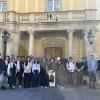
Coordinators, partners and graduates of the MSc European Forestry program visited IIASA on 29 September 2026. Twenty visitors from at least eight countries came as part of the alumni event held alongside the program's graduation ceremony at BOKU University in Vienna.