


The 16th Conference of the Parties (COP16) to the United Nations Convention to Combat Desertification (UNCCD) underscored Kazakhstan’s leadership in sustainable land management during the side event titled “Carbon Farming in the Dry Land Belt of Northern Eurasia: Unlocking Win-Win Opportunities.” This session, co-organized by the International Institute for Applied Systems Analysis (IIASA) and the BRICS Competition Law and Policy Centre, explored how innovative carbon farming practices can combat land degradation, mitigate climate change, and foster socio-economic development.
Riyadh, Saudi Arabia – December 12, 2024
Moderated by Elena Rovenskaya of IIASA, the session brought together experts and policymakers, amongst others Ahmed Alghamdi from the National Center for Vegetation Cover Development and Combating Desertification (NCVC), Murat Temirzhanov of Kazakhstan’s Ministry of Agriculture, Michael Obersteiner of the Environmental Change Institute at the University of Oxford and Alexey Ivanov, Director of the BRICS Competition Law and Policy Centre.
Drawing on over three decades of experience, Obersteiner emphasized lessons learned from global carbon sequestration projects, such as REDD+, and their relevance for carbon farming in dryland regions. “We have seen that achieving success in land-based carbon sequestration requires more than financial commitments—it demands integrated planning and technical cooperation,” he noted. Obersteiner highlighted the transformative potential of digitalization in carbon farming, explaining how advanced Earth intelligence tools can enable accurate monitoring and verification of carbon sequestration, ensuring the credibility of initiatives within global carbon markets.
He also called attention to the need for customized approaches: “Dryland ecosystems like those in Kazakhstan require tailored solutions, including soil restoration through enhanced weathering and biochar application, alongside traditional conservation practices such as no-till farming. These methods not only improve carbon storage but also enhance soil health and water retention, critical for the resilience of arid regions.”
Earlier during COP16, at the Science, Technology, and Innovation Day, Obersteiner joined a high-level dialogue addressing critical gaps in land and drought science. He stressed the need for integrated approaches to sustainable land management: “Sustainable land management must simultaneously address climate mitigation, biodiversity conservation, and rural development. These goals are interconnected and require integrated, science-based solutions.”
The discussions at COP16 underscored the broader implications of Kazakhstan’s carbon farming initiatives. Collaboration among countries in the Dry Land Belt, supported by innovative technologies and robust policy frameworks, has the potential to transform the region into a global model for climate resilience.
“Kazakhstan’s leadership can inspire neighboring countries to adopt similar strategies, creating a ripple effect of sustainable practices across the Dry Land Belt,” said Alexey Ivanov of the BRICS Competition Law and Policy Centre.
For more information on Kazakhstan’s carbon farming initiatives and the report “Carbon Farming in Kazakhstan: Unlocking the Potential,” visit www.eurasiancarbon.com.
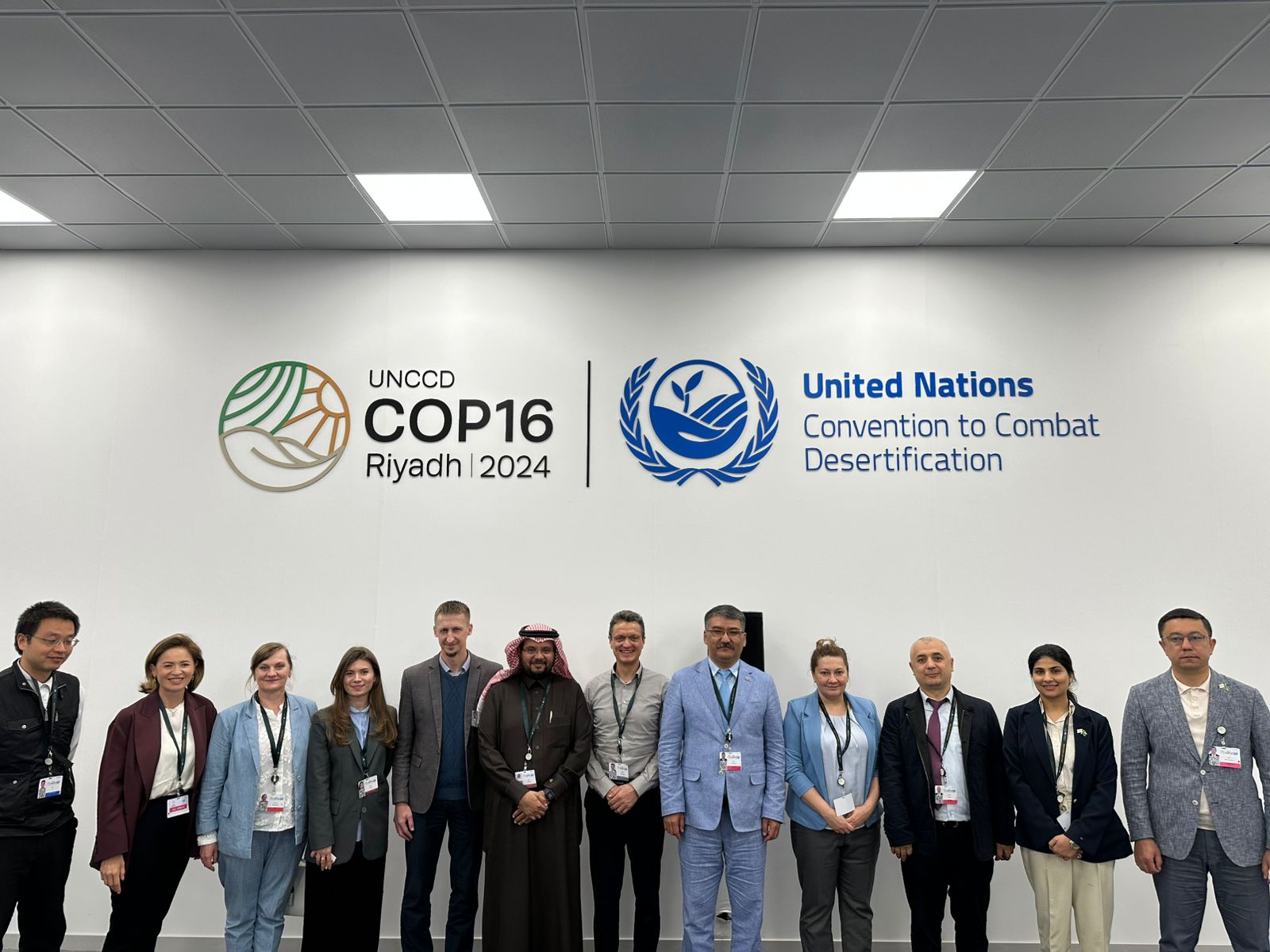 © IIASA
Speakers at the COP16 side event “Carbon Farming in the Dry Land Belt of Northern Eurasia: Unlocking Win-Win Opportunities.”
News
15 October 2026
IIASA strengthens science diplomacy ties at UNGA in New York
IIASA Science Diplomacy Director and Head of Communications and External Relations Susie Kitchens represented the Institute at the United Nations General Assembly (UNGA) High-level Week and Science Summit in New York in September, contributing to discussions on how science and international cooperation can help address shared global challenges.

22 September 2026
IIASA at UNCCD COP17: Advancing land restoration and resilience
Building on its engagement at the 16th session of the Conference of the Parties to the United Nations Convention to Combat Desertification (UNCCD COP16) in Riyadh, IIASA contributed to a series of events and bilateral discussions at UNCCD COP17, held in Ulaanbaatar, Mongolia, towards the end of August. Under the theme, Restoring Land, Restoring Hope, COP17 advanced action on land degradation, drought resilience, and sustainable land management, with particular emphasis on rangelands and pastoral livelihoods.

30 April 2026
IIASA Director General engages at Regional Ecological Summit in Kazakhstan
In April, IIASA Director General Hans Joachim (John) Schellnhuber, visited Kazakhstan at the invitation of Yerlan Nyssanbayev, Minister of Ecology and Natural Resources, to participate in the Regional Ecological Summit 2026 (RES 2026).