


In April, IIASA Director General Hans Joachim (John) Schellnhuber, visited Kazakhstan at the invitation of Yerlan Nyssanbayev, Minister of Ecology and Natural Resources, to participate in the Regional Ecological Summit 2026 (RES 2026).
The Summit themed, A Shared Vision for Resilient Future, initiated by Kassym-Jomart Tokayev, President of the Republic of Kazakhstan and supported by the United Nations, brought together governments, international organizations, and the scientific community to advance coordinated responses to shared environmental risks.
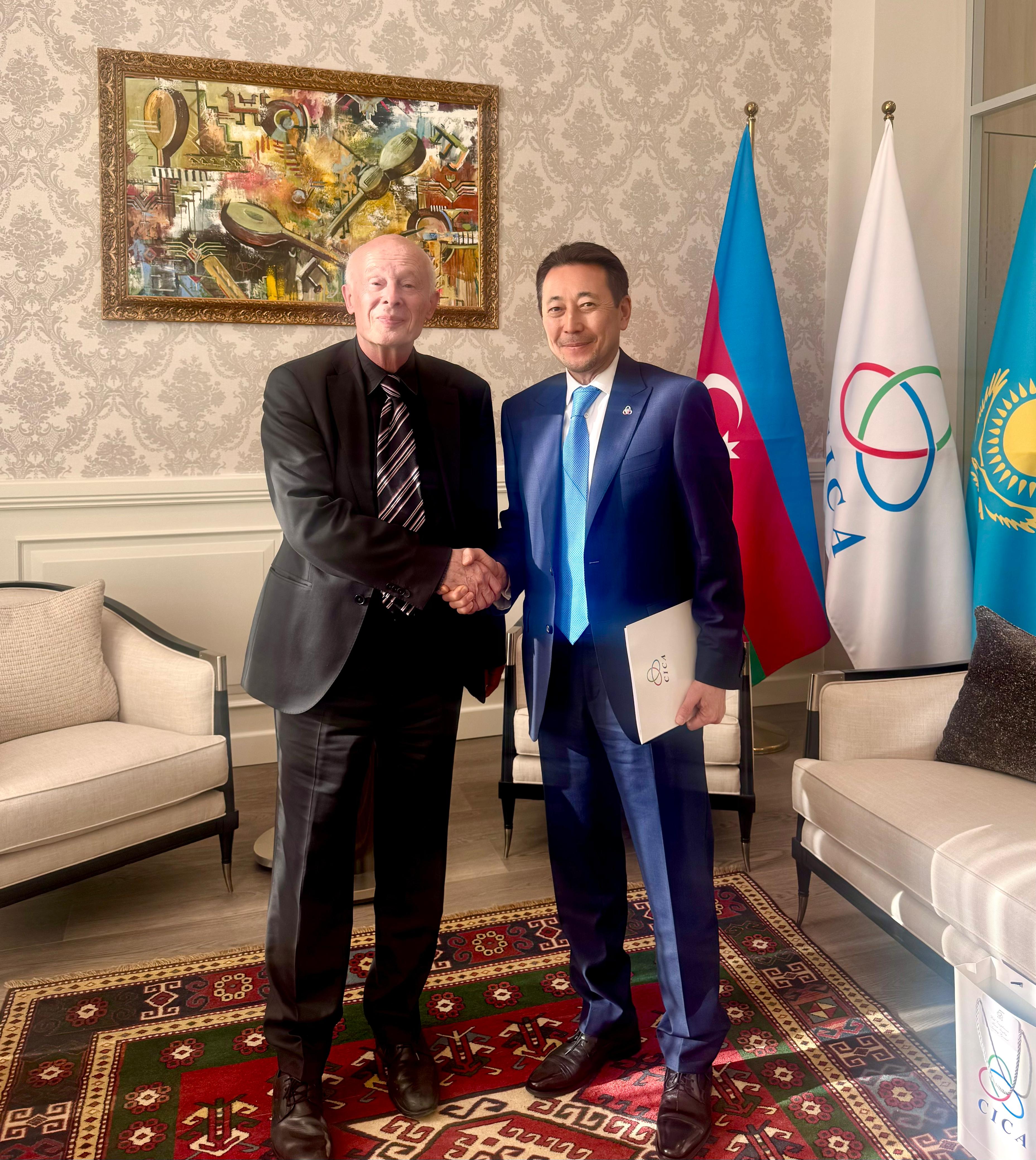 © CICA
Schellnhuber with Qairat Sarybay, Secretary General of the Conference on Interaction and Confidence-Building Measures in Asia
A central element of the visit was a series of high-level meetings with key stakeholders. This included a meeting with Sayasat Nurbek, Minister of Science and Higher Education of Kazakhstan. The Minister outlined Kazakhstan’s ambitious strategy to attract leading universities from around the world – both to strengthen domestic human capital and as a value proposition for other countries. Schellnhuber applauded the strategic vision, and they agreed to explore the opportunities for IIASA’s engagement in this domain. In a meeting with Akhylbek Kurishbayev, President of the National Academy of Sciences, the prospects of scientific collaboration between IIASA and Kazakhstan’s National Academy of Sciences on a wide range of topics including sustainable land management and governance of AI were discussed.
Schellnhuber also met with Qairat Sarybay, Secretary General of the Conference on Interaction and Confidence-Building Measures in Asia (CICA). Their exchange highlighted strong synergies between IIASA’s science diplomacy approach and CICA’s mandate to promote dialogue and trust-building across the region. Both sides emphasized the importance of fostering shared understanding as a pathway to peace and prosperity, identifying clear opportunities for future cooperation.
During the Summit program, Schellnhuber actively shaped discussions on urbanization and global water governance. In the session organized by UN Habitat on the Urbanisation, Climate and Environment Nexus in Central Asia, he shared his aspiration for climate-positive construction, arguing that cities must become part of the solution rather than the problem.
“The way we build our cities today will determine whether we lock in emissions or turn the built environment into a carbon sink,” he noted, highlighting the transformative potential of bio-based materials and systemic design approaches.
At the high-level Roundtable on the establishment of an International Water Organization, organized by the Ministry of Foreign Affairs and the Ministry of Water Resources and Irrigation of the Republic of Kazakhstan, Schellnhuber called for a shift from fragmented, sectoral approaches to a systems perspective on water.
“Water connects climate, ecosystems, and society – it is the operating system of the Anthropocene,” he emphasized.
Drawing on IIASA’s work in highly contested regions such as the Middle East, he highlighted the role of science-based cooperation in addressing complex water challenges and stressed the need to more systematically integrate emerging technologies. He also suggested that, should such an organization be established, it should be supported by a dedicated scientific panel, similar to the IPCC, to provide consolidated, policy-relevant assessments. The discussion feeds into a broader international process toward strengthening global water governance, including the upcoming UN Water Conference in December 2026.
The visit further extended the partnership between IIASA and Kazakhstan, which includes initiatives such as the Prospects and Possible Scenarios for Scaling Up Carbon Farming and Trade in Eurasia (CAMEA) project and related analytical efforts, including the IIASA-led report on carbon farming in Kazakhstan. IIASA also contributes to broader regional efforts on water security, including the World Bank Europe and Central Asia Regional Water Security Initiative, which advances integrated approaches to strengthening water resilience across the region.
Through its engagement in RES 2026, IIASA is building on the strong momentum in Kazakhstan and Central Asia, where recent years have seen growing leadership on environmental and climate issues. Kazakhstan, in particular, is emerging as an important driver of regional dialogue and action, with the Summit itself, bringing together governments from across the region, reflecting this role. It creates opportunities to scale solutions, particularly nature-based approaches across Kazakhstan’s vast landscapes, with potential spillover effects across Central Asia.
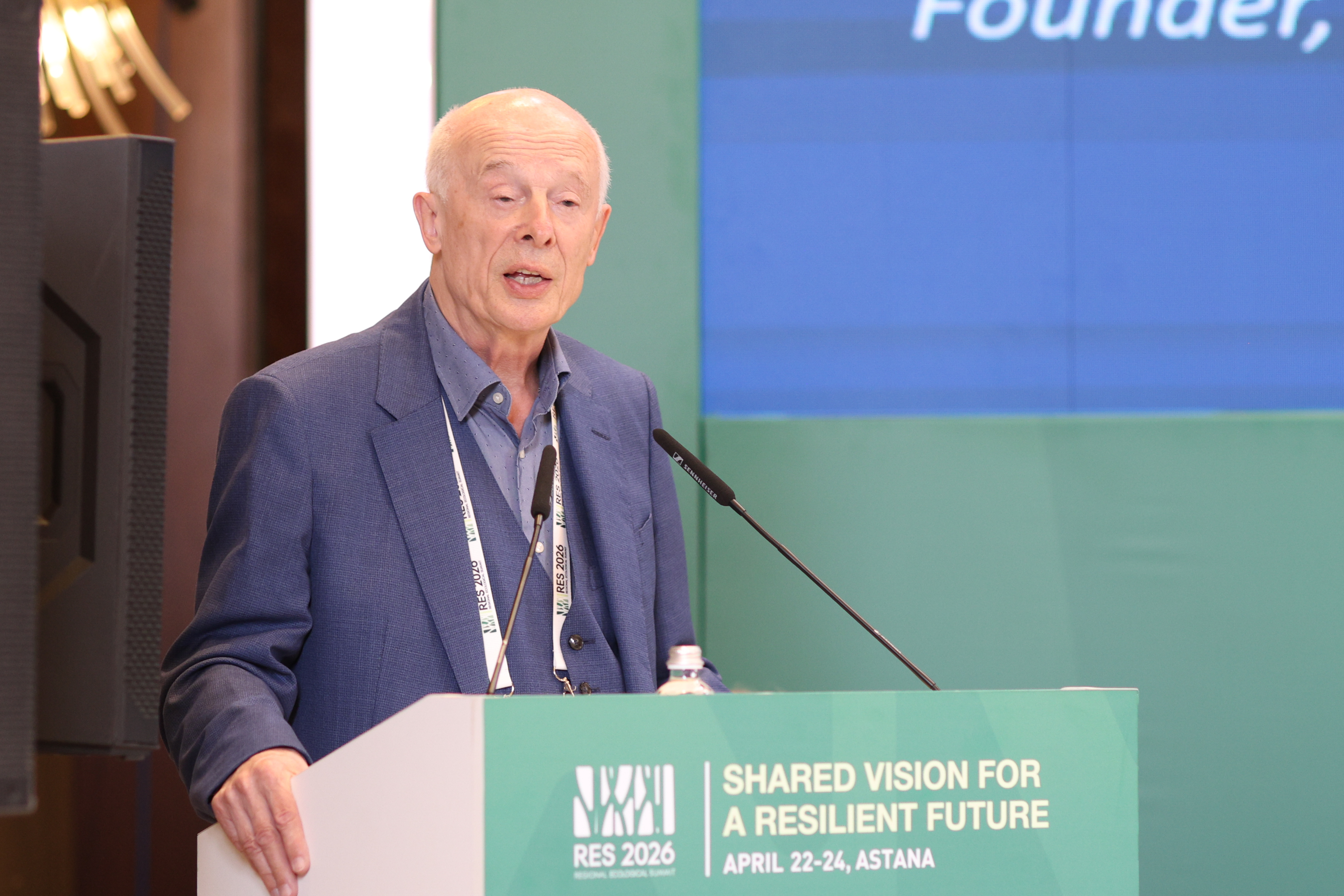 © Max Baikenov
IIASA Director General Hans Joachim (John) Schellnhuber
News

22 September 2026
IIASA at UNCCD COP17: Advancing land restoration and resilience
Building on its engagement at the 16th session of the Conference of the Parties to the United Nations Convention to Combat Desertification (UNCCD COP16) in Riyadh, IIASA contributed to a series of events and bilateral discussions at UNCCD COP17, held in Ulaanbaatar, Mongolia, towards the end of August. Under the theme, Restoring Land, Restoring Hope, COP17 advanced action on land degradation, drought resilience, and sustainable land management, with particular emphasis on rangelands and pastoral livelihoods.

19 March 2025
Eurasian Carbon Project Strengthens Ties with Kazakhstani Policy-makers to Advance Carbon Farming in the Country
The Eurasian Carbon Project is deepening its cooperation with Kazakhstan as the country moves forward with national efforts to integrate carbon farming into its climate and land-use strategies.

12 December 2024
Carbon Farming in the Dryland Belt of Northern Eurasia: Unlocking Win-Win Opportunities at COP16
The 16th Conference of the Parties (COP16) to the United Nations Convention to Combat Desertification (UNCCD) underscored Kazakhstan’s leadership in sustainable land management during the side event titled “Carbon Farming in the Dry Land Belt of Northern Eurasia: Unlocking Win-Win Opportunities.” This session, co-organized by the International Institute for Applied Systems Analysis (IIASA) and the BRICS Competition Law and Policy Centre, explored how innovative carbon farming practices can combat land degradation, mitigate climate change, and foster socio-economic development.