
Story ideas, media briefings, and press releases specifically for media. If you are a journalist, you can subscribe to receive upcoming press releases by email.
Press Releases
07 June 2021
Limiting climate risks for finance: Central banks and science publish scenarios
To improve climate related risk management in the financial sector and facilitate a smooth transition toward a sustainable economy, IIASA researchers joined forces with other scientists and a network of over 60 central banks and financial market supervisors to publish an updated set of scenarios. They show early greenhouse gas emissions reductions can minimize both physical and financial risk - in contrast, delayed action or no action would drive up costs.
04 June 2021
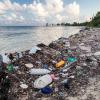
To achieve the SDGs, we need better data
IIASA researchers have contributed to a new global campaign that illustrates the centrality of data to sustainable development with a project that uses citizen science to monitor marine litter in Ghana for official UN Sustainable Development Goals reporting.

02 June 2021
Assessing the feasibility of transformation pathways for achieving the Paris Climate Agreement
What drives the feasibility of climate scenarios commonly reviewed by organizations like the Intergovernmental Panel on Climate Change (IPCC)? And can they actually be achieved in practice? A new systematic framework can help understand what to improve in the next generation of scenarios and explore how to make ambitious emission reductions possible by strengthening enabling conditions.
27 May 2021
New framework to enhance national climate action and achieve global goals
With the COP Climate conference in Glasgow only a few months away, the ambitions of the Paris Agreement and the importance of taking action at the national level to reach global climate goals is returning to the spotlight. IIASA researchers and colleagues have proposed a novel systematic and independent scenario framework that could help policymakers assess and compare climate policies and long-term strategies across countries to support coordinated global climate action.
26 May 2021
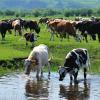
Mitigating emissions in the livestock production sector
The farming of livestock to feed the global appetite for animal products greatly contributes to global warming. A new study however shows that emission intensity per unit of animal protein produced from the sector has decreased globally over the past two decades due to greater production efficiency, raising questions around the extent to which methane emissions will change in the future and how we can better manage their negative impacts.

20 May 2021
Accounting for finance is key for climate mitigation pathways
A new study published in the journal Science, highlights the opportunity to complement current climate mitigation scenarios with scenarios that capture the interdependence among investors’ perception of future climate risk, the credibility of climate policies, and the allocation of investments across low- and high-carbon assets in the economy.

17 May 2021
Climate policies, transition risk, and financial stability
The way in which banks react to climate risks and uncertainty could impact financial stability as well as the world’s transition to a low-carbon economy. A new study by researchers from IIASA and the Vienna University of Economics and Business explored the role that banks’ expectations about climate-related risks will play in fostering or hindering an orderly low-carbon transition.

17 May 2021
Keywan Riahi appointed to ten-member group of the UN Secretary General
The United Nations Secretary-General, António Guterres, has appointed a new group of ten renowned experts including IIASA Energy, Climate, and Environment Program Director, Keywan Riahi, to support the UN Technology Facilitation Mechanism to bring science into the implementation of the Sustainable Development Goals (SDGs).
06 May 2021
Bringing the impact of nutrient imbalance to global attention
Through combining their expertise, four European Research Council (ERC) grantees have awoken the scientific community to what nutrient imbalances could mean for our planet, and for our species. Their findings could lead the world towards more accurate climate modeling, more equitable policymaking, and more sustainable food production.