

On the 50th anniversary of Earth Day, SAS and IIASA join forces to transform crowdsourced knowledge into actionable intelligence to help protect the planet.
This Earth Day, SAS and IIASA are implementing the next generation of crowd-driven artificial intelligence (AI) to help power AI algorithms designed to help us better understand our planet.
SAS is committed to building a global community of innovators that use technology to ignite positive change for people and the planet.
IIASA is known for its expertise in systems analysis and providing policy solutions and baseline information on pressing concerns for humanity. The institute is placing a spotlight on the issue of deforestation to learn about the application of AI to elucidate the interconnectivity of Earth’s ecosystems. Today, our systems are changing rapidly, approaching levels that exceed existing human experiences, scientific understanding and traditional modeling capabilities, making it increasingly difficult for humans to intervene efficiently, effectively and timeously.
“The urgency required to address these transformations requires the application of best of breed technology solutions. That’s why we turned to SAS,” said IIASA Director General, Albert van Jaarsveld. “By combining the power of our environmental science research platforms, SAS’ AI and computer vision technologies, and the sheer intellectual power of concerned citizens, we will develop AI models that will exponentially increase the value of human insights and strive to deliver near real-time assessment of global environmental change.
Powerful, accurate, useful AI models do not happen by magic. The development of an AI model starts with human intelligence. For this project, SAS and IIASA are jointly launching an online crowdsource-driven app to gather the collective intelligence of the crowd. They are asking volunteers – an army of citizen scientists from middle school students in today’s virtual classrooms to artists, engineers and professional data scientists – to kick-start this effort by reviewing and judging images of the rainforest. These images show land untouched and land that may have been affected by human development.
“Since image analysis is an important first step for the accurate assessment and projection of deforestation, we are asking people to see what technology can’t see, by examining and reporting on images of smaller incremental forestry incursions worldwide,” said van Jaarsveld. “Crowdsourcing helps improve the AI algorithms, expediting what used to take years to analyze, thus helping to drive vital policy responses to protect our forests more quickly.
” When people flag regions that have seen signs of human impact, they help make AI models become smarter. For example, it is easy for a human to distinguish between a road (which signals human impact) and a river (which does not), but an AI model will not know the difference until it obtains sufficient training through learning from human observations. Additionally, results from the model ensure that the crowdsourcing app focuses the attention of human judges where their expertise is most needed. The model will allow for increased efficiency of a volunteer human force that best makes use of their attention and insights for a broad array of projects aimed at monitoring and measuring important global change matters.
With the power of the crowd and the computer combined, SAS and IIASA will have a robust, extensive platform for empowering citizen scientists to assist in cutting-edge research that helps us all better understand, predict and thrive in the world we share. While the first phase of this partnership focuses on deforestation, there are plans to extend this platform to other environmental concerns where crowdsourcing can help serve the greater good.
As a start, everyone can play a role in making AI smarter and improve its ability to help protect our forests. From students who are currently out of the classroom to AI professionals and everyone in between, this activity allows each of us to make a difference just by looking at a few images. Just categorize images that show signs of deforestation and help models learn and improve at each iteration.
This crowdsourcing partnership with IIASA is fueled by SAS’ commitment to both data literacy and the Data for Good movement, which encourages using data in meaningful ways to drive positive global change.
SAS
SAS is the leader in analytics. Through innovative software and services, SAS empowers and inspires customers around the world to transform data into intelligence.SAS is committed to building a global community of innovators that use technology to ignite positive change for people and the planet.
News
16 October 2026
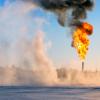
Getting back on track to reduce methane emissions
A new study, led by IIASA researchers and coauthored by UNEP colleagues, finds that if governments fully implement their methane reduction plans, they could reduce global emissions by 11% between 2020 and 2030. This would reverse the current trend of increasing methane emissions, but would not be sufficient to achieve the goal of the Global Methane Pledge.
01 October 2026
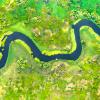
Where the waters meet: Connecting global limits and local water management
Human activity and climate change are putting growing pressure on water resources, disrupting the predictability of the water cycle, and changing the availability and quality of freshwater. IIASA researchers and partners have developed a new framework for guiding water management and planning at the river-basin level, derived from the existing Global Water Planetary Boundary.
21 September 2026
Fairness informs how the world cuts emissions
Who cuts emissions fastest, and who supports others do so, are central questions in global climate action. New IIASA-led research shows that building fairness into climate models from the start can inform deliberations without changing the overall climate goal.