The following statistics are from the last 5 full calendar years: 2021-2025
Publications
0
Publications by IIASA researchers from Lesotho
Projects
245
Projects related to Lesotho
| Name | Start | End Sort ascending | Abbreviation | Classification |
|---|---|---|---|---|
| Open ENergy TRANsition ANalyses for a low-Carbon Economy | 2019 | 2023 | OpenENTRANCE | Global |
| Centre for Integrated Assessment Modelling - Annual Work Plan and Budget 2023 under MOU between UNECE and IIASA | 2023 | 2023 | CIAM-UNECE 2023 | Global |
| Developing Digital Ecosystems Sustainably: Ecological Foundations of Antitrust | 2021 | 2022 | Eco-FAn | Global |
| Energy Demand changes Induced by Technological and Social innovations | 2021 | 2022 | EDITS 2 | Global |
| Climate change mitigation: How much can achieving biodiversity targets contribute? | 2020 | 2022 | ECF_NDC | Global |
| Earth Commission Modeling Working Group - Phase 3 | 2022 | 2022 | ECMG Phase 3 | Global |
| IPCC 6th Assessment Report Review | 2019 | 2022 | IPCC WGI Lead | Global |
| Direct Air Capture to Fuel | 2020 | 2022 | ADEPT | Global |
| Earth Commission Modeling Working Group 2 | 2020 | 2022 | ECMG Phase 2 | Global |
| Challenges of global agriculture in a climate change context – Focus on water as an agricultural production factor | 2021 | 2022 | AgCLIM50 IV | Global |
Pagination
0
Projects sponsored by funders from Lesotho
Engagement
1
Number of times participants from Lesotho joined IIASA events
People
News
02 June 2026
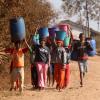
Climate-driven drought linked to rising violence among adolescents in Southern Africa
New research from IIASA and the University of Oxford provides the first quantitative evidence that drought exposure over the last 12 months is associated with increased risk of sexual, emotional, and physical violence among adolescents in Southern Africa. This risk rises substantially during cumulative droughts over two years.
18 May 2026
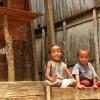
African Human Capital Data Sheet 2026
The African Human Capital Data Sheet 2026: Past Trends, Skills, and Future Pathways presents new evidence on population trends by level of education, skills, and demographic transitions across the African continent.