The following statistics are from the last 5 full calendar years: 2021-2025
Publications
6
Publications about Denmark
91
Publications co-authored with institutions in Denmark
Pagination
1
Publications by IIASA researchers from Denmark
| Title | Type | Publisher | Date Sort ascending | Journal |
|---|---|---|---|---|
| First steps towards bridging integrated assessment modeling and high-resolution energy system models: A scenario matrix for a low-emissions sector-cou | article | Institute of Physics Publishing (IOP) | Environmental Research Communications |
Projects
329
Projects related to Denmark
| Name | Start | End Sort ascending | Abbreviation | Classification |
|---|---|---|---|---|
| Analysis of air pollutant emission trends towards 2050 for EU energy intensive industry sectors | 2022 | 2023 | SR3-AQ | Multi-Regional / Country |
| Co-creating climate resilient transformation pathways to meet the SDG Agenda | 2021 | 2023 | SDG Pathfinding | Global |
| Analysis and Economic Modeling and Clean Air Act Issues | 2022 | 2023 | EPA CCD FC 2020-2023 (Option Y2) | Global |
| Modelling of LULUCF emissions and sinks, and of related mitigation options for EU Member States, associated with a POTEnCIA decarbonisation scenario | 2022 | 2023 | POTEnCIA | Global |
| European Topic Centre for Biodiversity and Ecosystem 2023 | 2023 | 2023 | ETC BE 2023 | Global |
| QuantMig: Quantifying Migration Scenarios for Better Policy | 2020 | 2023 | QuantMig | Multi-Regional / Country |
| Role of drivers of emissions from agriculture and LULUCF sector in 2040 and beyond | 2022 | 2023 | SR7/LULUCF2040 | Multi-Regional / Country |
| FORCeS: Constrained aerosol forcing for improved climate projections | 2019 | 2023 | FORCeS | Multi-Regional / Country |
| Development of a European Biodiversity Observation Network (Europa BON) to integrate existing data streams and effectively monitor the status of Europ | 2020 | 2023 | EuropaBON | Global |
| COMFORT: Our common future ocean – quantifying coupled cycles of carbon, oxygen, and nutrients for determining and achieving safe operating spaces wit | 2019 | 2023 | COMFORT | Global |
Pagination
7
Projects sponsored by funders from Denmark
| Name | Start | End Sort ascending | Abbreviation | Funder |
|---|---|---|---|---|
| European Topic Centre on Biodiversity and Ecosystems 2025 | 2025 | 2025 | ETC BE 2025 | European Environment Agency (EEA) |
| Expert support GEOID consortium | 2023 | 2024 | GEOID | European Environment Agency |
| European Topic Centre on Biodiversity and Ecosystems 2024 | 2024 | 2024 | ETC BE 2024 | European Environment Agency |
| European Topic Centre for Biodiversity and Ecosystem 2023 | 2023 | 2023 | ETC BE 2023 | European Environment Agency |
| IPCC 6th Assessment Report Review | 2019 | 2022 | IPCC WGI Lead | European Environment Agency |
| Revising historical PM2.5 emissions from residential combustion to consistently include condensable organics and asses the implication for the review | 2021 | 2022 | NCM-cPM | Nordic Working Group for Climate and Air (NKL) |
| IPCC 6th Assessment Report Review - Chapters review | 2020 | 2021 | IPCC Chapters | European Environment Agency |
Engagement
40
Number of times participants from Denmark joined IIASA events
7
Number of times visitors from Denmark came to IIASA
117
IIASA staff visits to Denmark
People
1
- Women
- Men
YSSPers from Denmark
11
- Women
- Men
- Unknown
Total number of alumni from Denmark
News

24 January 2023
How has the COVID-19 pandemic affected immigration?
New research finds a high variation between how pandemic mitigation measures affected immigration to different destination countries, from a slight increase to huge reductions.
Events
Focus
Feasible futures
Policy Brief #41, October 2023. Embracing the notion of feasibility, this research shows that the world will probably overshoot
1.5°C, largely owing to low institutional capacity. Energy demand reduction and electrification are two options to turn down the heat, and addressing weak institutions is crucial.
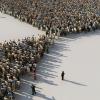
Standardizing migration data in Europe
Options Magazine, Winter 2022: Researchers illustrated the discrepancies in migration flow statistics across Europe to help standardize data and better understand migration patterns.